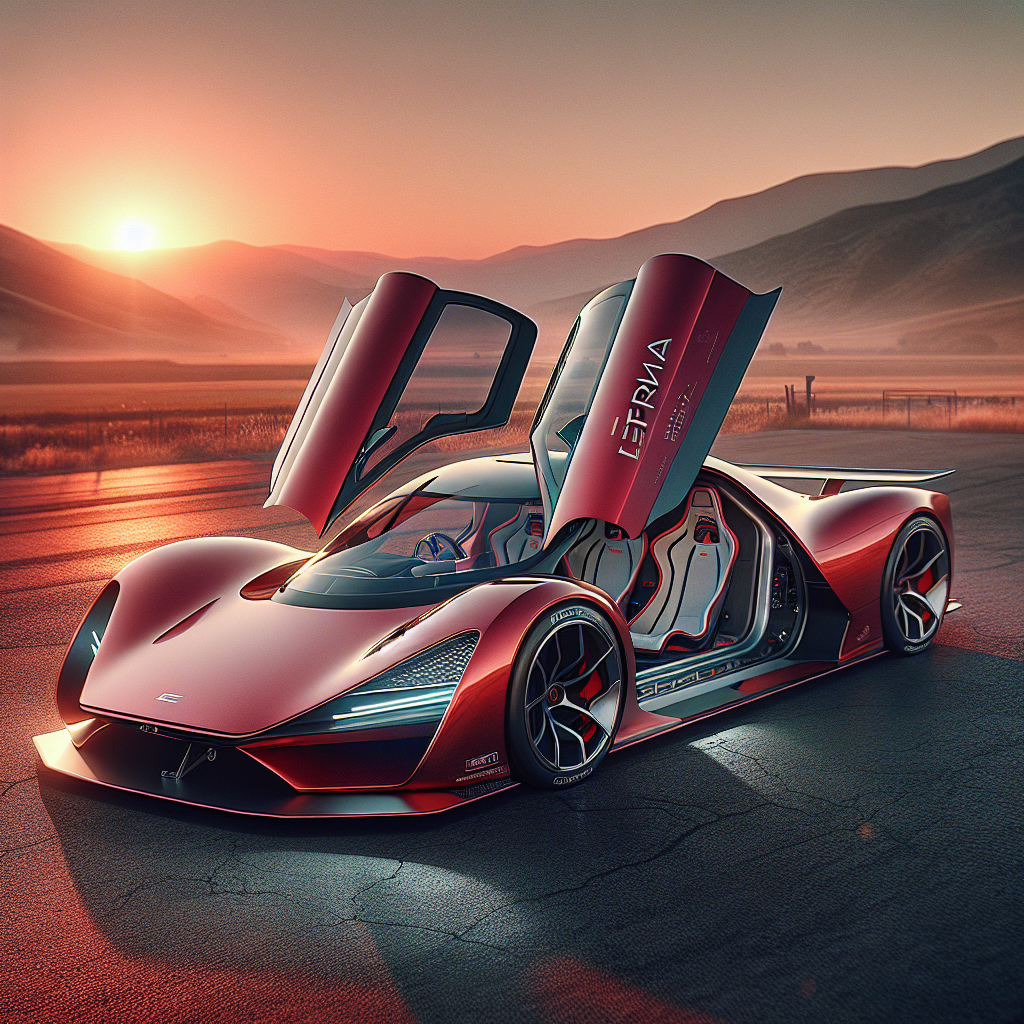
Ferrari has officially unveiled the name and select design details of its first fully electric vehicle, marking a pivotal moment in the Italian automaker’s storied history. In a video published by Wired titled “Ferrari Reveals Name of First EV—and Its Jony Ive–Designed Interior,” the company confirmed that the vehicle will be called the Ferrari Eterna, a nod to both innovation and timeless design.
Set for release in late 2025, the Eterna represents Ferrari’s response to the automotive industry’s accelerating shift toward electrification. While the company has previously released hybrid models, such as the SF90 Stradale, the Eterna will be the marque’s first fully battery-powered car. Its introduction signals Ferrari’s intention to maintain its stature in an increasingly decarbonized market without compromising its identity as a builder of high-performance machines.
The vehicle’s interior has been designed in collaboration with Jony Ive, the acclaimed former Chief Design Officer at Apple. Ive, now leading the design firm LoveFrom, brings his legacy of minimalism and technological integration to Ferrari’s traditionally bold aesthetic. While limited imagery has been released, the design language revealed so far tells a story of subdued elegance—leather and aluminum are reportedly balanced with sustainable composite materials, hinting at Ferrari’s broader environmental intentions.
Wired’s report notes that the collaboration between Ferrari and Ive’s firm is emblematic of a growing cross-pollination between the automotive and tech design worlds. The goal, according to those involved in the project, was not only to preserve the luxurious feel that customers expect from Ferrari but also to reimagine what that experience could look like in the context of 21st-century automotive and environmental priorities.
Technical specifications for the Eterna remain closely guarded, but sources within the company told Wired that engineers are focused on ensuring the electric powertrain delivers the same visceral driving experience for which Ferrari is known. The company has gone to great lengths to develop an in-house sound design system intended to replicate some of the auditory drama of internal combustion engines, offering a possible counter to common critiques of electric sports cars’ muted performance.
Ferrari’s move into electrification has not been without internal debate. The company, intimately tied to the roaring engines that have defined its identity for over 75 years, has faced the challenge of balancing tradition with transformation. Yet its executives insist that the soul of Ferrari—its performance, style, and exclusivity—remains intact, even as electrons replace gasoline.
As Wired notes, the debut of the Eterna represents a broader shift within the luxury automotive market. High-end manufacturers, once reluctant to embrace electric mobility, now find themselves compelled to respond not only to global regulatory pressures, but also to evolving customer expectations. For Ferrari, the launch of the Eterna may prove to be one of the most consequential chapters in its legacy, testing whether a brand so deeply rooted in the mechanical past can thrive in a digital, electric future.