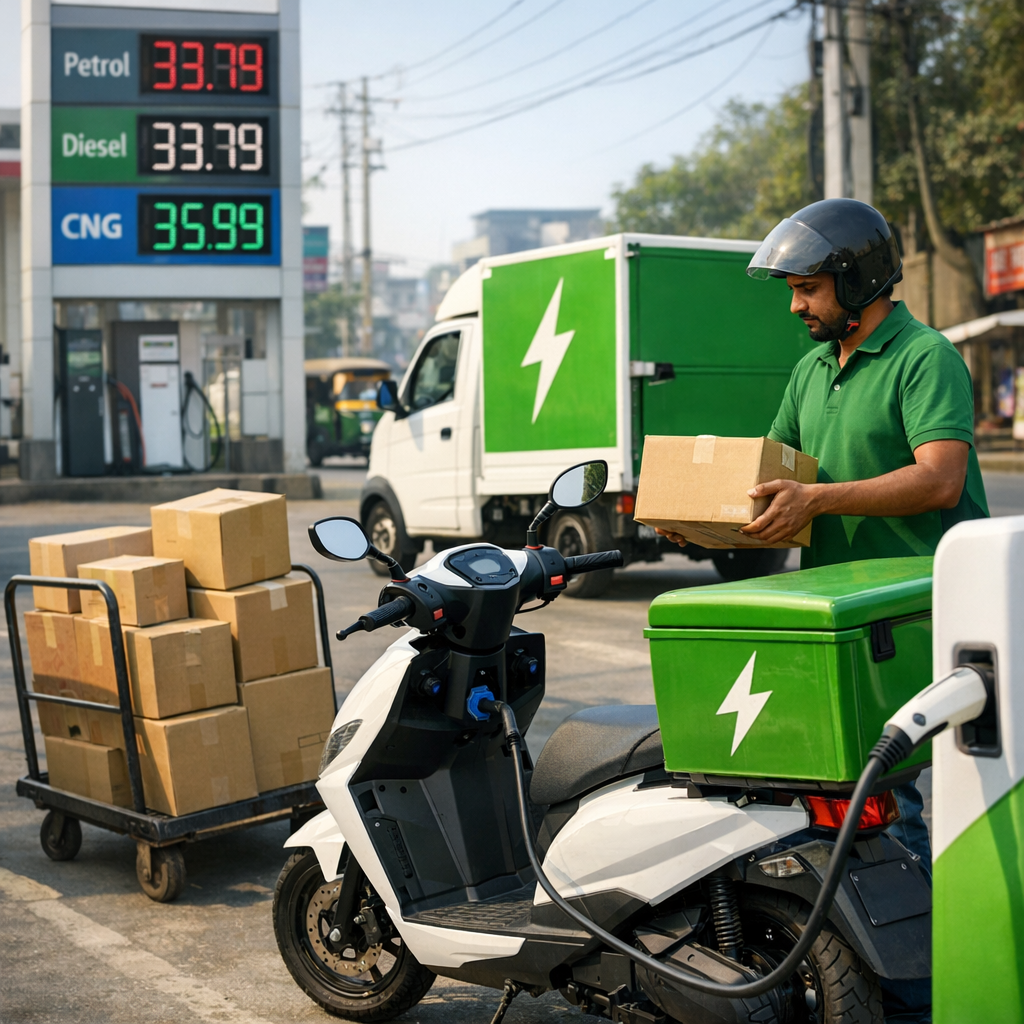
Rising fuel price volatility is accelerating the shift toward electric vehicles in India’s last-mile delivery sector, particularly among ecommerce logistics firms, according to insights reported in the article “Fuel volatility accelerates EV leap in last-mile delivery for ecommerce logistics firms” published by The Economic Times.
Companies operating large delivery fleets are increasingly turning to electric two-wheelers and small commercial vehicles to reduce exposure to unpredictable fuel costs and improve operating margins. With fuel expenses accounting for a significant portion of last-mile logistics costs, even modest fluctuations in petrol and diesel prices can have an outsized impact on profitability. Industry executives cited in the report indicate that EVs, despite higher upfront costs, offer more stable long-term economics due to lower running and maintenance expenses.
Major logistics providers and ecommerce platforms have been expanding their EV fleets as part of broader cost-control strategies, while also aligning with sustainability commitments. The transition is being supported by a growing ecosystem of EV manufacturers, battery-swapping networks, and financing options tailored to fleet operators. This has made adoption more feasible at scale, particularly in urban and semi-urban delivery networks.
However, challenges remain. Limited charging infrastructure in certain regions, concerns about vehicle range, and the need for operational adjustments continue to slow full-scale adoption. Companies are addressing these constraints through route optimization, investment in charging hubs, and partnerships with energy providers. Battery-swapping models are also gaining traction as a way to reduce vehicle downtime and improve fleet efficiency.
The report underscores that the push toward electrification is no longer driven solely by environmental considerations. Instead, it is increasingly a financial imperative shaped by market volatility. As fuel prices remain unpredictable, logistics firms are viewing EV adoption as a hedge against cost instability while positioning themselves for a more sustainable operating model.
Industry participants expect the trend to intensify over the next few years, particularly as technology improves and policy incentives remain supportive. The convergence of economic and regulatory factors suggests that electric mobility will become a cornerstone of last-mile logistics in India’s rapidly expanding ecommerce sector.