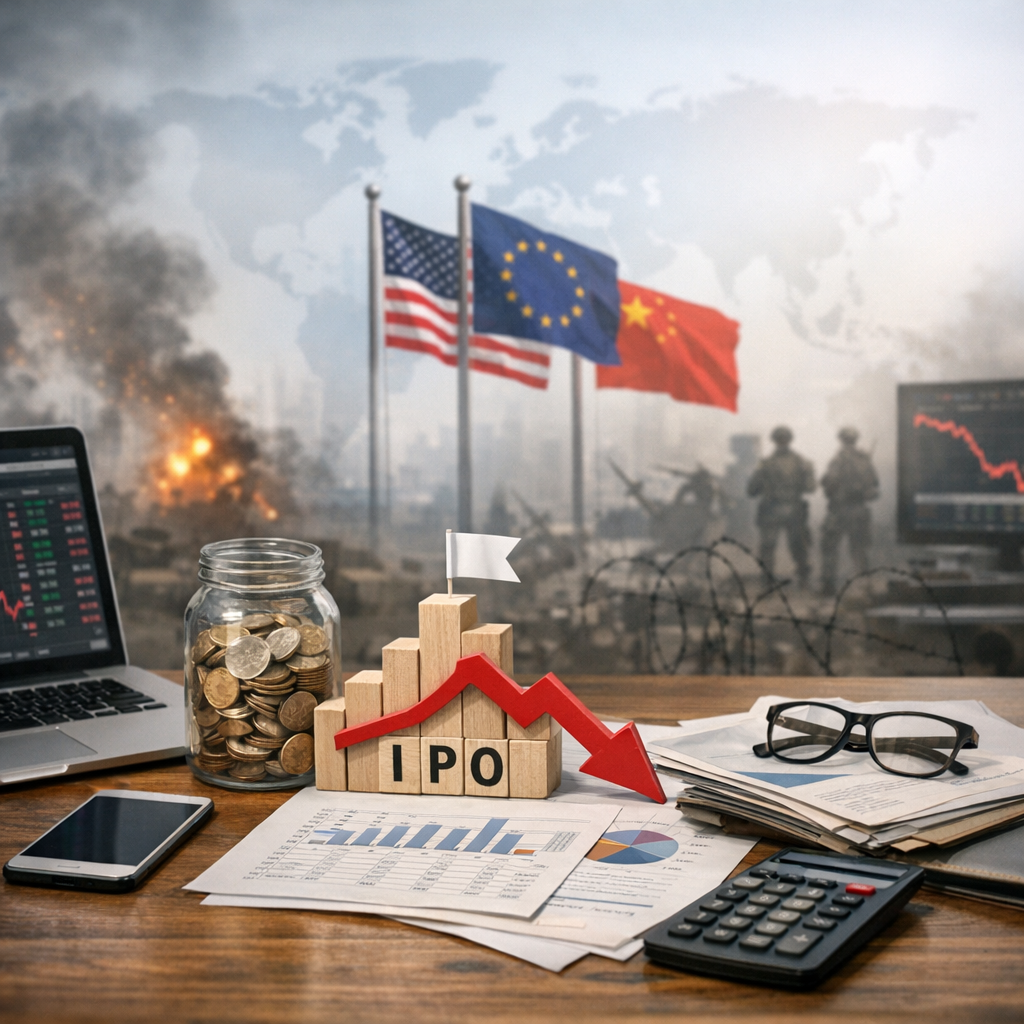
Global geopolitical tensions are beginning to ripple through the capital-raising ambitions of financial technology firms, prompting many to reassess or delay plans to go public. According to the Economic Times article titled “Fintechs go easy on IPO plans as war rattles stock markets,” heightened market volatility linked to ongoing conflicts has made both investors and companies more cautious about entering public markets.
The report highlights that fintech companies, which had previously been among the most aggressive in pursuing initial public offerings, are now adopting a more measured approach. Market instability has depressed valuations and reduced investor appetite for riskier, high-growth listings, conditions that are particularly challenging for firms in the fintech sector that often rely on strong market sentiment to secure favorable pricing.
Industry executives cited in the Economic Times piece indicate that several companies are choosing to postpone listing timelines rather than risk underwhelming debuts. The preference is to wait for clearer macroeconomic signals and more stable market conditions, especially as uncertainty surrounding global conflicts continues to weigh on equities.
Investment bankers also note a broader cooling of IPO pipelines, with fintech firms no longer dominating the queue as they did during more buoyant periods. Instead, companies are focusing on strengthening balance sheets, improving profitability metrics, and, in some cases, exploring private funding alternatives to bridge the gap until markets recover.
The shift underscores a growing recognition within the sector that timing is critical in public offerings. Listing during periods of turbulence can not only affect immediate valuations but also long-term investor confidence. As a result, many fintech companies are prioritizing strategic patience over rapid market entry.
The Economic Times report suggests that while the long-term outlook for fintech remains strong, near-term IPO activity will likely remain subdued until geopolitical tensions ease and market stability returns. For now, caution appears to be the prevailing strategy across the industry.