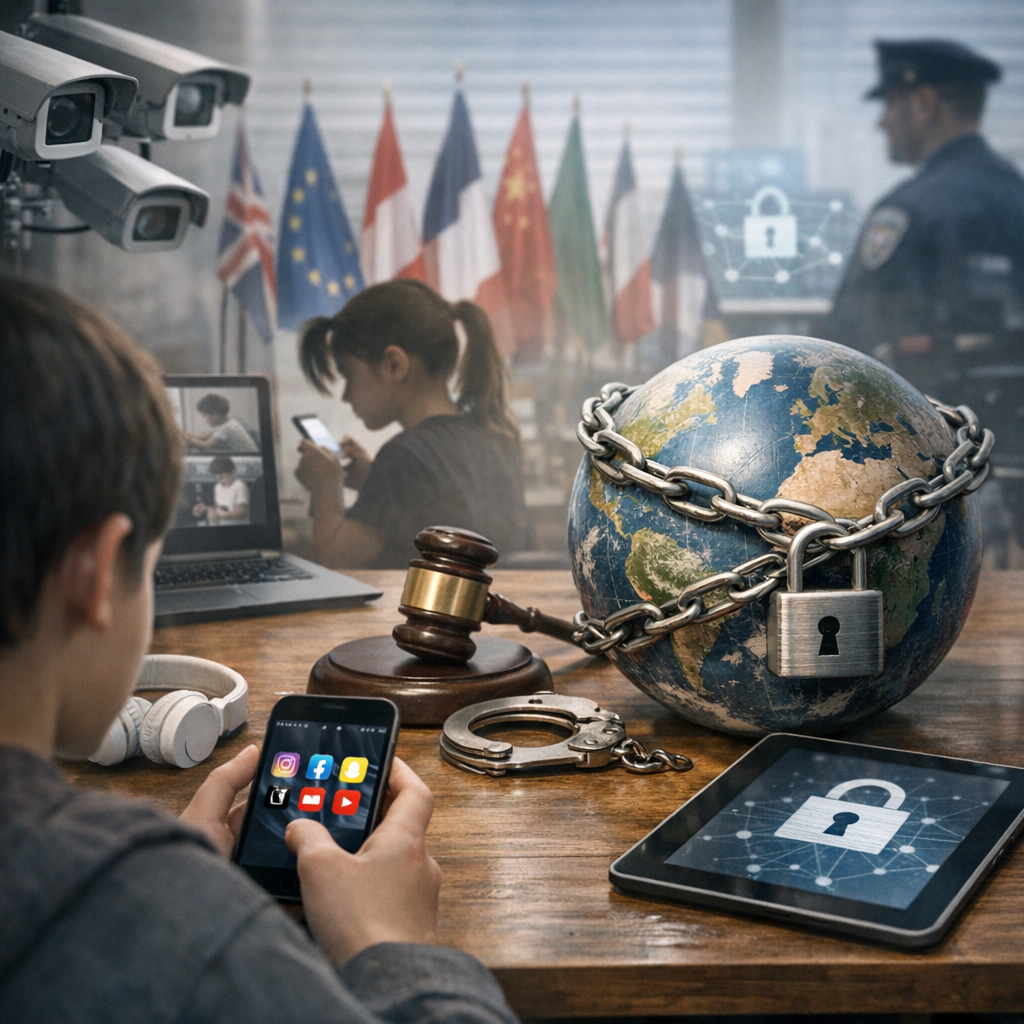
Governments across the world are tightening controls on how children access and use social media, reflecting mounting concern over the platforms’ effects on mental health, privacy, and safety. A recent report by The Economic Times, titled “Here’s how countries are cracking down on kids’ social media use,” outlines a growing patchwork of regulatory approaches that range from outright restrictions to stricter age verification requirements and expanded parental controls.
In the United States, lawmakers have intensified scrutiny of social media companies, with several states introducing or passing legislation aimed at limiting minors’ exposure to addictive features. Some proposals seek to require parental consent for users under 18, while others aim to restrict algorithmic recommendations for younger audiences. These efforts have faced legal challenges, particularly on free speech grounds, highlighting the tension between child protection and constitutional rights.
European countries have moved ahead with more centralized regulatory frameworks. Under the European Union’s Digital Services Act, platforms face obligations to assess and mitigate risks to minors, including exposure to harmful content and manipulative design practices. Individual countries such as France have taken additional steps, approving measures that would require parental authorization for children under a certain age to create social media accounts, although enforcement mechanisms remain under development.
In the United Kingdom, the Online Safety Act places a duty of care on tech companies to shield minors from harmful material. Regulators are expected to enforce age verification and content moderation rules more aggressively, with significant penalties for noncompliance. Critics, however, warn that strict verification systems may raise privacy concerns or prove difficult to implement at scale.
Australia has also signaled a tougher stance, with policymakers considering tighter age restrictions and clearer accountability for platforms. The country has been at the forefront of efforts to compel tech companies to take responsibility for harmful content, and child safety has become an increasingly prominent focus of that agenda.
Asian markets present a varied landscape. China has already implemented some of the world’s strictest digital controls for minors, including limits on screen time and curfews for online gaming and platform use. Other countries in the region are exploring regulatory models that balance digital innovation with growing public anxiety about youth well-being.
Despite differences in approach, the global trend is unmistakable. Policymakers are converging on the idea that self-regulation by technology companies is insufficient when it comes to protecting children. At the same time, questions remain about how to enforce age restrictions without infringing on privacy, how to define harmful content consistently, and how to ensure that regulations keep pace with rapidly evolving platforms.
Industry groups have urged regulators to adopt flexible frameworks that encourage innovation while safeguarding users, and some companies have begun rolling out tools designed to give parents greater oversight. Yet critics argue that voluntary measures have often fallen short, necessitating firmer government intervention.
As The Economic Times article underscores, the debate is shifting from whether to regulate children’s social media use to how best to do so. With more countries expected to introduce legislation in the coming years, the outcome of this global push will likely shape the digital experiences of a generation.