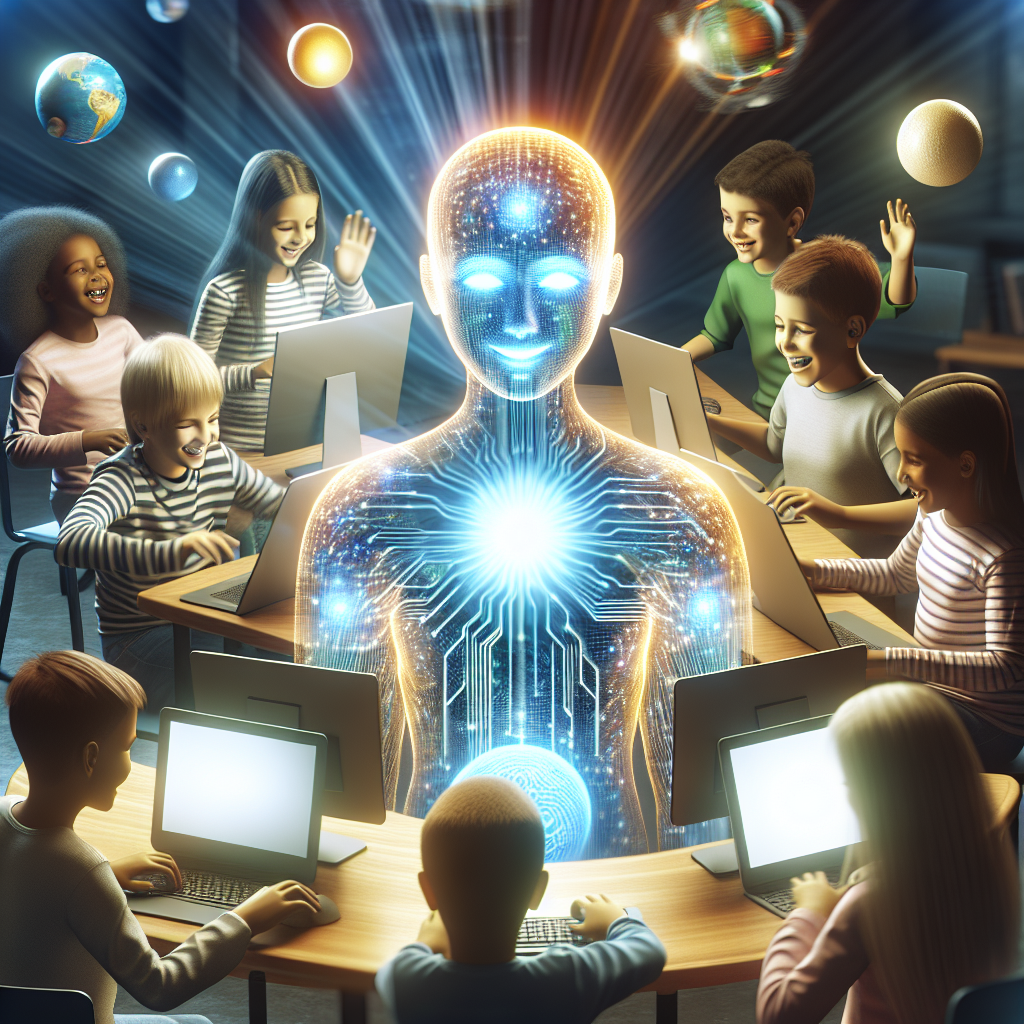
In a rapidly evolving digital health landscape, one startup is aiming to rewrite the future of youth mental health through artificial intelligence. As highlighted in an article titled “HappyKids AI: Reimagining Mental Health for the Next Generation,” published by StartupNews.fyi, the company HappyKids AI is leveraging cutting-edge technology to provide scalable, accessible emotional and psychological support for children and adolescents worldwide.
Founded in 2023 by psychologist Dr. Lena Chen and machine learning expert Raj Mehta, HappyKids AI seeks to bridge the widening gap in youth mental health services with a platform that combines clinical psychology, game design, and AI-driven personalization. The product offers interactive behavioral tools, mindfulness exercises, and real-time emotional check-ins, all designed to engage young users in an age-appropriate, non-stigmatizing environment.
According to the StartupNews.fyi report, the app’s proprietary AI engine adapts to individual users over time, interpreting mood and engagement signals to tailor content and interventions. This dynamic personalization is intended to supplement — rather than replace — traditional therapy or school-based counseling, particularly in communities where access to mental health resources remains limited or inconsistent.
HappyKids AI arrives in response to sobering national trends. A 2024 report from the U.S. Surgeon General described youth mental health as “the defining public health challenge of the decade,” citing a dramatic increase in anxiety, depression, and self-harm among teenagers. The COVID-19 pandemic further amplified these issues by disrupting school routines and reducing the interpersonal safety nets many children once relied on. The founders of HappyKids AI argue that scalable technological solutions are now indispensable in ensuring that every child, regardless of geography or socioeconomic status, can receive timely emotional support.
The StartupNews.fyi article emphasizes that HappyKids AI has already formed strategic partnerships with school districts in California, as well as with several non-profit organizations focused on childhood well-being. Early pilots reportedly demonstrate a significant improvement in student self-reporting of emotional states, as well as increased classroom engagement and decreased disciplinary incidents.
However, industry experts caution that AI in mental health remains a frontier with unresolved ethical and clinical concerns. Critics urge rigorous oversight to ensure that algorithmic interventions are evidence-based, developmentally appropriate, and transparent. In response, HappyKids AI says it has appointed an independent ethics board and is undergoing voluntary clinical validation, a rare move in an industry often accused of prioritizing scale over science.
Despite the scrutiny, investor confidence in the startup appears strong. The company recently secured $18 million in Series A funding, led by Horizon Ventures, with participation from social impact investors and education-focused foundations. The new capital will be used to expand its engineering and research teams, and to support additional pilots in both urban and rural districts across the United States.
While the long-term efficacy of AI-driven mental health tools for children remains under evaluation, HappyKids AI represents a growing sector of tech startups attempting to address profound social needs through innovation. As StartupNews.fyi’s feature makes clear, the challenge is not merely technological — it is deeply human. In the quest to cultivate resilience in the next generation, HappyKids AI is betting that machine intelligence, carefully calibrated, can help light a path forward.