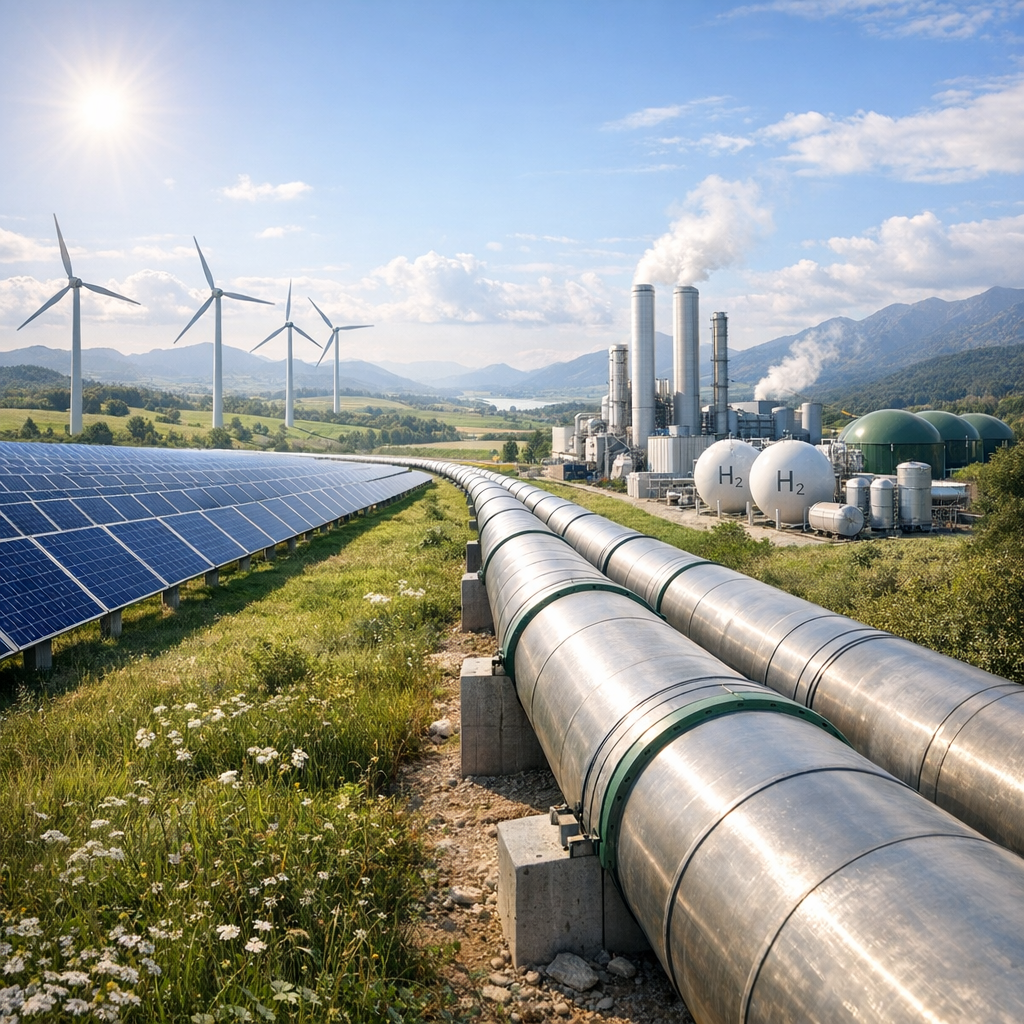
In a recent development reported by TechXplore, an insightful article titled “Europe’s New Carbon-Neutral Fuel Pipelines Could Reshape Energy Landscape” explores how Europe is taking significant strides toward reshaping its energy landscape with the construction of innovative carbon-neutral fuel pipelines. This pioneering project seeks to integrate a network capable of distributing hydrogen and synthetic fuels while revitalizing existing infrastructure, marking a monumental step in Europe’s commitment to a sustainable future.
As the continent advances its climate goals, the emphasis on renewable energy sources like green hydrogen and synthetic e-fuels has intensified. These resources, known for their carbon-neutral qualities, are becoming central to Europe’s strategy to significantly reduce greenhouse gas emissions and move toward achieving carbon neutrality by the designated timeline. The new pipeline initiative promises to be a critical component of this strategy, poised to support the transition from fossil-based energy to more sustainable alternatives.
The report from TechXplore highlights that this initiative isn’t just about new construction; it leverages Europe’s substantial existing infrastructure. By repurposing and upgrading older fuel pipelines, the region is optimizing both financial investment and implementation timelines. This pragmatic approach is set to minimize costs while speeding up deployment—key considerations given the urgency around global climate commitments.
A tangible focus is on green hydrogen, produced through electrolysis using renewable energy sources like wind and solar power. As hydrogen is earmarked to play a vital role in industrial processes and heavy transport due to its high energy density and clean combustion, the deployment of an extensive hydrogen pipeline network could dramatically scale up its usage. This, in turn, aligns with several European countries’ strategies to bolster their hydrogen economies.
The article further underscores the collaborative nature of this endeavor. Cross-border integration of energy infrastructure is pivotal, with multiple European countries engaging in conversations to harmonize regulations and standards. This cooperative spirit aims to create a seamless trans-European energy network, enhancing security of supply while fostering regional partnerships. It also emphasizes the economic potential for Europe, with an eye on job creation in both construction and future operations of these pipelines.
Notably, the project garners optimism from various stakeholders, including government officials, environmental groups, and industry players. They view it as an opportunity to place Europe at the forefront of the global green energy transition. However, challenges remain, particularly in securing investments and aligning policies across countries with varying energy agendas.
As Europe navigates these complexities, the pipeline project signifies more than an infrastructural upgrade; it represents a broader commitment to sustainability, resilience, and energy independence. How effectively Europe can overcome the challenges and harness the potential of its carbon-neutral strategies will be watched closely, not only within the region but as a blueprint for global efforts in climate change mitigation. The TechXplore report captures this transformative moment in Europe’s energy journey, providing a glimpse into the potential future of a continent striving to lead by example in sustainable innovation.