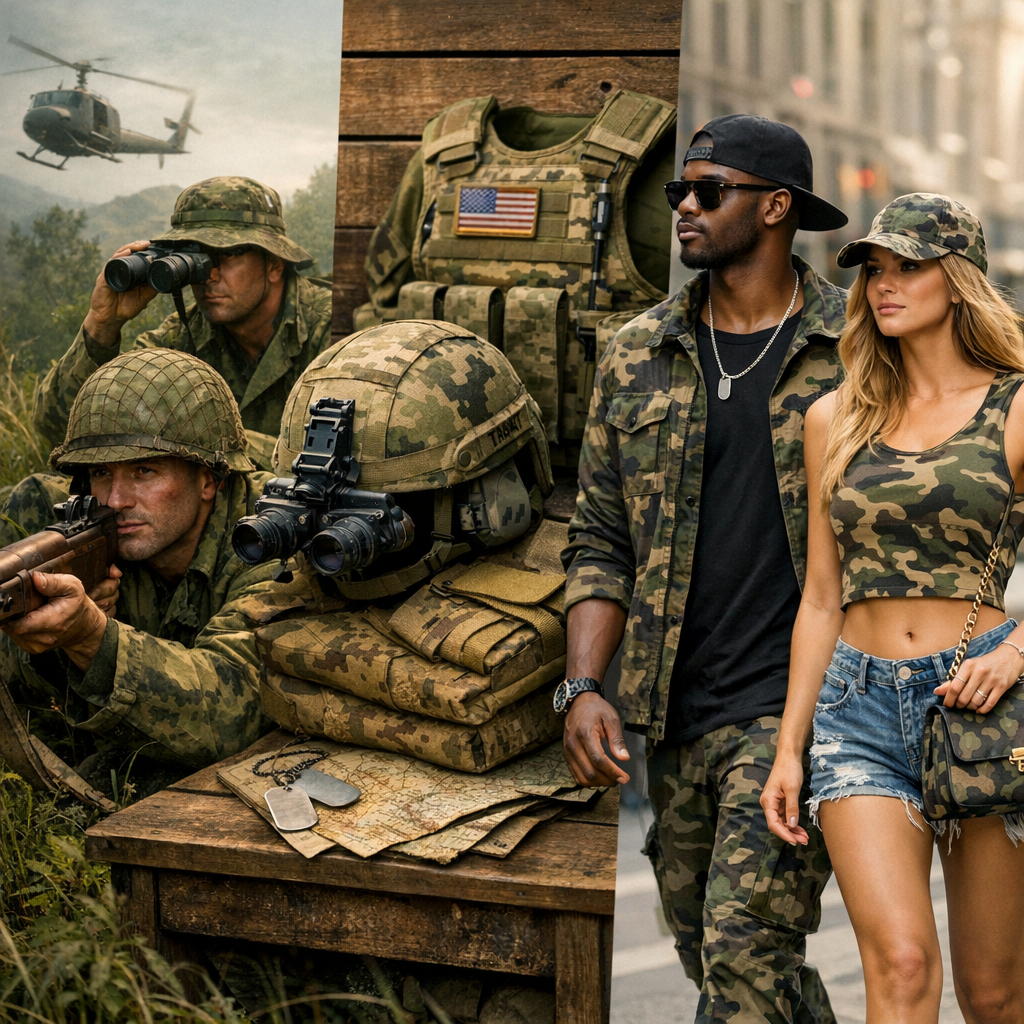
A recent Wired video titled “How American Camouflage Conquered the World” traces the evolution of U.S. military camouflage from a niche battlefield innovation into a global visual language that now permeates fashion, policing, and popular culture.
The video outlines how camouflage, once designed strictly for concealment in specific environments, became both more sophisticated and more widespread through 20th-century conflicts. Early American patterns, influenced by European experimentation during World War I, were refined during World War II and the Cold War as the U.S. military invested heavily in research aimed at countering new surveillance technologies and diverse combat terrains. Over time, these efforts produced a range of patterns optimized for jungles, deserts, and urban environments.
According to Wired’s account, a key turning point came with the standardization of camouflage systems and the expansion of U.S. military presence globally. As American forces operated across continents, their gear and visual aesthetics were observed, adopted, and sometimes replicated by allied and rival forces alike. Surplus uniforms and equipment also entered civilian markets, accelerating the spread of these designs beyond strictly military use.
The video emphasizes that camouflage’s influence extends far beyond warfare. By the late 20th century, patterns originally engineered for stealth had been absorbed into streetwear, high fashion, and commercial branding. Designers and consumers alike repurposed camouflage as a symbol that can signal rebellion, authority, or aesthetic preference, often detached from its original tactical purpose.
At the same time, the widespread adoption of camouflage has complicated its effectiveness on the battlefield. As patterns become more recognizable and ubiquitous, militaries have increasingly sought new designs that maintain an edge in concealment. This has led to continuous cycles of innovation, including digital pixelated patterns and adaptive materials intended to respond to changing environments.
Wired’s video ultimately frames American camouflage not merely as a military tool, but as a powerful export of visual culture. What began as a practical response to the demands of modern warfare has evolved into a global symbol—one that reflects both the reach of U.S. military influence and the unpredictable ways in which functional design can migrate into everyday life.