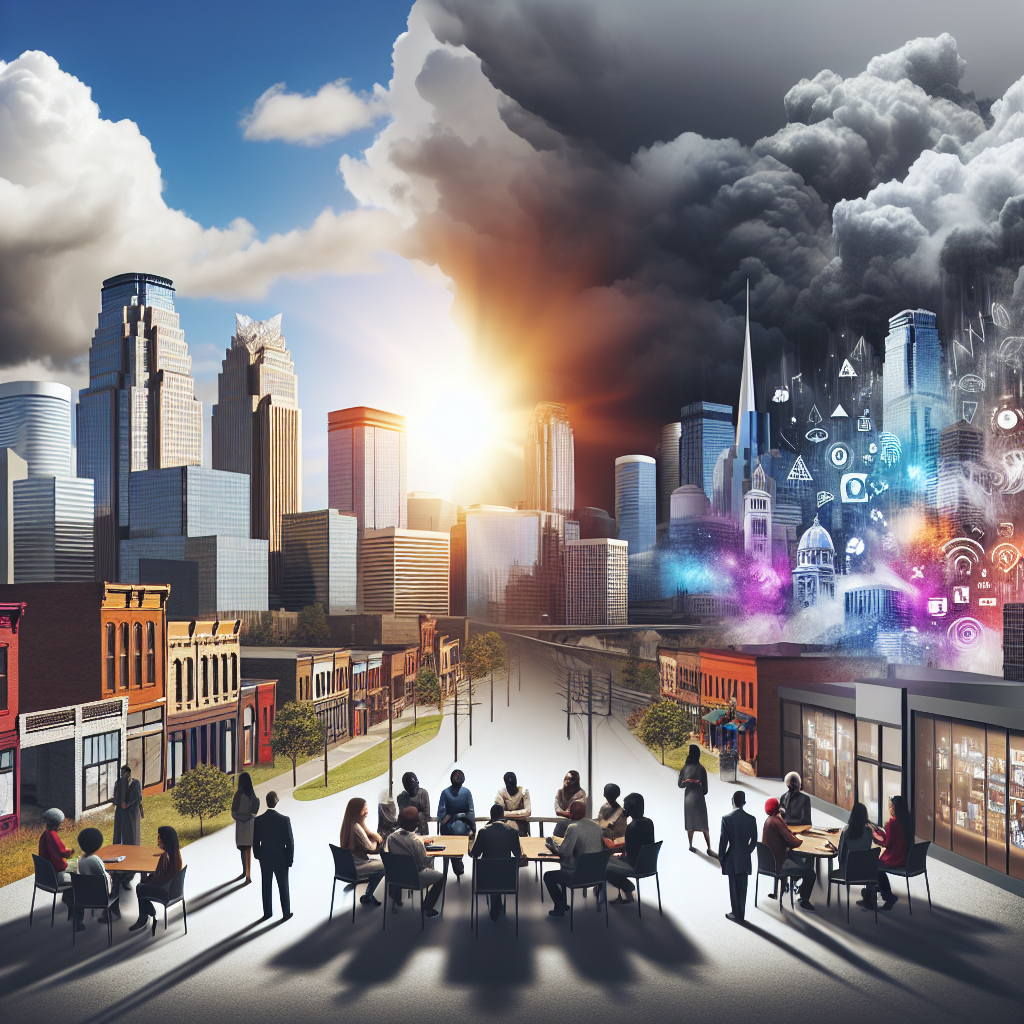
In the aftermath of high-profile incidents that have placed Minneapolis at the center of national debates over policing and urban crime, a new wave of right-wing influencers has converged on the city, shaping public perception through viral videos and polarizing commentary. As reported in the Wired article “Right-Wing Influencers Have Flooded Minneapolis” published on Wired.com, online content creators with large conservative followings are using the city as a backdrop for narratives that frame crime, homelessness, and urban decay as evidence of systemic failure under progressive governance.
The article documents how these influencers, many with millions of followers across TikTok, YouTube, and X (formerly Twitter), have increasingly targeted Minneapolis’ most economically distressed neighborhoods to produce content blending supposed on-the-ground journalism with sensationalism. The videos—often featuring footage of individuals in crisis, street encampments, or after-the-fact visits to crime scenes—aim to create an image of lawlessness and dysfunction that aligns with broader political messaging about liberal cities being in decline.
This phenomenon has drawn criticism from local leaders, organizers, and media professionals who argue that the content not only misrepresents the reality on the ground but actively harms the community. Critics say the influencers engage in “disaster tourism,” exploiting suffering for political and personal gain while doing little to engage with the underlying systemic causes of poverty, addiction, or public safety challenges.
The Wired piece highlights the tension between free expression and ethical reporting, especially in the digital age when anyone with a camera and a social media platform can attract mass audiences while sidestepping traditional journalistic standards. By selectively highlighting the most extreme or troubling imagery and offering minimal context, the influencers often tell a single, alarmist story: that Minneapolis, emblematic of liberal policy failures, is irreparably broken.
Yet the situation on the ground is far more complex. While Minneapolis, like many American cities, does face real challenges related to crime, housing, and the social safety net, civic leaders point to ongoing efforts to reform public safety, expand support for vulnerable populations, and reinvest in historically under-resourced neighborhoods. These longer-term approaches, however, rarely generate the same viral impact as a clipped video of a street confrontation or an abandoned building.
Moreover, the selective coverage brought forth by these influencers risks inflaming political polarization at the national level. By reducing multifaceted urban issues to an ideological narrative, they contribute to a feedback loop in which cities become ideological battlegrounds rather than communities in need of nuanced policy solutions.
As Wired.com’s article suggests, the confluence of social media virality and hyperpartisan content creation is reshaping not only how audiences perceive urban America, but also how public discourse about cities unfolds. Whether this signals a transformation in how media influence shapes public narratives or a new level of complexity in the nation’s culture wars, the consequences for communities like Minneapolis are tangible, immediate, and profound.