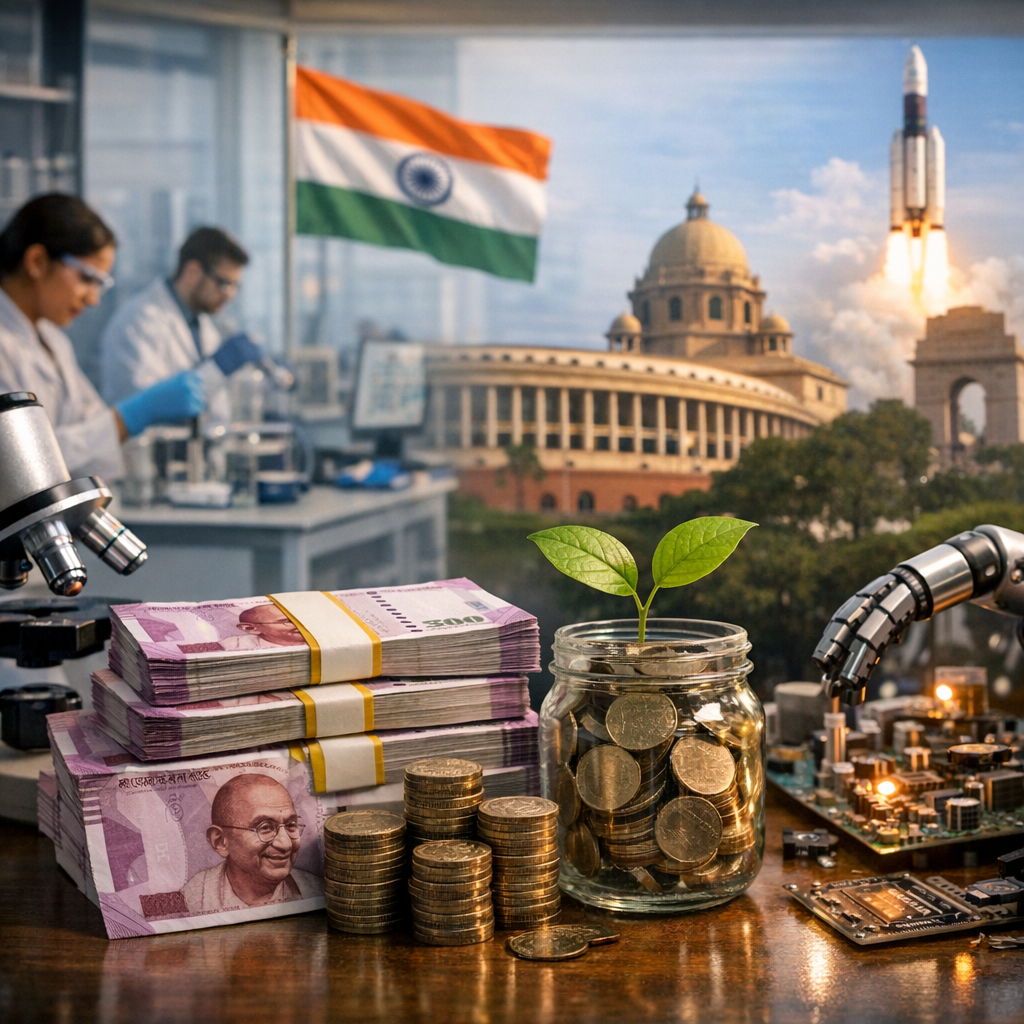
In a bold move aimed at bolstering India’s position in the global semiconductor supply chain, Finance Minister Nirmala Sitharaman on Thursday announced the creation of a Rare Earth Processing Corridor, a key component of the government’s vision to develop indigenous capabilities for chip manufacturing. The initiative was detailed during her Union Budget 2026 presentation and underscores India’s growing ambitions in the realm of high-tech manufacturing.
As reported in “Budget 2026: Nirmala Sitharaman Unveils Rare Earth Corridor to Power India’s Chip Push,” published by The Economic Times, the corridor will focus on the extraction and processing of rare earth elements—critical inputs for semiconductors and a wide range of advanced electronics. India is home to sizable rare earth reserves but has historically lacked the infrastructure for value-added processing, resulting in heavy reliance on imports, particularly from China.
Sitharaman’s announcement positions the corridor as a linchpin of India’s emerging geopolitically driven strategy to pivot from a consumer technology economy to a hub for strategic electronics manufacturing. The corridor, to be established under the aegis of a public-private partnership, will see the government facilitate investments in refining capacity and downstream industries by providing land, regulatory approvals, and financial incentives.
The move aligns with broader global efforts to diversify rare earth supply chains, with India seeking to capitalize on the increasing scrutiny of China’s dominance in this sector. Global chipmakers and defense manufacturers have long voiced concerns about supply chain vulnerabilities tied to the limited number of rare earth processing centers worldwide.
India’s push is not only aimed at strengthening its semiconductor ecosystem, but also at attracting global manufacturers looking for resilient and politically stable supply partners. The corridor is expected to create new opportunities for Indian refiners, metallurgical companies, and technology firms, while reinforcing national security and long-term technological self-reliance.
Analysts note that realizing the corridor’s full potential will require overcoming several challenges, including environmental concerns, technological gaps in processing, and the need for skilled manpower. However, the announcement signals a pivotal shift in India’s industrial strategy, moving beyond traditional sectors and galvanizing efforts in critical and strategic industries.
The Rare Earth Processing Corridor, as outlined in India’s 2026 budget, marks one of the most significant steps yet in the country’s bid to climb the technological value chain. Whether it can convert its natural resource advantage into a sustainable industrial capability remains to be seen, but the initiative is being seen by many as a timely and necessary gambit in the evolving race for tech sovereignty.