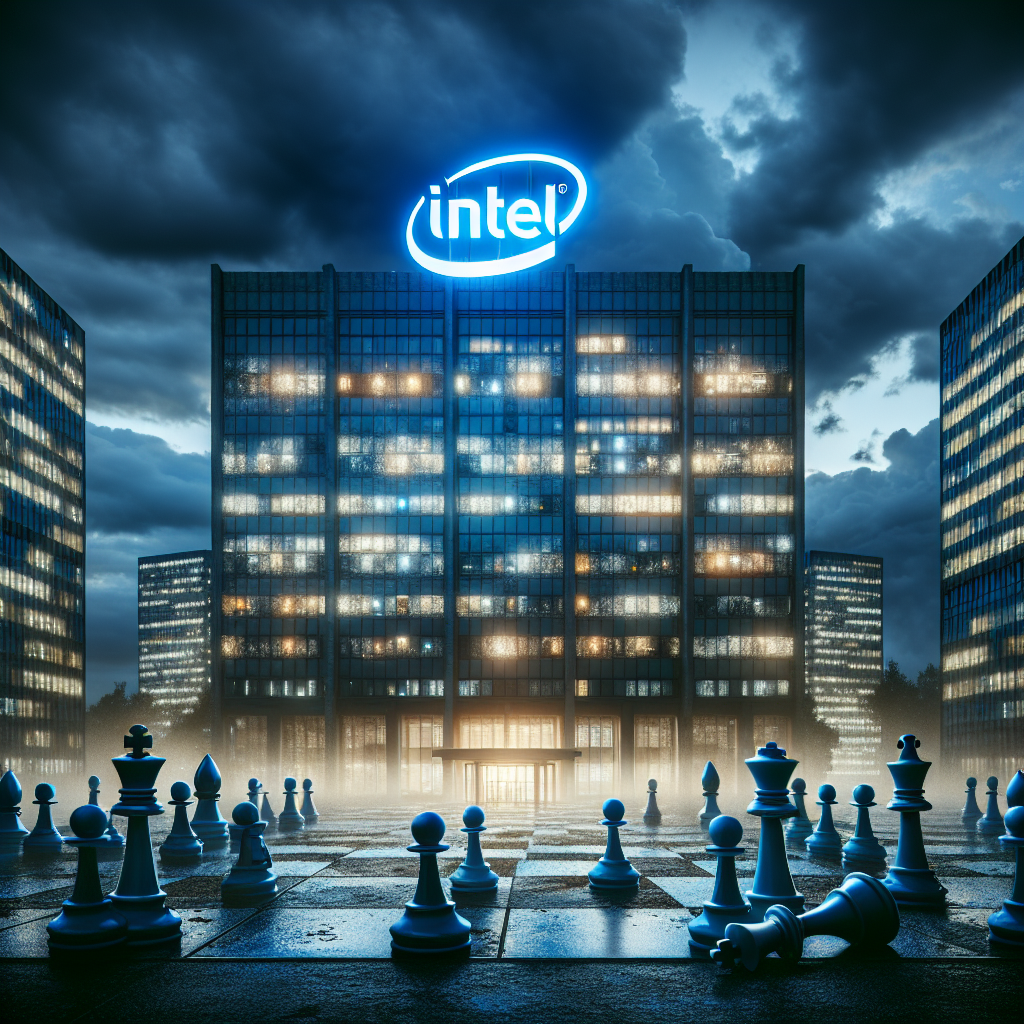
The executives at Intel, the semiconductor giant based in Silicon Valley, have recently confirmed plans for a notable reduction in the workforce, spanning at least 10% of its employees across various business units. The strategy mirrors pressure mounting from ongoing global economic headwinds and a significant stagnation in the market segments crucial to Intel’s operations. These developments highlight a tumultuous period for the chip industry, which has been navigating through supply chain disruptions, swinging consumer demands, and shifts in technological focus.
The downsizing decision by Intel is set to directly affect the company’s diverse workforce units, potentially leading to as many as several thousand job cuts. This move is part of a broader cost reduction effort aiming to trim costs up to $3 billion in 2024, progressing towards a target of $8 billion to $10 billion in annualized reductions by the end of 2025. Such decisive cost-cutting measures are pivotal as Intel endeavors to recalibrate its operational efficiency and refine its strategic focus under the guidance of CEO Pat Gelsinger. Following his appointment in 2021 amid a period of intense scrutiny over Intel’s strategic missteps and market position, Gelsinger’s aggressive realignment strategies underscore efforts to steer the company back toward industry leadership.
Intel’s positioning comes at a critical time when the market dynamics of the semiconductor industry are engulfed in volatility, driven by a post-pandemic adjustment phase. Throughout the pandemic, an unprecedented surge in demand for consumer electronics, bolstered by remote work and learning requirements, resulted in a significant shortage of semiconductors. However, the industry is currently experiencing a stark reversal as consumer demand dampens and inventory levels balloon, pressing companies like Intel to adjust their sails.
Further exacerbating this situation are the geopolitical tensions affecting semiconductor supply chains. Notably, the United States’ tech restrictions against China play a substantial role, with new regulations restricting export to strategic rivals, thereby potentially realigning global supply chains and affecting production strategies for many tech giants including Intel.
Strategically, Intel’s pivot also reflects a broader trend where companies are thrust into enhancing their product line to meet the fierce competition and technological advancements in the sector. As part of this, Intel has not only been streamlining its workforce but also significantly investing in advanced technologies like artificial intelligence and autonomous driving solutions, sectors that promise robust growth potential.
As this restructuring unfolds, the impact on Intel’s workforce is undeniable. The human aspect of such corporate adjustments poses a stark reality for many employees now facing job uncertainty. Beyond the immediate corporate savings, the long-term ramifications of these workforce reductions on company morale and operational capacity remain to be seen.
In conclusion, Intel’s latest maneuvers including workforce reduction and strategic refocus, underscore a desperate fight for survival and dominance in an increasingly competitive and unpredictable global market. As Intel navigates these choppy waters, the tech industry at large watches and learns, adapting to an ecosystem where only the fittest can assure their continuation in the game. This radical reshaping of Intel marks not just a pivot in its corporate strategy, but a beacon of broader market realignments expected as the tech world grapples with future uncertainties.