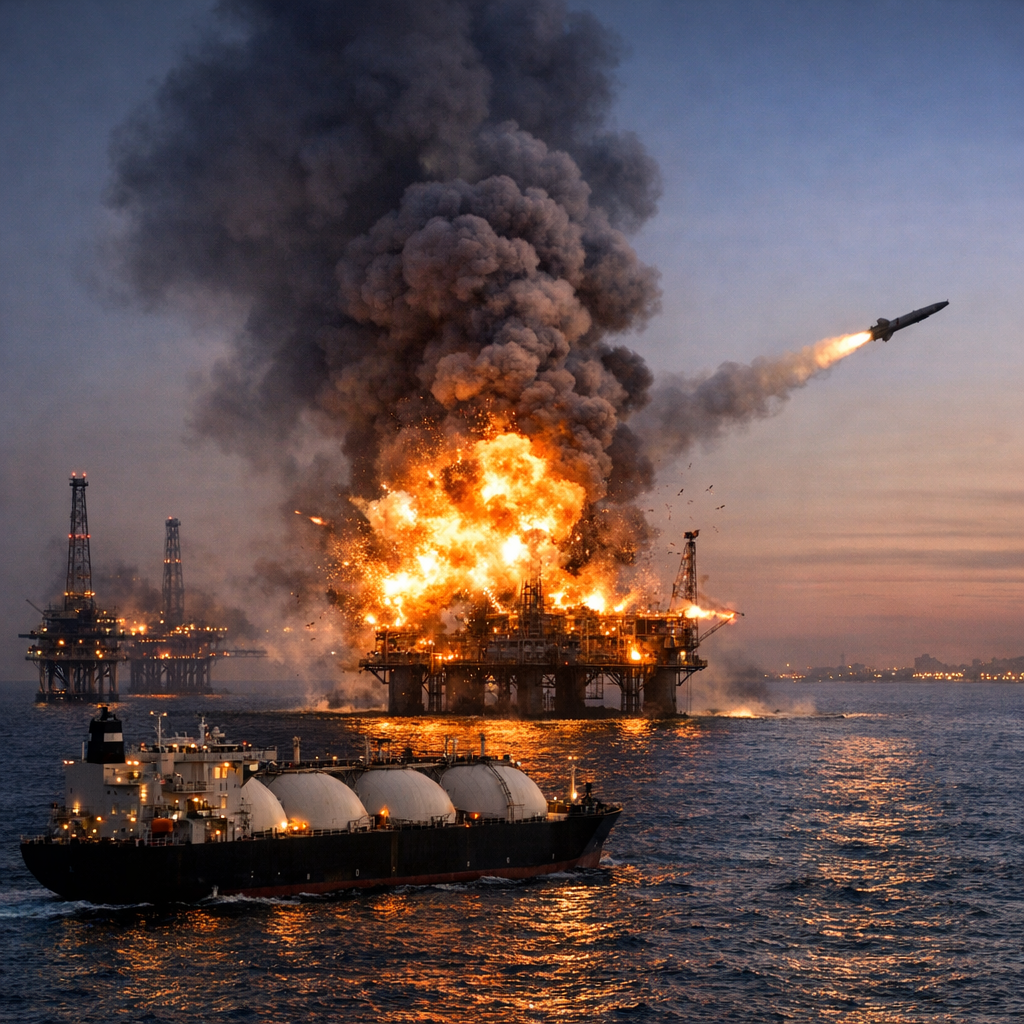
Tensions in the Gulf have escalated sharply after Iran reportedly struck a gas field in Qatar, marking a significant expansion of hostilities following an earlier attack on the South Pars field. The developments, first reported in a video piece titled “War enters dangerous phase: Iran strikes Qatar gas field after South Pars attack, US denies role” published by the Economic Times, signal a widening regional crisis with potential global energy implications.
According to the report, the latest strike targeted infrastructure linked to one of the world’s most critical energy hubs. The South Pars field, shared between Iran and Qatar, accounts for a substantial portion of global natural gas production. Any disruption to this region is likely to reverberate across international energy markets already strained by geopolitical uncertainty.
Iran’s reported move to extend strikes into Qatari territory represents a notable escalation, raising concerns that the conflict is no longer confined to isolated exchanges but may be entering a broader and more dangerous phase. The attack follows earlier damage to facilities on the Iranian side of the shared field, which Tehran appears to attribute to external actors.
The United States has denied any involvement in the initial strike on South Pars, a claim highlighted in the Economic Times coverage. Washington’s rejection of responsibility underscores the delicate geopolitical balancing act now underway, as global powers seek to avoid direct entanglement while also attempting to stabilize a rapidly deteriorating situation.
For Qatar, one of the world’s leading exporters of liquefied natural gas, the implications are significant. The country has invested heavily in infrastructure designed to ensure steady supply to Europe and Asia, particularly amid efforts to reduce dependence on other energy sources. Any sustained disruption could tighten global supply chains, drive price volatility, and intensify competition for alternative energy shipments.
Regional analysts warn that the symbolic importance of targeting shared energy infrastructure cannot be overstated. Such facilities have traditionally been viewed as mutually beneficial and therefore relatively insulated from direct confrontation. A shift away from that precedent may signal a willingness among involved parties to accept broader economic fallout in pursuit of strategic objectives.
Diplomatic channels are reportedly active, though there has been no clear indication that immediate de-escalation is likely. The lack of clarity surrounding attribution for the initial South Pars attack further complicates efforts to contain the situation, as competing narratives risk fueling retaliatory measures.
As the situation develops, the intersection of military action and energy security is becoming increasingly acute. The events described in the Economic Times report suggest that the conflict may be entering a phase where economic infrastructure is no longer off-limits, raising the stakes for both regional actors and the global community.