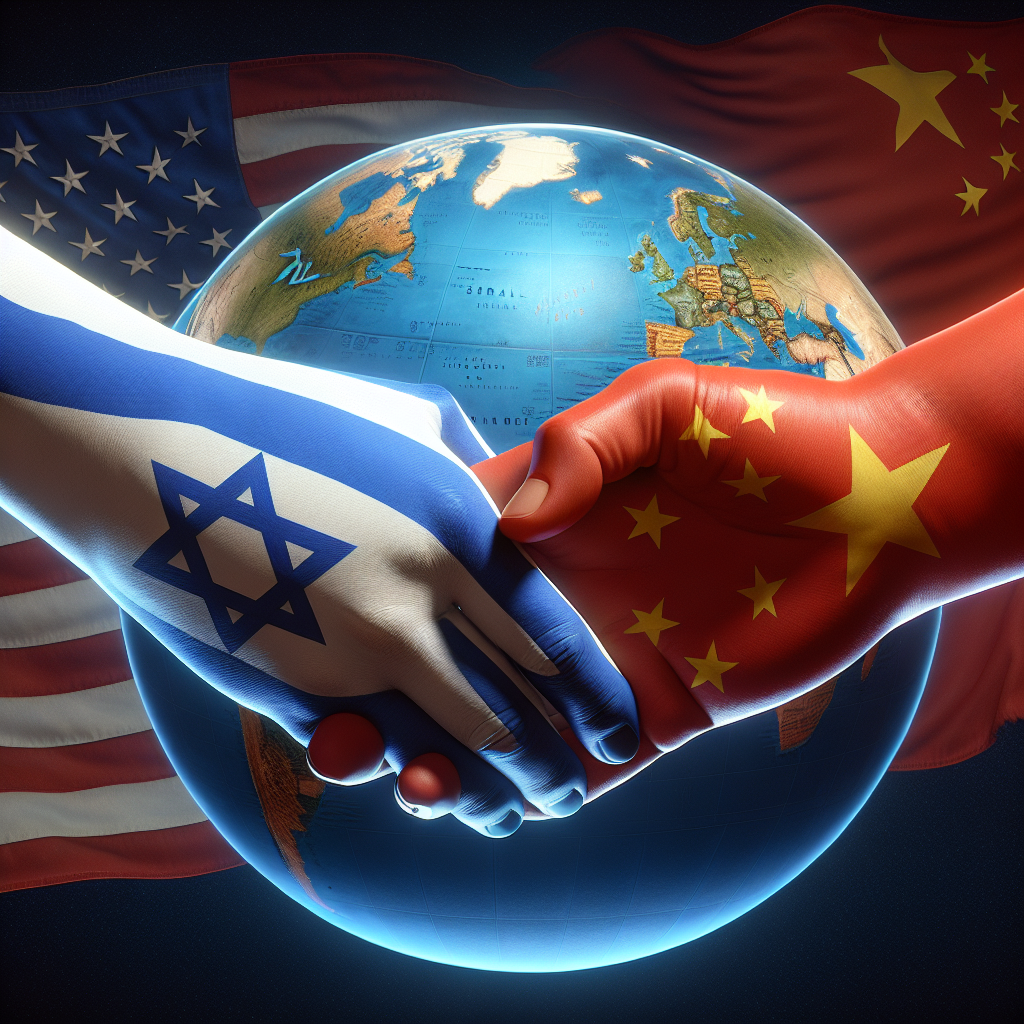
In an informative article recently published on CTECH by Calcalist under the heading “Israel-China Trade Relations Continue to Flourish in spite of US Concerns,” amidst ongoing geopolitical tensions and trade diplomacy intricacies, Israel continues to see a blooming of its trade exchanges with China. This trend persists despite the clear disquiet expressed by its closest ally, the United States, raising complex questions about the balance of international relations in a polarized global environment.
Israel has historically maintained robust trade dynamics with China, one of its most significant trading partners. In recent years, this partnership has seen exponential growth, with China heavily investing in various sectors of the Israeli economy, including technology and infrastructure. Notably, Chinese firms have taken part in significant projects such as the construction of the Tel Aviv Light Rail and the expansion of the Haifa port, pivotal both for domestic needs and broader geopolitical implications.
However, this flourishing economic relationship brings its own set of challenges, particularly with the intricate dance of diplomatic alignments that Israel must navigate. The U.S. has voiced repeated concerns regarding the strengthening ties between Israel and China, emphasizing potential security risks and strategic implications. These concerns are part of a broader strategy of the U.S. to mitigate Chinese influence globally, especially in critical technological and infrastructural spheres.
Despite these geopolitical undercurrents, the trade between Israel and China has surged, underscoring a complex interdependency that transcends straightforward diplomatic alliances. In 2022, bilateral trade volumes were robust, showing an increment which emphasizes the depth of the partnership. For Israel, China represents a vast market for its technology-driven sectors, whereas for China, Israel is a crucible of innovation and technological advancements, which are valued highly by Beijing.
Israeli policymakers are thus faced with the challenging task of balancing their strategic and economic interests. The stakes involve not just direct economic benefits but also the broader implications of their global strategic positioning. As the U.S. continues to view China’s international ventures through a lens of strategic competition, Israel’s engagements with China could potentially impact its relations with the U.S., affecting everything from defense cooperation to diplomatic backing.
Moreover, the situation encapsulates larger global trends where nations are increasingly finding themselves having to negotiate their local economic interests in the context of global power shifts. The U.S.-China rivalry underscores a broader thematic shift in international relations which influences global trade policies, technological cooperation, and geopolitical alliances.
The ongoing developments mark a critical period for Israel, as it navigates these complex waters. The decisions made today regarding its relationships with global superpowers like China and the U.S. will likely have long-lasting effects on its international stance, economic health, and security architecture.
In sum, while the economic incentives of engaging with China are clear, the broader geopolitical implications are profound and warrant careful consideration. As Israel continues to expand its trade horizons with China, it also faces the intricate challenge of aligning its strategic interests with those of its traditional allies, particularly the U.S., in an increasingly complex and multipolar world. The situation remains dynamic, with developments worth close monitoring as they unfold.