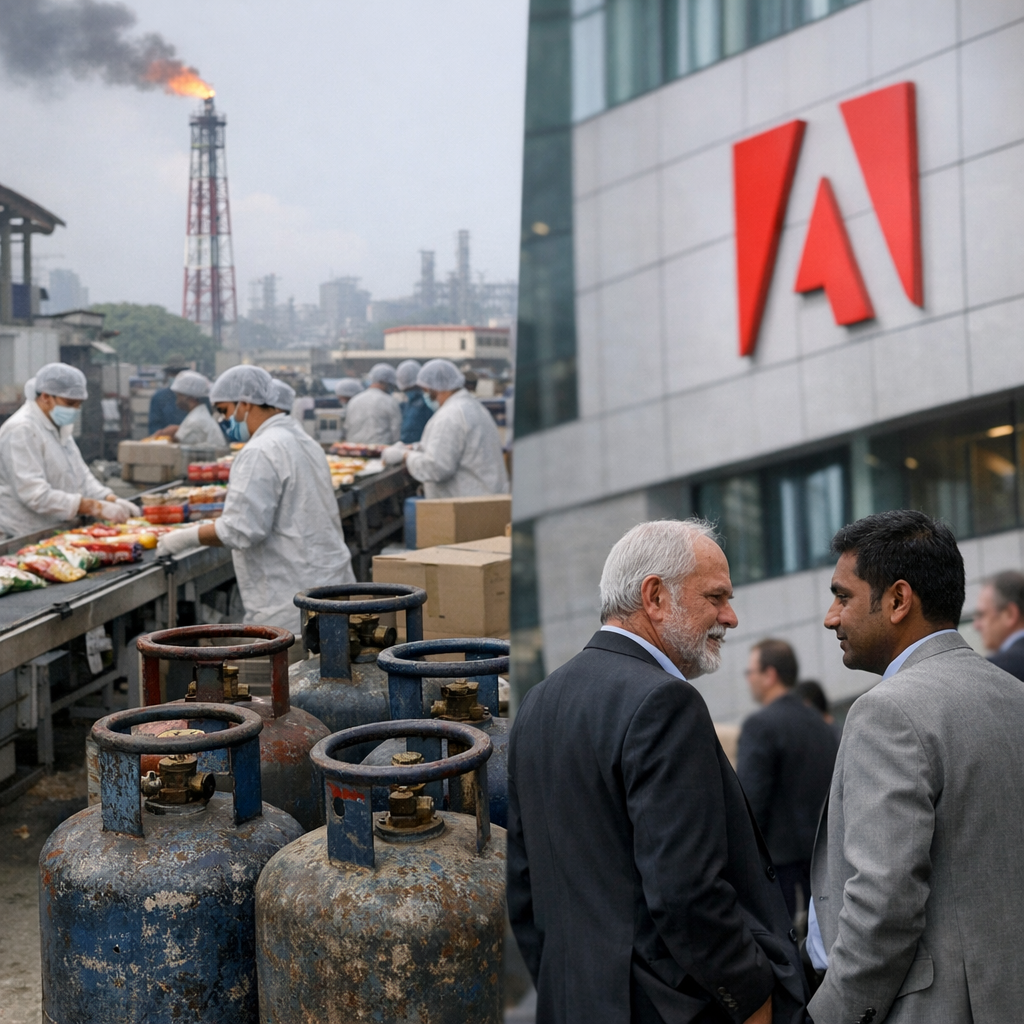
A tightening supply of liquefied petroleum gas (LPG) is beginning to ripple through India’s packaged food sector, creating production disruptions and cost pressures for several manufacturers that depend on the fuel for large‑scale cooking and processing. At the same time, developments in the global technology industry — including leadership changes at a major software company — are adding to a week of consequential business news highlighted in the Economic Times’ technology briefing.
In an article titled “LPG shortage hits packaged food; Adobe CEO to exit,” published by the Economic Times on its website as part of the Tech Top 5 newsletter, the newspaper reported that several packaged food producers have been grappling with constraints in the supply of commercial LPG cylinders. The shortage has affected firms that rely heavily on gas-based heating systems in factories producing snacks, ready-to-eat meals, and other processed foods.
Industry executives cited in the report said that LPG plays a central role in many manufacturing facilities because it offers consistent heat and relatively simple infrastructure compared with other fuels. When supplies tighten, factories must either slow output or switch to costlier alternatives such as diesel or electric heating, both of which can disrupt production planning and margins. Smaller manufacturers, with limited bargaining power and fewer backup systems, are particularly vulnerable to sudden supply gaps.
The situation arrives at a time when consumer demand for packaged food in India remains robust, supported by urbanization and the growing popularity of convenient meal options. Any sustained fuel supply constraint could therefore reverberate across distribution chains, potentially leading to delays, higher logistics costs, or incremental price increases for consumers if companies choose to pass on rising production expenses.
Alongside the supply-chain issue, the Economic Times article also drew attention to possible leadership changes at Adobe, one of the world’s largest software companies. According to the report, the company is preparing for a leadership transition that could eventually lead to the departure of its long-serving chief executive, Shantanu Narayen. While Adobe has not formally detailed the timing or structure of any transition, the discussion around succession reflects broader governance and strategic planning across major technology firms navigating rapid shifts in artificial intelligence and digital content tools.
Narayen has led Adobe since 2007, overseeing the transformation of the company from a traditional software licensing business into a cloud-based subscription powerhouse built around services such as Creative Cloud and Document Cloud. Under his tenure, Adobe has expanded its presence in digital marketing, enterprise software, and generative AI technologies.
Together, the developments underscore how disruptions in both physical supply chains and corporate leadership structures can influence industries that span manufacturing and technology. As the Economic Times article highlights, pressures on fuel availability in India’s food manufacturing ecosystem and leadership shifts within global tech giants illustrate the diverse challenges companies face while navigating volatile markets and evolving technological landscapes.