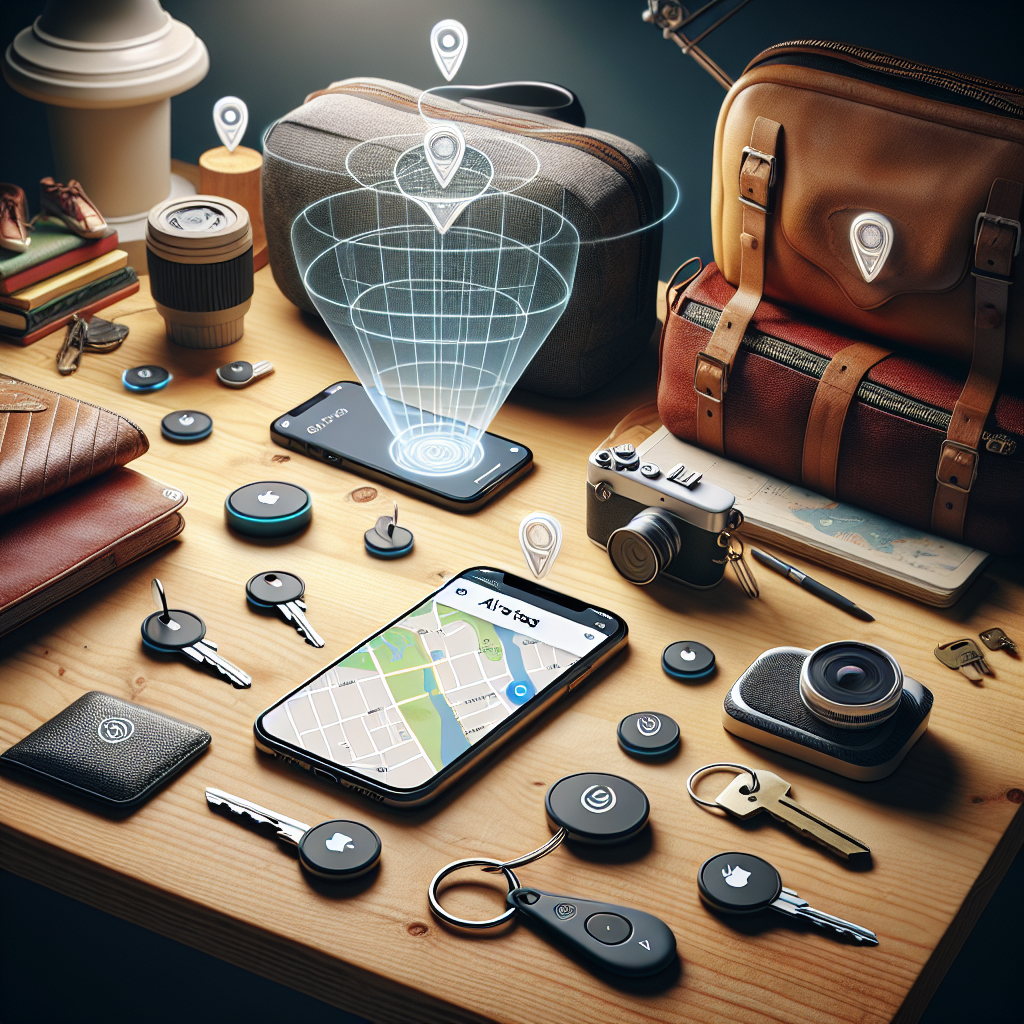
As personal tech continues to evolve and integrate more deeply into everyday life, tracking devices like Apple’s AirTags are becoming indispensable tools for those seeking to keep tabs on everything from luggage to car keys. A recent guide published by StartupNews.fyi under the title “How to Get the Most Out of Apple AirTags: A Comprehensive User Guide” provides valuable insights into maximizing the potential of these compact devices, underlining both their practical applications and the technical nuances that users should be aware of.
Apple introduced AirTags as part of its growing ecosystem of location-aware tools, capitalizing on its vast Find My network to offer precision tracking across wide geographic ranges. The article from StartupNews.fyi offers a grounded, in-depth walkthrough of how the devices can be employed most effectively, emphasizing scenarios such as travel, daily commuting, and pet tracking.
A standout feature of the AirTags, according to the guide, is their use of ultra-wideband (UWB) technology, which allows for precise directional guidance when you’re within Bluetooth range of the tagged item. This feature, combined with the larger community-driven location reporting made possible by the millions of Apple devices worldwide, means that lost items can often be located even after they’ve traveled significant distances.
The guide stresses the importance of proper setup and understanding privacy controls, noting that Apple has proactively built features into the AirTags to prevent unauthorized tracking—an issue that has raised concerns since their launch. Users are encouraged to monitor notifications for unknown AirTags traveling with them, a protective measure that is uniquely enabled by Apple’s ecosystem.
One of the more practical recommendations in the guide is the use of customized names and icons to make it easier to identify multiple AirTags. This simple organizational step can streamline the process of locating lost objects, especially for users who travel frequently or manage many personal or work-related items.
Battery life also receives attention. While the AirTag uses a standard CR2032 coin cell battery and boasts a lifespan of roughly one year, the guide advises routine checks via the Find My app to ensure continued functionality. The battery replacement process is straightforward, though some newer CR2032 models with bitter coatings may not work correctly with AirTags due to contact interference.
StartupNews.fyi’s guide also touches on third-party accessories and protective cases, highlighting how options from both Apple and other manufacturers can improve functionality or help adapt the device to specific use cases, such as attachment to pet collars or integration into wallets.
While Apple’s AirTags are not a panacea for lost items, the StartupNews.fyi article lucidly demonstrates how, with proper understanding and usage, these small devices can provide significant peace of mind. As concerns about data privacy and surveillance persist in the digital age, Apple’s attempts to thread the needle between helpful tracking capabilities and user safety continue to find a willing audience among its loyal customer base.
The guide ultimately positions AirTags not just as gadgets, but as tools for maintaining order in increasingly complex personal and professional lives. For consumers considering how to make the most of such technology, StartupNews.fyi’s comprehensive approach provides a timely and detailed roadmap.