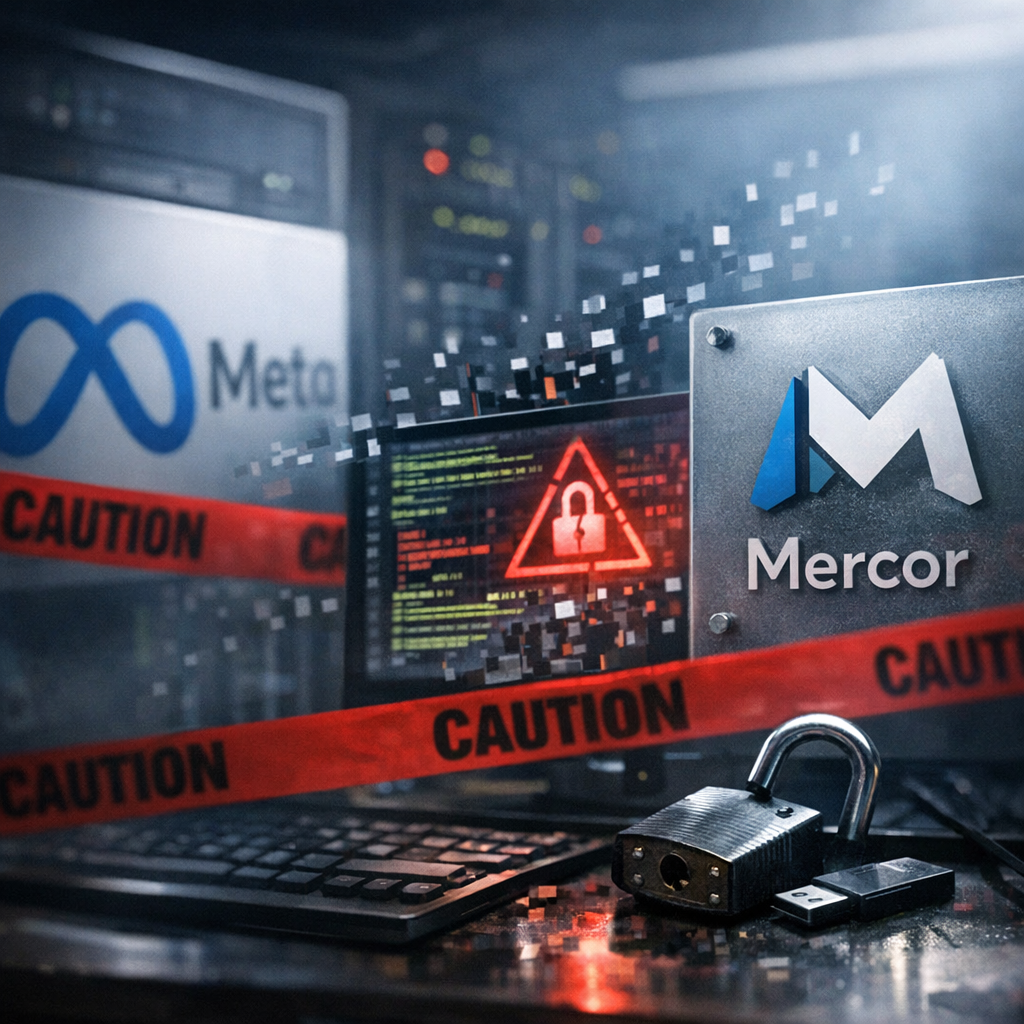
Meta has suspended its collaboration with recruiting startup Mercor after a data breach raised concerns about the exposure of sensitive information related to artificial intelligence development, according to reporting by Wired in its article “Meta Pauses Work With Mercor After Data Breach Puts AI Industry Secrets at Risk.”
The decision underscores growing anxiety across the technology sector about the security of proprietary data as competition in AI intensifies. Mercor, a lesser-known firm specializing in AI-driven hiring tools, had been working with Meta on staffing and talent identification, drawing on datasets that potentially intersect with confidential internal projects.
According to Wired, the breach involved unauthorized access to systems that may have contained information tied not only to Mercor’s own operations but also to its corporate partners. While the full scope of the compromised data has not been publicly disclosed, the possibility that sensitive details about AI research initiatives could have been exposed prompted swift action from Meta.
Meta’s move to halt engagement reflects a broader industry shift toward stricter oversight of third-party vendors. As major technology companies race to develop increasingly advanced AI systems, even indirect leaks of information—such as hiring patterns, project descriptions, or internal tooling references—can reveal strategic priorities.
Mercor has acknowledged the incident and said it is investigating the breach, while taking steps to secure its infrastructure. The company has not indicated whether external actors targeted specific client-related data or whether the exposure was the result of a broader vulnerability.
The episode highlights a persistent tension in the AI ecosystem: firms rely on a network of specialized partners and startups to move quickly, yet each additional link in that chain introduces new security risks. Industry analysts note that recruitment platforms, in particular, can serve as unexpected vectors for sensitive information, given their access to resumes, job descriptions, and candidate evaluations tied to cutting-edge technologies.
Regulatory scrutiny may also intensify as a result. Governments have already begun examining how AI companies manage data security and protect intellectual property, and incidents like this are likely to reinforce calls for clearer standards around vendor risk management.
For Meta, the pause appears to be a precautionary measure rather than a permanent severing of ties. However, it sends a signal to the broader market that even relatively small security lapses can carry significant consequences in a field where competitive advantage hinges on closely guarded innovations.
As Wired’s reporting makes clear, the breach extends beyond a single company’s misstep, touching on systemic vulnerabilities that could shape how partnerships in the AI industry are structured in the future.