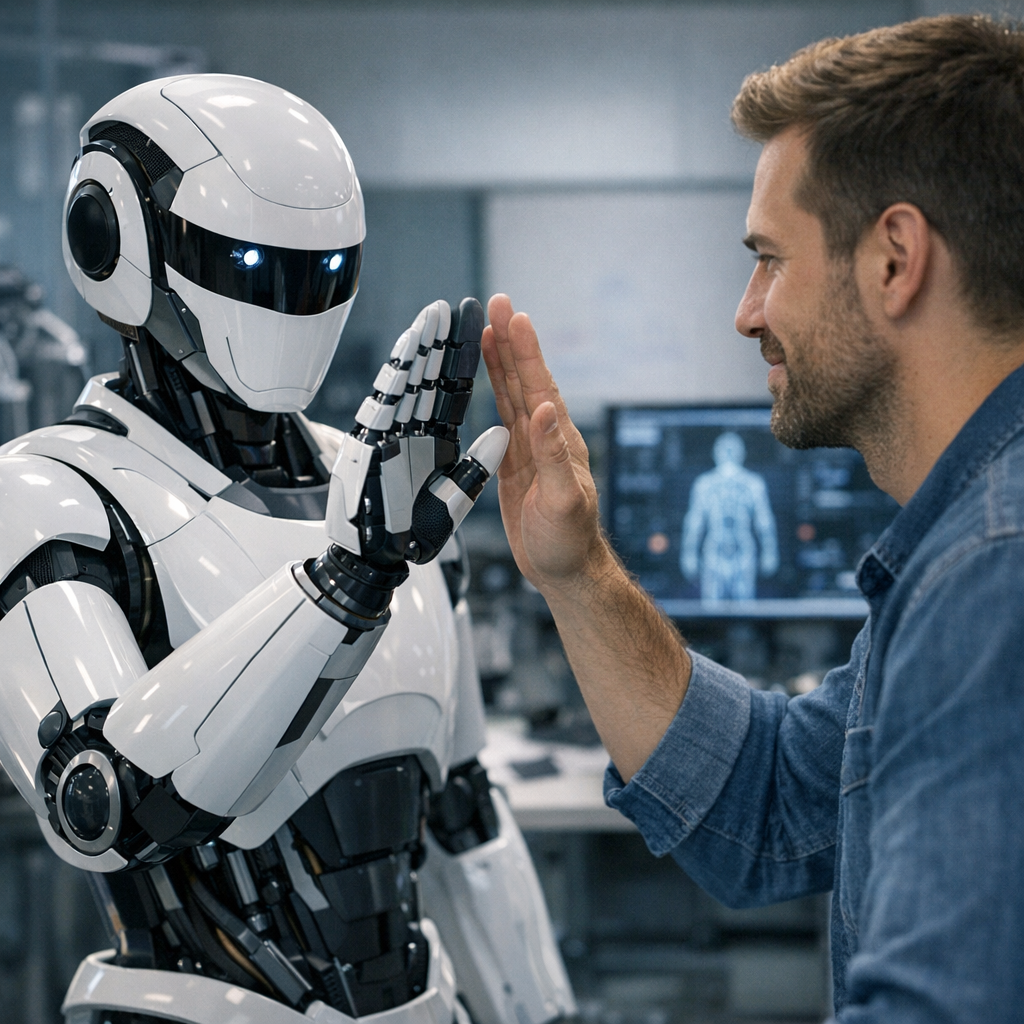
A new line of research into human–robot interaction is beginning to blur the boundaries between machine behavior and social intelligence, according to a report published by Tech Xplore titled “MirrorBot: Robot behavior designed to foster human connection.”
The article describes a system developed by researchers that enables robots to subtly mirror human behavior—an approach rooted in well-established psychological principles showing that people tend to feel more comfortable and connected when their gestures, tone, or posture are reflected back to them. Known as “MirrorBot,” the system is designed not to mimic overtly, but to reproduce human cues in a restrained and context-aware manner, fostering a sense of rapport without triggering discomfort.
Rather than relying solely on preprogrammed responses, the robot uses real-time sensory input to interpret human actions such as head movements, speech cadence, and body orientation. These signals are then processed through algorithms that determine how and when to mirror them with slight delays or variations, aiming to create a natural interaction flow. Researchers emphasized that timing and subtlety are critical; excessive or immediate mimicry risks appearing mechanical or unsettling.
The significance of this approach lies in its potential applications across healthcare, education, and service industries, where trust and engagement are essential. For example, assistive robots working with elderly patients or individuals with cognitive impairments could use mirroring behaviors to create a comforting presence and improve communication outcomes. Similarly, educational robots could enhance student attention and participation by establishing a more intuitive social connection.
The Tech Xplore report notes that early trials indicate participants perceive MirrorBot as more empathetic and socially competent compared to conventional robots. Test subjects reportedly engaged longer and were more responsive during interactions, suggesting that even minimal behavioral alignment can influence human perception.
At the same time, the development raises broader questions about the ethical use of socially adaptive machines. If robots can intentionally shape human emotional responses through behavioral mirroring, concerns emerge around manipulation, transparency, and consent. Researchers involved in the project acknowledge these issues, stressing the importance of clear guidelines to ensure such technologies are deployed responsibly.
The work reflects a broader shift in robotics from task-oriented functionality toward social integration, where success is measured not only by efficiency but by the quality of interaction. As machines increasingly enter everyday environments, the ability to communicate in ways that feel intuitive and human-like may become as important as their technical capabilities.
While MirrorBot remains an experimental system, its underlying principles point to a future in which robots are not just tools, but participants in social environments—designed, in part, to understand and reflect the people they serve.