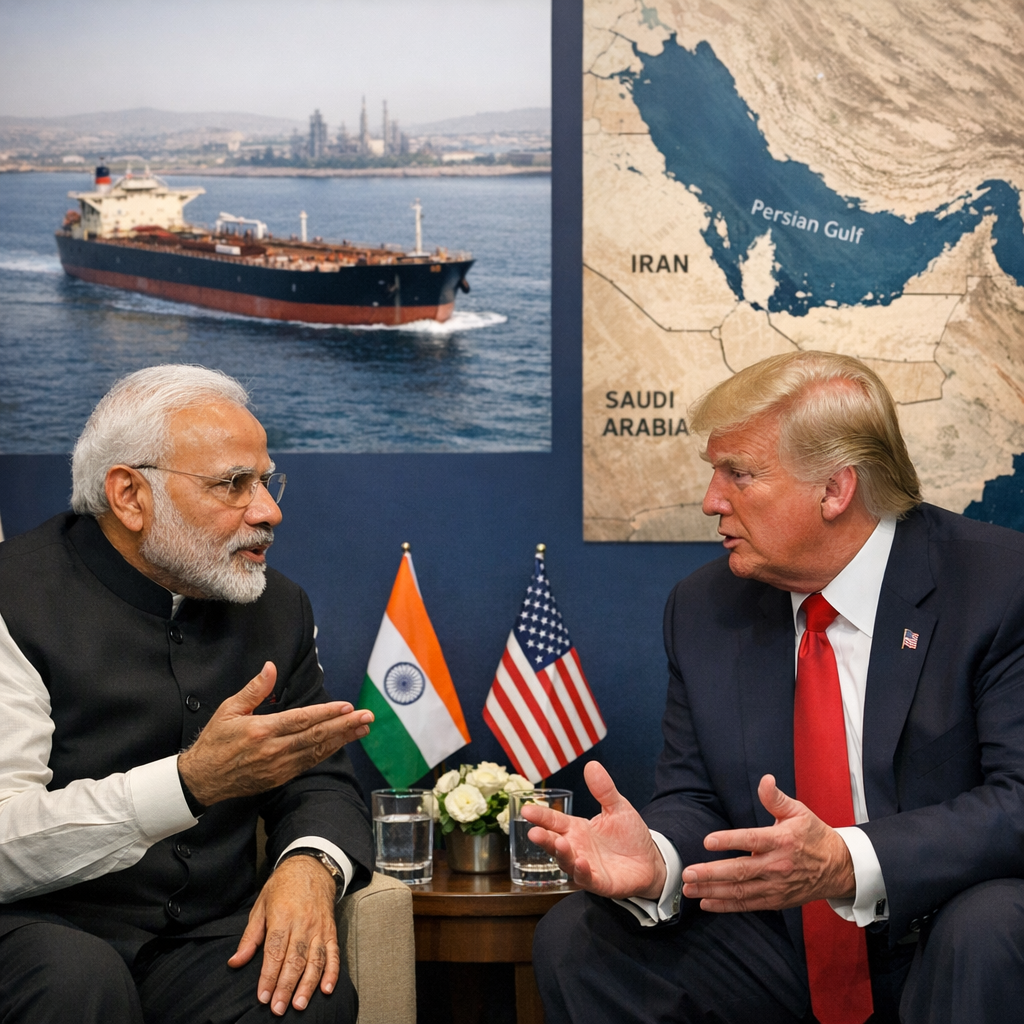
Indian Prime Minister Narendra Modi and former U.S. President Donald Trump held discussions focused on escalating tensions in the Middle East and the strategic importance of the Strait of Hormuz, according to a report published by The Economic Times titled “Iran war: PM Modi, Trump hold talks to discuss Middle East and Strait of Hormuz situation.”
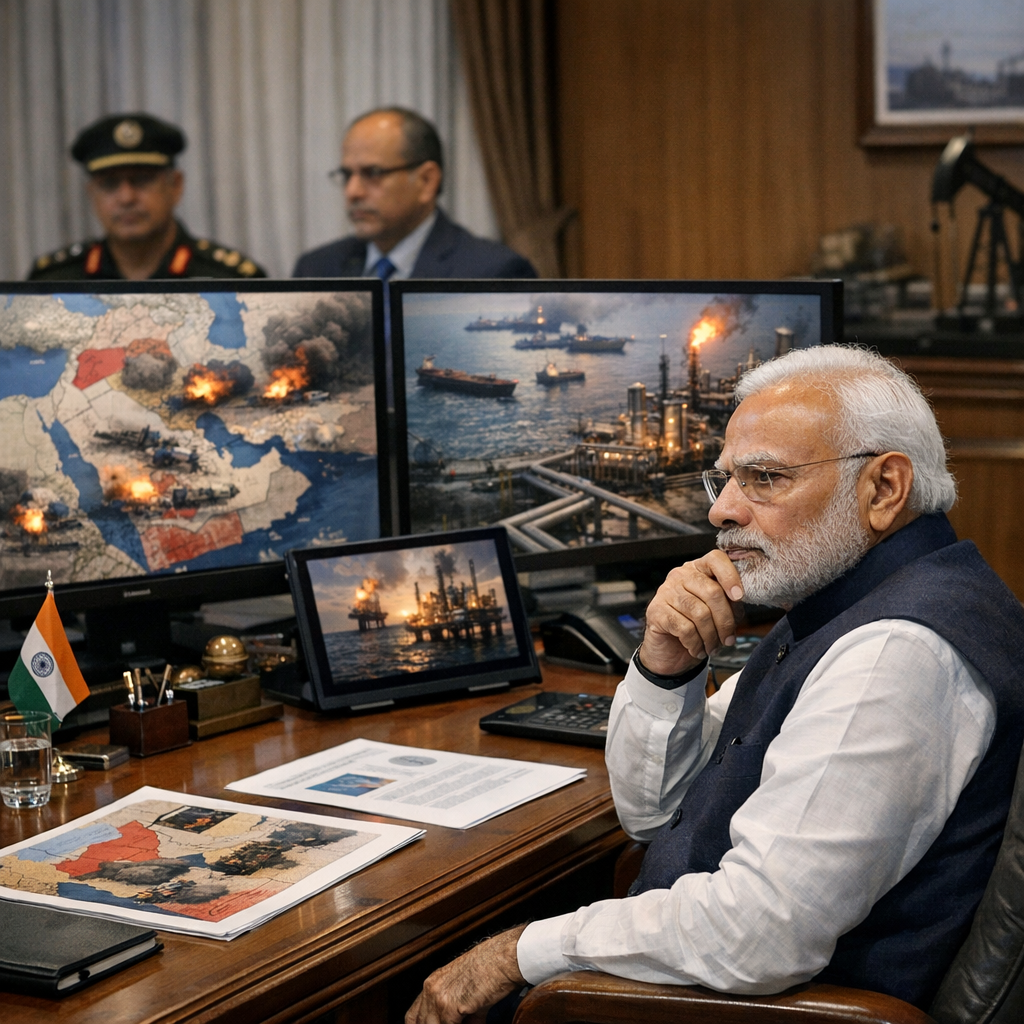
The report comes amid heightened geopolitical uncertainty in the region, with global attention fixed on the potential implications of instability involving Iran. The Strait of Hormuz, a narrow but critical maritime chokepoint through which a significant share of the world’s oil supply passes, remains central to concerns over energy security and global trade.
According to The Economic Times, the conversation between Modi and Trump underscored shared concerns about maintaining stability in the region and ensuring uninterrupted maritime navigation. Any disruption in the Strait could have immediate and far-reaching consequences for global energy markets, particularly for countries like India that are heavily dependent on energy imports.
India has historically balanced its strategic relationships in the Middle East while prioritizing energy security and safeguarding its large diaspora in the region. The reported dialogue reflects New Delhi’s continued diplomatic engagement at a time when tensions risk escalating into broader conflict.
For the United States, developments in the Gulf carry both strategic and economic implications. While Trump is no longer in office, his continued engagement with international political figures signals ongoing influence in global policy discussions, particularly concerning regions where U.S. interests remain deeply embedded.
Analysts note that any coordinated dialogue between major political leaders on the issue of the Strait of Hormuz indicates the seriousness of the current situation. Even limited disruptions in shipping routes could result in volatility in oil prices, supply chain delays, and broader economic strain.
The report by The Economic Times highlights the urgency with which global leaders are approaching the situation, as diplomatic channels continue to play a critical role in managing tensions and preventing further escalation in a region that remains vital to the global economy.