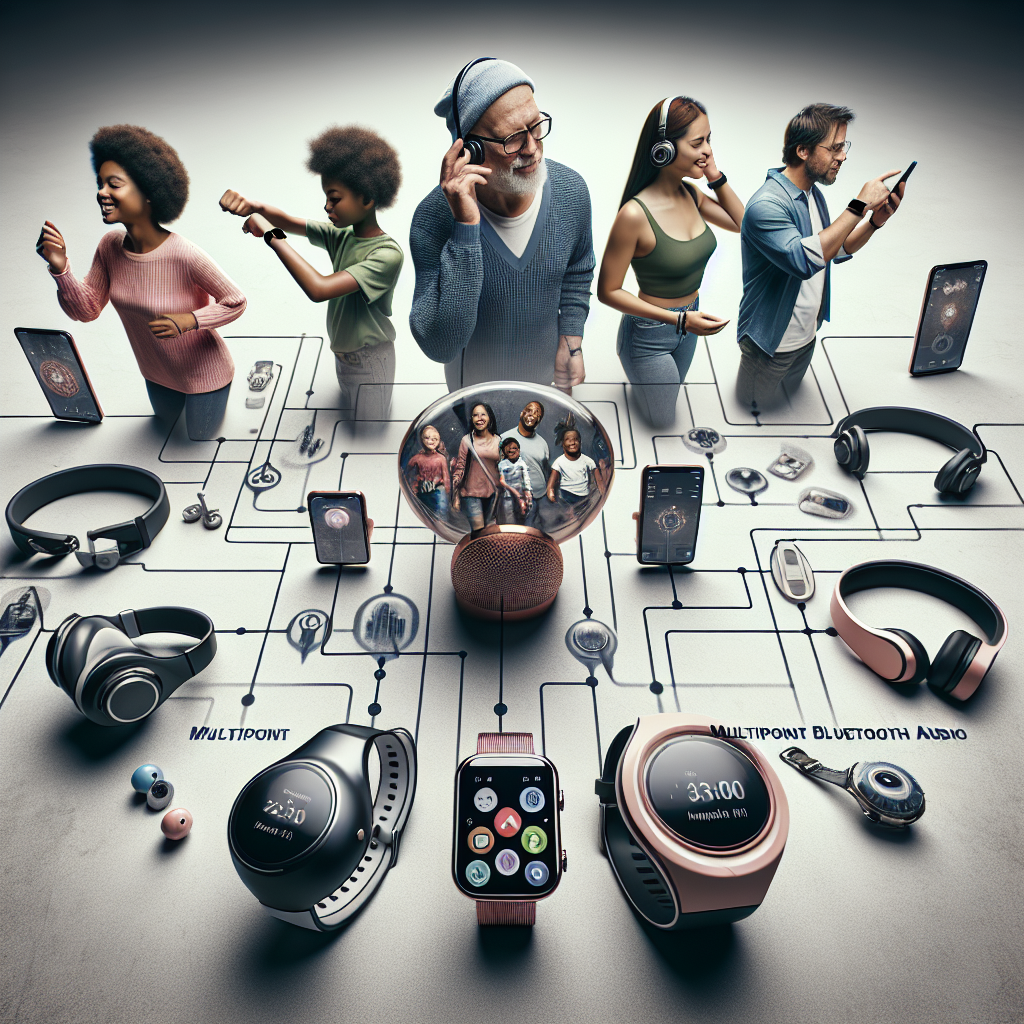
As the demand for seamless connectivity across multiple devices intensifies, Multipoint Bluetooth Audio is emerging as a crucial feature for today’s tech-savvy consumers. In a recent piece titled “Stop Switching Devices Manually—Your Guide to Multipoint Bluetooth Audio,” StartupNews.fyi explores the growing significance of this functionality and how it’s reshaping user expectations for wireless audio products.
Multipoint Bluetooth allows a single headset or audio device to maintain simultaneous connections to more than one source—typically smartphones, laptops, or tablets. This enables users to switch between devices effortlessly, without the need for repeated pairing and unpairing. According to StartupNews.fyi, this advancement addresses one of the most persistent frustrations in personal audio: the inconvenience of manually toggling connections when moving between devices for work, entertainment, or communication.
Originally adopted in enterprise-focused devices, multipoint audio is now making its way into mainstream consumer products. Major tech firms, including Apple, Sony, and Bose, are incorporating this feature into their latest wireless headphones and earbuds. The transition reflects a broader shift toward multi-device ecosystems, particularly in professional environments where users frequently juggle video calls, streaming media, and mobile communication.
The article underscores an important distinction between basic multipoint functionality and more advanced implementations. While standard multipoint allows for dual connections, more sophisticated systems can prioritize audio streams or intelligently switch between sources depending on user behavior. For instance, a headset connected to both a phone and a computer might automatically pause music playback if a call comes in.
Despite the convenience it offers, multipoint Bluetooth technology is not without its limitations. StartupNews.fyi notes that compatibility varies across devices and platforms, and users may encounter connectivity issues or diminished battery performance. Additionally, technical challenges related to Bluetooth’s limited bandwidth and potential latency need to be addressed to improve reliability and audio quality.
Still, industry observers view this evolution as a natural response to how people use technology in increasingly mobile, interconnected ways. As hybrid work models and multitasking become standard, user preferences are shifting toward tools that offer flexibility without sacrificing performance. Multipoint Bluetooth, once a niche consideration, is quickly becoming a baseline expectation.
Through its detailed overview, StartupNews.fyi provides a timely explanation of why this technology matters—and why consumers and manufacturers alike are investing in making it widely accessible. As product differentiation becomes more subtle across brands, such features may soon define how users choose their next pair of headphones or earbuds.