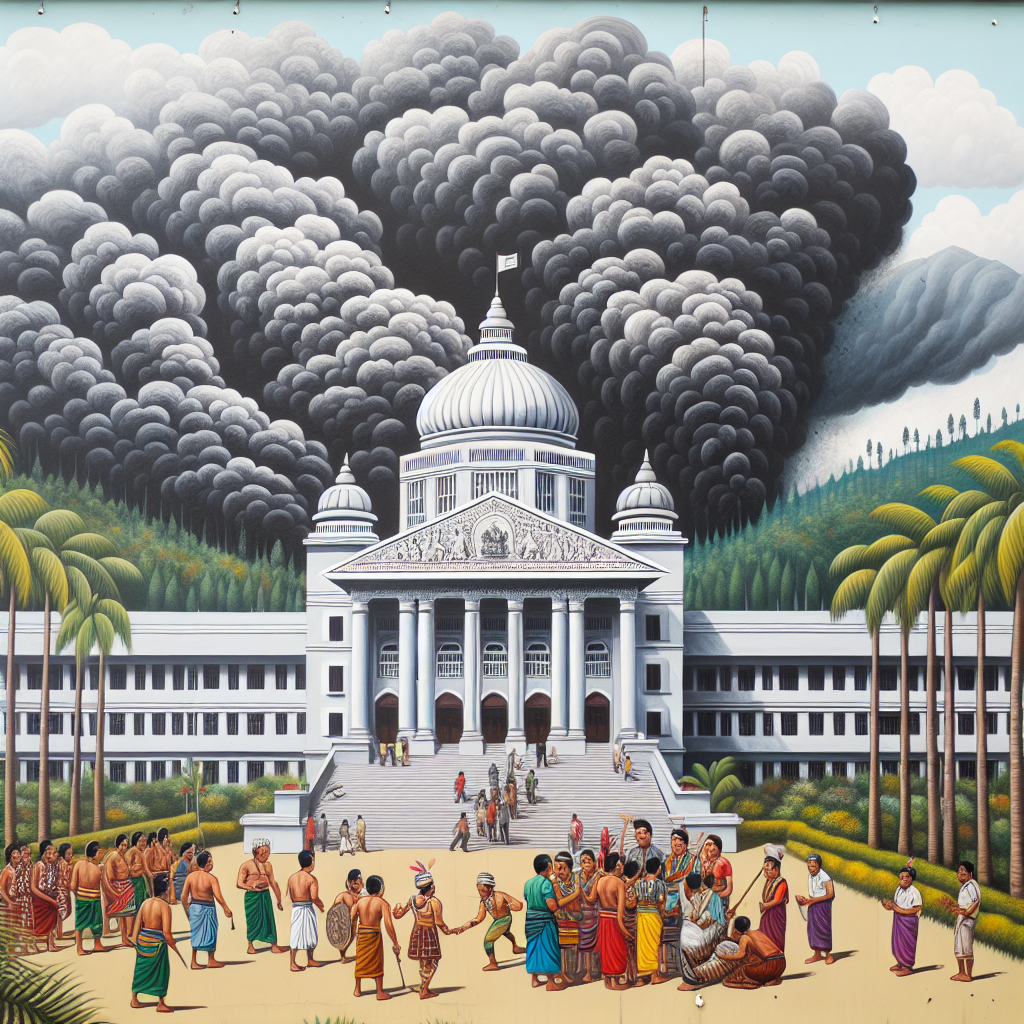
Manipur remains tense following the Bharatiya Janata Party-led National Democratic Alliance’s (NDA) successful completion of a floor test in the state assembly, as reported in the article titled “Manipur on edge as NDA clears floor test amid Kuki-Zo opposition” published by The Economic Times. The political maneuver comes at a time when the northeastern state continues to grapple with deep ethnic divisions and ongoing unrest, particularly among the Kuki-Zo community.
Chief Minister N. Biren Singh secured the confidence of the assembly, reinforcing the NDA’s hold on power. However, the floor test has not quelled the broader disquiet across the state. Instead, it has intensified criticism from tribal groups, especially the Kuki-Zo, who argue that their voices and concerns have been consistently sidelined in the state’s political calculus. Despite no significant disruptions to the legislative process, tensions remain high in many parts of Manipur, where civil society organizations and local opposition have alleged systemic marginalization and neglect.
The political process unfolds against a backdrop of violence and deep ethnic polarization that has plagued Manipur for over a year. Clashes between the Meitei and Kuki-Zo communities have led to numerous casualties, displacement of thousands, and widespread damage to infrastructure and public trust. Many affected areas remain volatile, with heavy security deployments and curfews continuing in several districts to prevent fresh outbreaks.
Tribal leaders and activists have expressed alarm over what they perceive as the state government’s failure to address basic security and humanitarian concerns, particularly in tribal-dominated regions. The NDA’s floor test victory, while technically reinforcing constitutional order, has done little to restore broader public confidence, particularly among communities that feel excluded from decision-making processes.
National observers and rights organizations have urged the Union government to play a more active mediating role to bridge the widening ethnic divide. While the central leadership has voiced support for a return to normalcy, critics argue that concrete, inclusive policy measures are urgently needed to prevent the further erosion of public trust in state institutions.
With political legitimacy now reaffirmed on paper, the question remains whether the state government can translate parliamentary stability into tangible peace and reconciliation on the ground. For the people of Manipur—particularly those in the hills—the pressing issues remain security, justice, and meaningful dialogue. Until such concerns are addressed, the specter of unrest is likely to persist, despite the procedural victory at the state assembly.