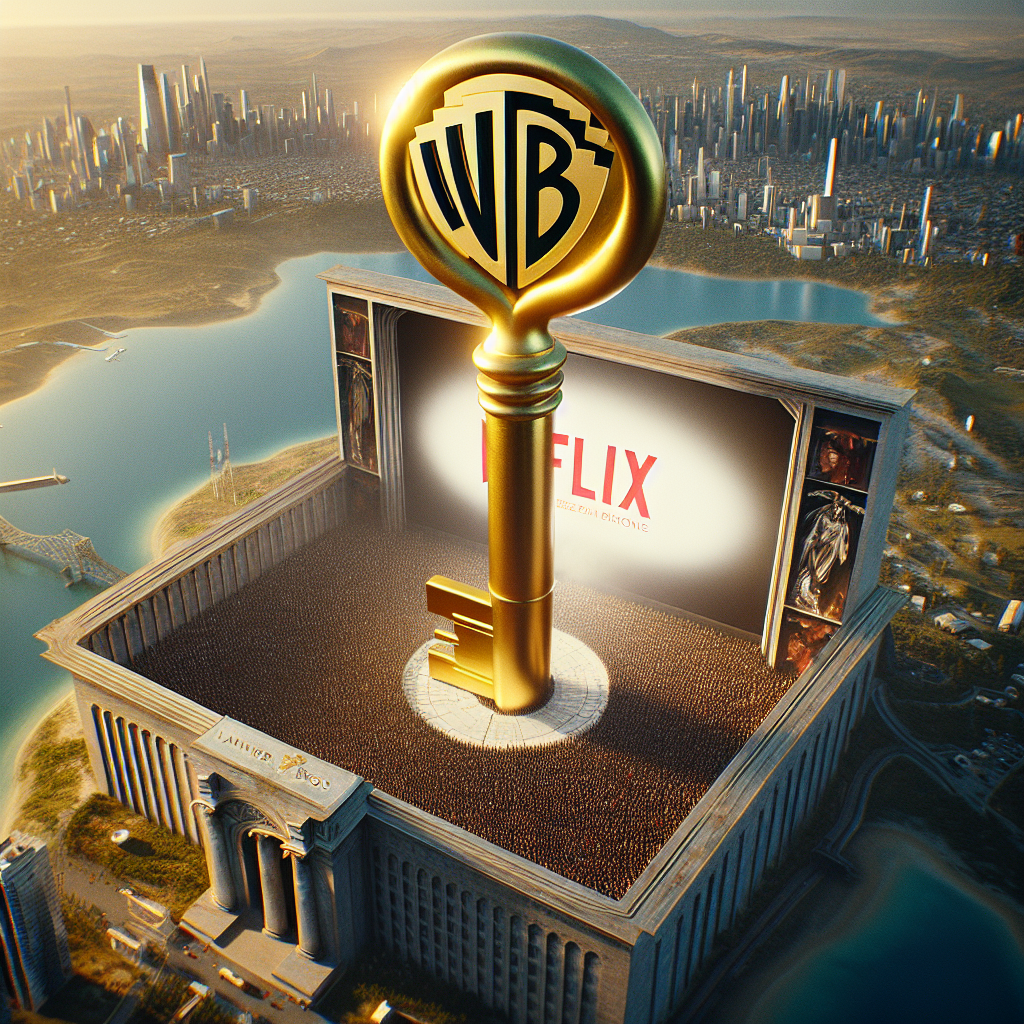
In a seismic shift for the global entertainment industry, Netflix has announced its intent to acquire Warner Bros. for $82.7 billion, according to a report published by Startup News in an article titled “Netflix to Buy Warner Bros for $82.7 Billion.” The move represents one of the largest mergers in media history and signals a bold effort by Netflix to expand its content empire and solidify its position as the dominant player in the streaming landscape amid increasing competition and market saturation.
The proposed transaction, which is subject to regulatory approval, would bring Warner Bros.’s extensive portfolio of intellectual property—ranging from DC Comics to HBO, CNN, and a century’s worth of film and television archives—under Netflix’s already vast digital distribution network. Analysts point to the strategic value of the deal as Netflix seeks to diversify its business model and deepen its control over premium content production, licensing, and global distribution.
For Netflix, this acquisition addresses growing concerns about subscriber growth and retention in the post-pandemic era. Though still the world’s largest streaming platform, the company has faced mounting pressure from rivals such as Disney+, Amazon Prime Video, and Apple TV+, all of which have invested heavily in original content and international expansion. By acquiring Warner Bros., Netflix gains access to a deep well of perennial IP and award-winning storytelling brands, including franchises like Harry Potter, Game of Thrones, and The Matrix.
Conversely, Warner Bros.—a storied legacy studio with a complex corporate history—has been seeking stability in an era of rapid transformation. The studio has undergone several ownership changes in recent years, most recently under the umbrella of Warner Bros. Discovery, and has struggled to maintain cohesion in strategies spanning film, television, and streaming. This merger could offer the creative and operational alignment that Warner Bros. has lacked in recent years, particularly after the mixed performance of its Max streaming platform.
While the acquisition promises clear synergies, it also invites regulatory scrutiny. Antitrust authorities in the United States and abroad are expected to examine the deal closely, especially given concerns about media consolidation and market power. The combined entity would control a significant share of U.S. streaming traffic and prime content licensing, raising questions about competition and consumer choice.
If approved, the merger will have far-reaching implications not only for the entertainment business but also for the broader media ecosystem, touching everything from theatrical releases and cable programming to global streaming models. Legacy studios, independent producers, and tech conglomerates alike will be watching closely to assess how the entertainment hierarchy reshapes itself under the weight of this blockbuster deal.
Neither company has provided a detailed roadmap for integration, and industry observers note that the executional challenges of such a wide-ranging merger—encompassing corporate cultures, production pipelines, and global operations—should not be underestimated. However, the ambitions are unmistakable: with this acquisition, Netflix aims not just to compete, but to redefine what it means to be a global media powerhouse in the 21st century.