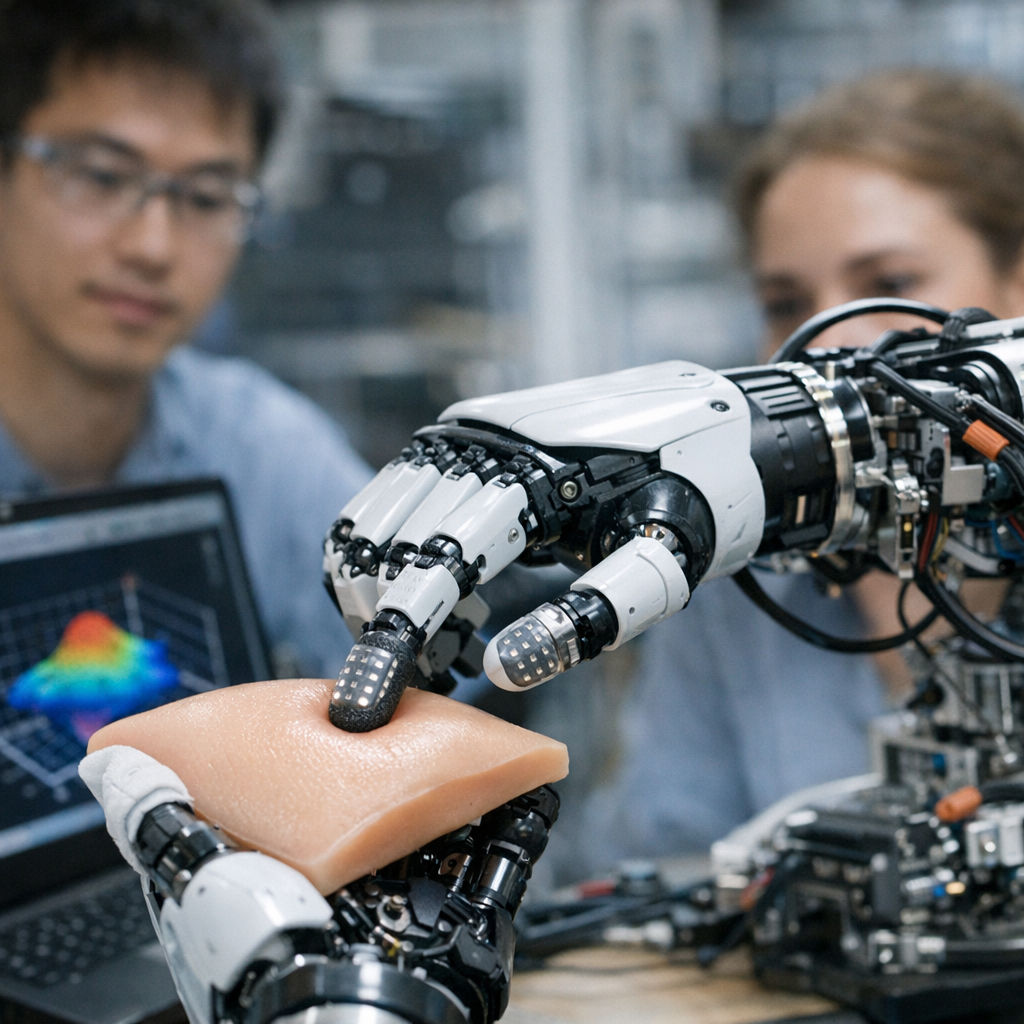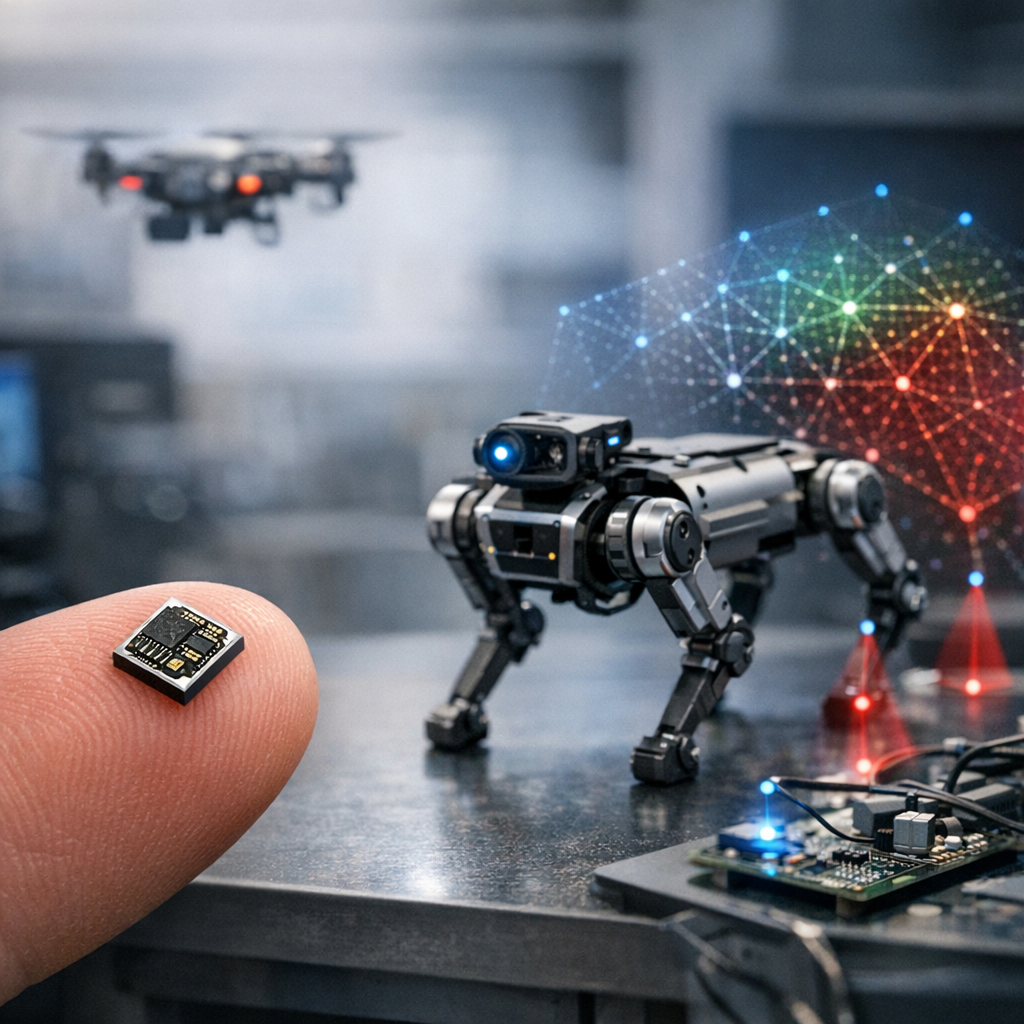
A newly developed sensing chip could significantly expand how robots perceive and track movement in real time, potentially enabling machines to monitor objects across large spaces with far greater precision than is currently possible. The research, described in the article “New chip enables robots to perform 4D tracking from a distance,” published by Tech Xplore, outlines a compact system designed to continuously map motion in three-dimensional space while also capturing changes over time.
Conventional robotic sensing systems often rely on cameras or lidar units to detect and follow nearby objects. While effective in controlled environments, those technologies can struggle with long-range monitoring, fast-moving targets, or dynamic settings where multiple objects must be tracked simultaneously. The new chip aims to address those limitations by integrating advanced sensing and processing capabilities into a single miniature package, allowing robotic systems to detect motion across wider areas while maintaining precise spatial awareness.
Researchers behind the technology describe the system as enabling “four-dimensional” tracking. The term refers to the combination of three-dimensional positional data with time-based information that captures how objects move through space. By linking both types of data in real time, the chip allows robots to construct detailed trajectories of moving objects, rather than simply detecting their current position. This temporal dimension can help machines better anticipate motion patterns and react more quickly to changes in their environment.
At the heart of the system is a specialized architecture that processes reflected signals to determine both distance and motion with high resolution. Instead of relying solely on external computing hardware, much of the signal processing occurs directly on the chip. Integrating these functions reduces latency and power consumption, two major constraints that often limit the deployment of advanced sensors in smaller robots, drones, or mobile devices.
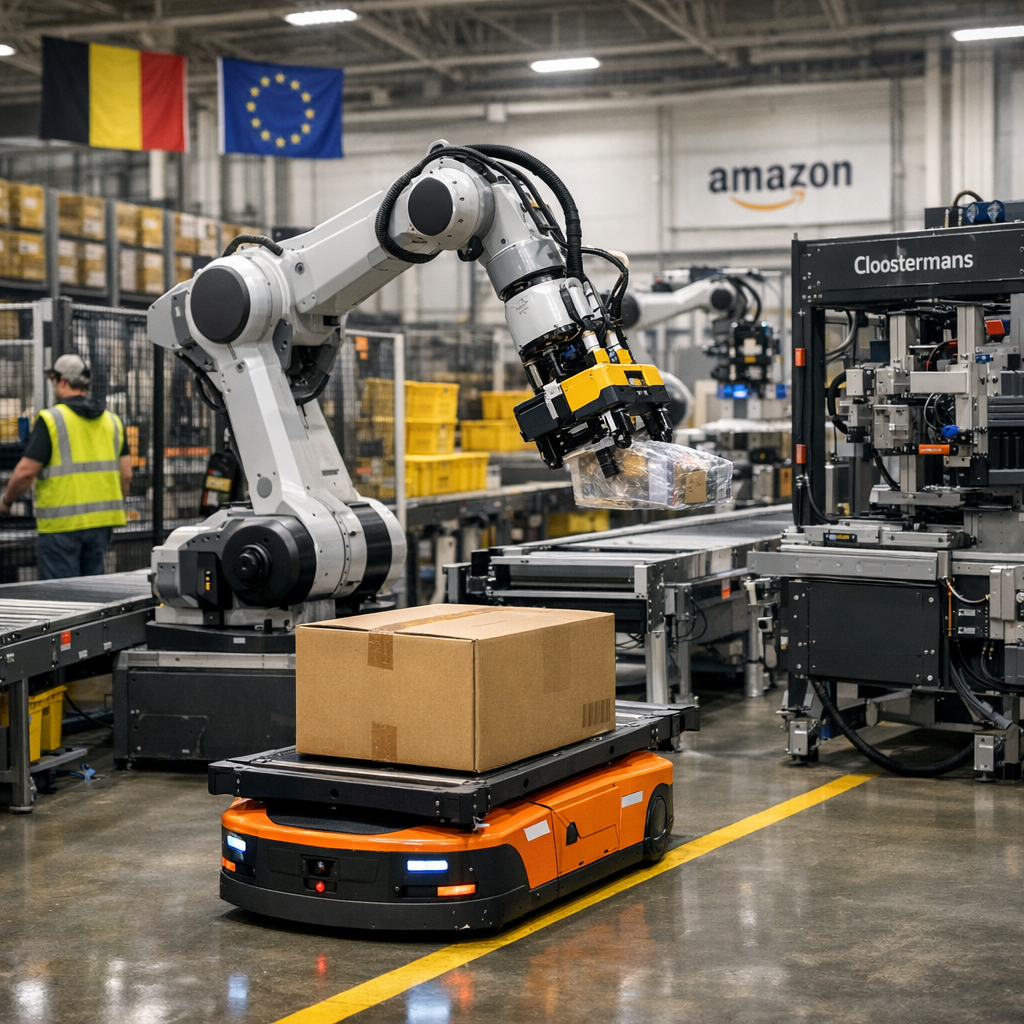
Another advantage highlighted by the researchers is range. Early demonstrations suggest that the chip can monitor objects at distances significantly greater than many compact sensing systems allow today. The increased reach could make the technology particularly useful in industrial settings such as warehouses or manufacturing facilities, where autonomous machines must coordinate their movements and avoid collisions in large, busy spaces. The system may also support applications ranging from robotic logistics and infrastructure inspection to human–robot interaction.
Because the technology is built on semiconductor fabrication processes similar to those used for conventional electronics, the researchers believe it could ultimately be produced at scale. Mass manufacturability is often a key hurdle for emerging sensing technologies that depend on complex optical assemblies or expensive specialized hardware.
If successfully commercialized, the chip could help push robotics toward more predictive and context-aware perception. Systems capable of tracking motion continuously and at a distance may better navigate crowded environments, coordinate with other machines, and adapt to rapidly changing conditions. As the Tech Xplore report notes, such capabilities could represent a step toward more responsive and autonomous robotic platforms, where machines not only detect their surroundings but actively interpret the evolving patterns of movement within them.