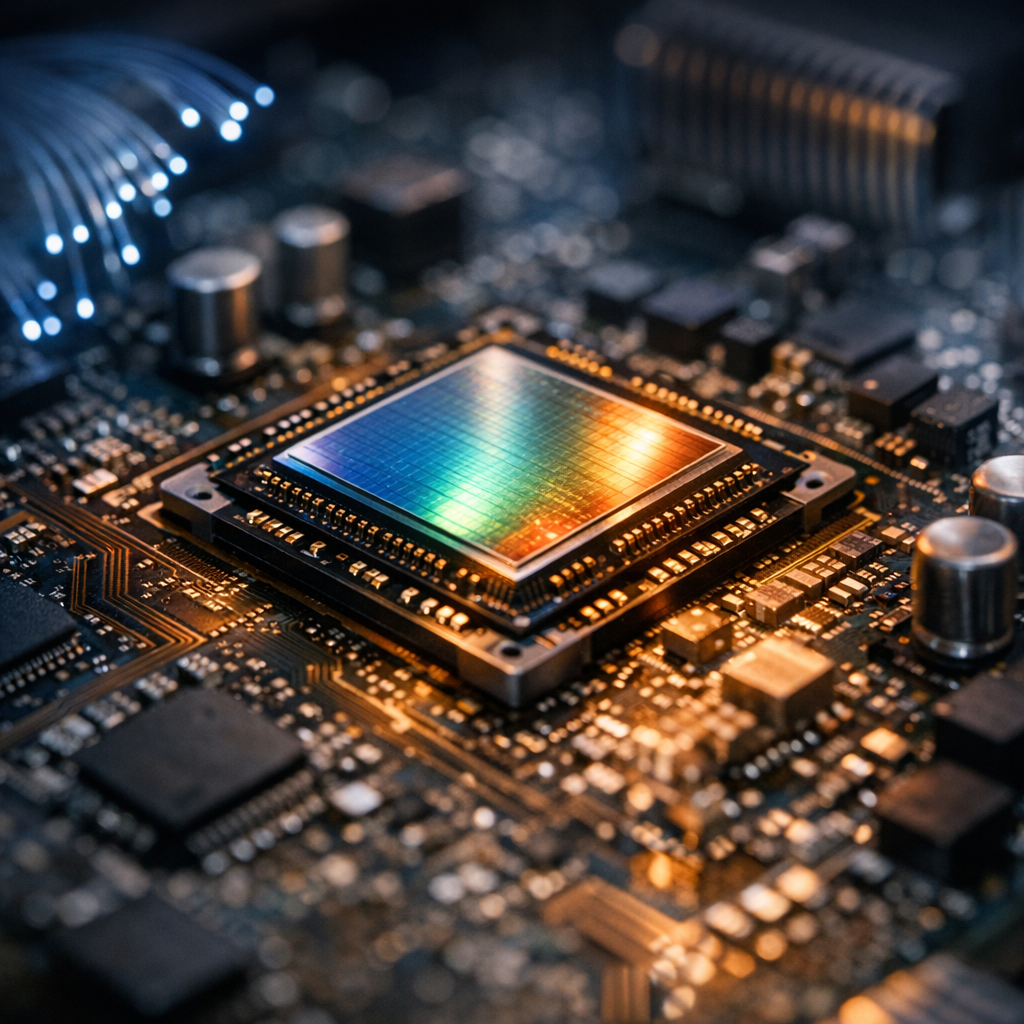
Researchers have unveiled a prototype semiconductor device that could significantly improve energy efficiency in computing, according to a report titled “Prototype chip could boost efficiency and cut power use,” published by Tech Xplore.
The new chip, developed by an international team of engineers and materials scientists, is designed to address one of the most persistent challenges in modern electronics: the rising energy demands of data processing. As artificial intelligence, cloud computing, and connected devices proliferate, the need for faster and more power-efficient hardware has become increasingly urgent.
The prototype relies on an alternative architecture that departs from conventional transistor-based design. Instead of simply scaling down existing silicon components, the researchers integrated novel materials and circuit strategies that reduce energy loss during operation. Early laboratory tests suggest the chip can perform calculations using a fraction of the power required by comparable current-generation processors, while maintaining competitive processing speeds.
According to the reporting by Tech Xplore, a key innovation lies in how the device manages electrical signals. By minimizing resistance and heat generation at critical نقاط within the circuit, the chip improves overall efficiency and reduces the need for energy-intensive cooling systems. This could have wide-ranging implications for data centers, which currently account for a growing share of global electricity consumption.
The development remains at the prototype stage, and significant engineering challenges must be overcome before commercialization. Scaling production, ensuring compatibility with existing manufacturing processes, and maintaining performance stability over time are all hurdles researchers will need to address.
Nevertheless, experts view the work as a promising step toward more sustainable computing infrastructure. Even incremental improvements in chip efficiency can translate into substantial energy savings when deployed at scale.
If further refined, the technology could influence future generations of processors used in everything from smartphones to high-performance computing systems, potentially easing the environmental footprint of the digital economy while supporting continued growth in computational demand.