Recent research is raising fresh concerns about the reliability of solid-state batteries, a technology widely seen as a cornerstone of next-generation energy storage. According to an article titled “Why solid-state batteries are short circuiting” published by Tech Xplore, scientists are uncovering mechanisms that help explain why these batteries can fail unexpectedly, despite their theoretical advantages over conventional lithium-ion designs.
Solid-state batteries replace the liquid electrolytes used in traditional batteries with solid materials, a shift that promises improved safety, higher energy density, and longer lifespans. However, the new findings suggest that the behavior of these solid materials under real-world operating conditions is more complex than previously understood. Researchers have identified microscopic structural changes within the electrolyte that can lead to the formation of pathways for electrical short circuits.
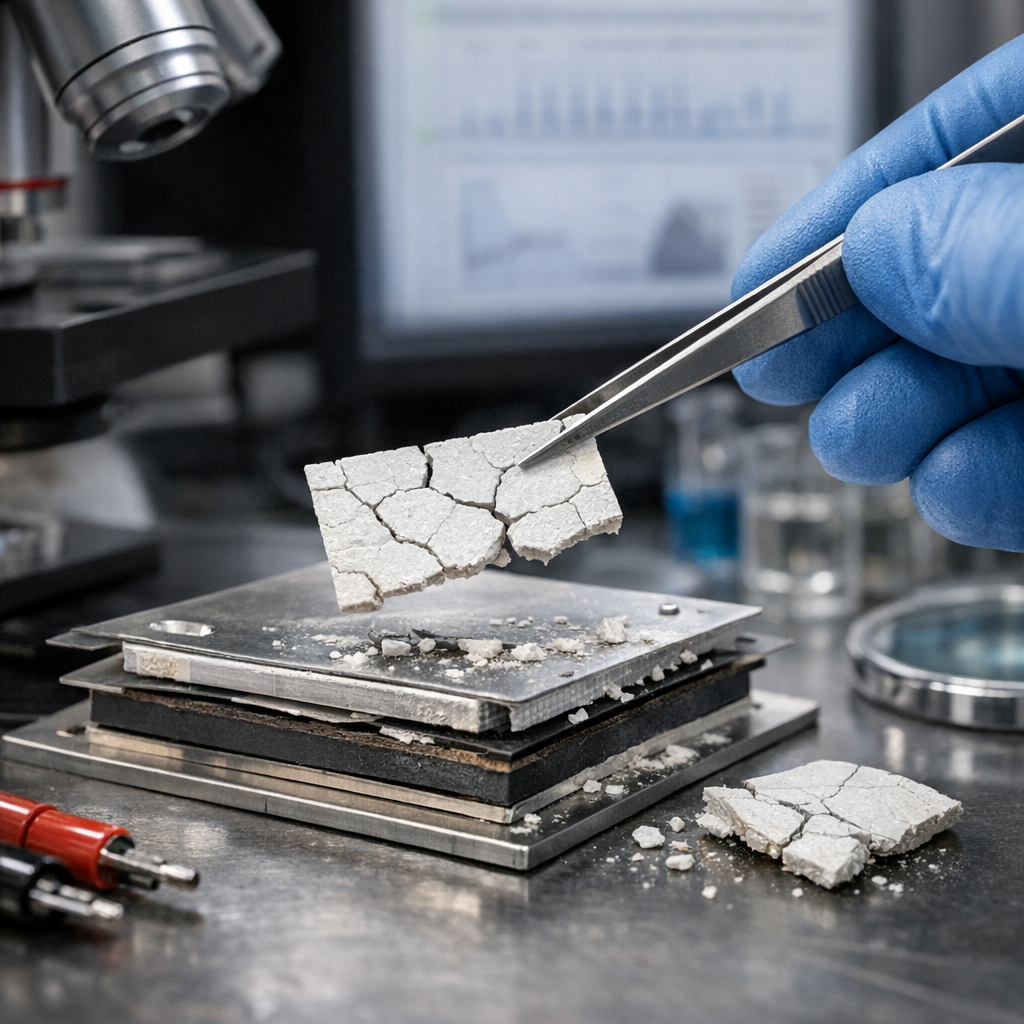
The study highlights how mechanical stress and chemical interactions inside the battery can create tiny defects or cracks in the solid electrolyte. Over repeated charging cycles, these imperfections may allow lithium to penetrate the electrolyte in the form of filament-like structures, sometimes referred to as dendrites. Once these structures span the electrolyte, they can connect the battery’s electrodes and trigger a short circuit, potentially leading to performance degradation or failure.
What distinguishes this work is the emphasis on the dynamic nature of the solid electrolyte. Rather than remaining rigid and uniform, the material appears to evolve during operation, responding to pressure, temperature changes, and electrochemical reactions. This evolving microstructure can inadvertently create weak points that undermine the battery’s stability.
The findings challenge a common assumption that simply switching to a solid electrolyte inherently eliminates the risks associated with dendrite formation. Instead, the research suggests that solid-state systems may require more precise engineering at the microscopic level to prevent failure. Material composition, interface design, and manufacturing processes all appear to play critical roles in determining whether a battery remains stable over time.
Industry interest in solid-state batteries remains high, particularly among automakers seeking safer and more energy-dense options for electric vehicles. Yet the new insights underscore that significant technical hurdles remain. Ensuring consistent performance across large-scale production and extended use cycles will likely demand new approaches to materials design and quality control.
While the research does not negate the long-term promise of solid-state technology, it adds a layer of realism to expectations about its near-term deployment. By clarifying the mechanisms behind short circuiting, the study may ultimately accelerate progress, guiding engineers toward solutions that address these newly identified vulnerabilities.