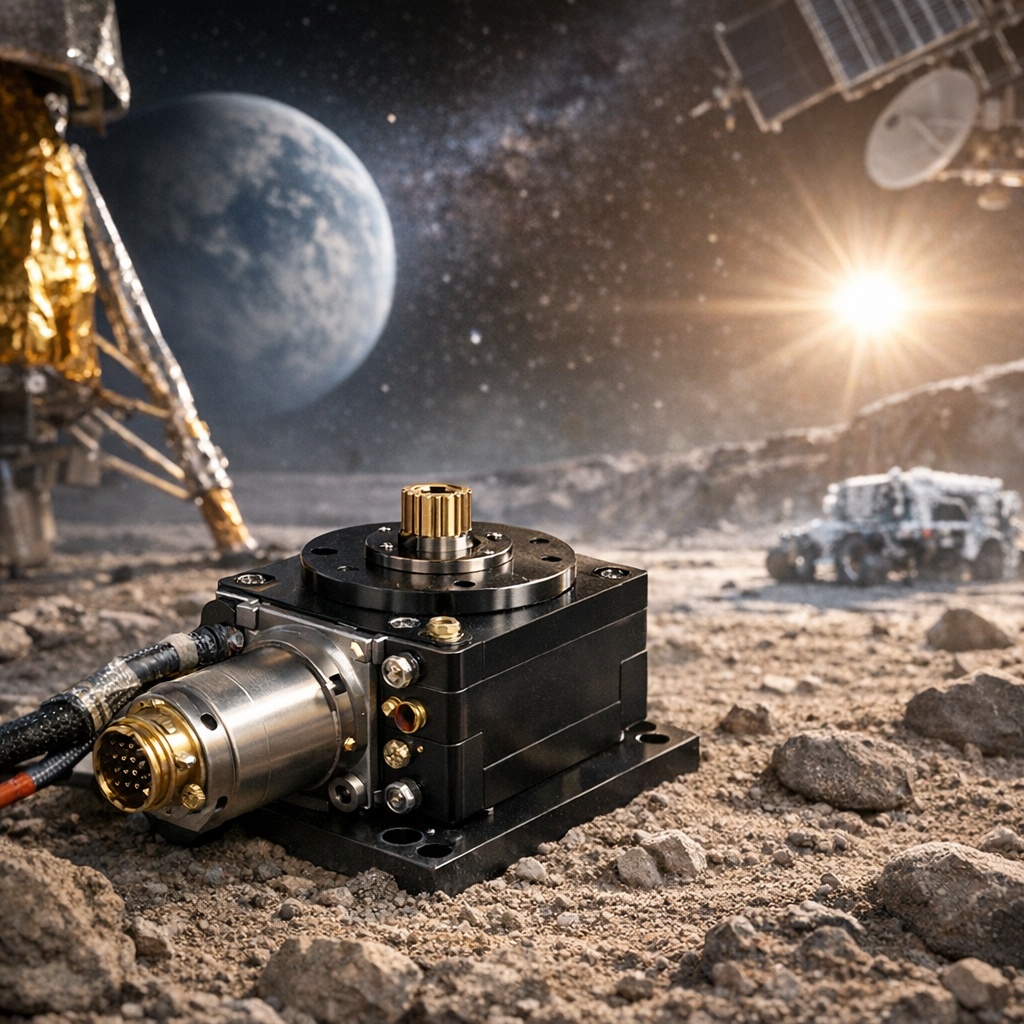
A newly developed actuator designed to withstand extreme conditions could mark a significant advance for future space missions, according to reporting by Tech Xplore in its article “Resilient actuator shows potential for space-ready applications.”
The device, engineered to operate reliably in environments characterized by intense temperature swings, radiation exposure, and mechanical stress, addresses a longstanding challenge in aerospace engineering: ensuring that critical mechanical systems remain functional far from Earth. Actuators, which convert energy into motion, are essential components in spacecraft, underpinning everything from robotic arms to instrument positioning systems.
Researchers behind the project focused on durability and adaptability, developing an actuator capable of maintaining performance under conditions that would typically degrade conventional systems. Traditional actuators often rely on materials and designs that can become brittle in extreme cold, suffer from thermal expansion in high heat, or degrade under sustained radiation. The newly proposed design incorporates materials and structural features intended to mitigate these vulnerabilities, potentially extending operational lifespans and reducing the risk of mission-critical failures.
According to the Tech Xplore report, testing has demonstrated that the actuator can continue functioning after repeated exposure to harsh environmental cycles. This resilience is particularly significant for long-duration missions, such as those targeting deep space or planetary exploration, where maintenance or replacement is not feasible. By improving reliability, the technology could help reduce mission costs and increase scientific return.
The development also reflects broader trends in space engineering, where emphasis is shifting toward systems that can operate autonomously and endure unpredictable conditions. As agencies and private companies pursue more ambitious missions, including crewed expeditions to Mars and extended lunar operations, the need for robust mechanical components is becoming more acute.
While further validation and integration work remains before the actuator can be deployed in operational spacecraft, the early results suggest a promising step forward. If successfully implemented, such technology could enhance the resilience of future space systems and support more complex and longer-lasting missions beyond Earth orbit.