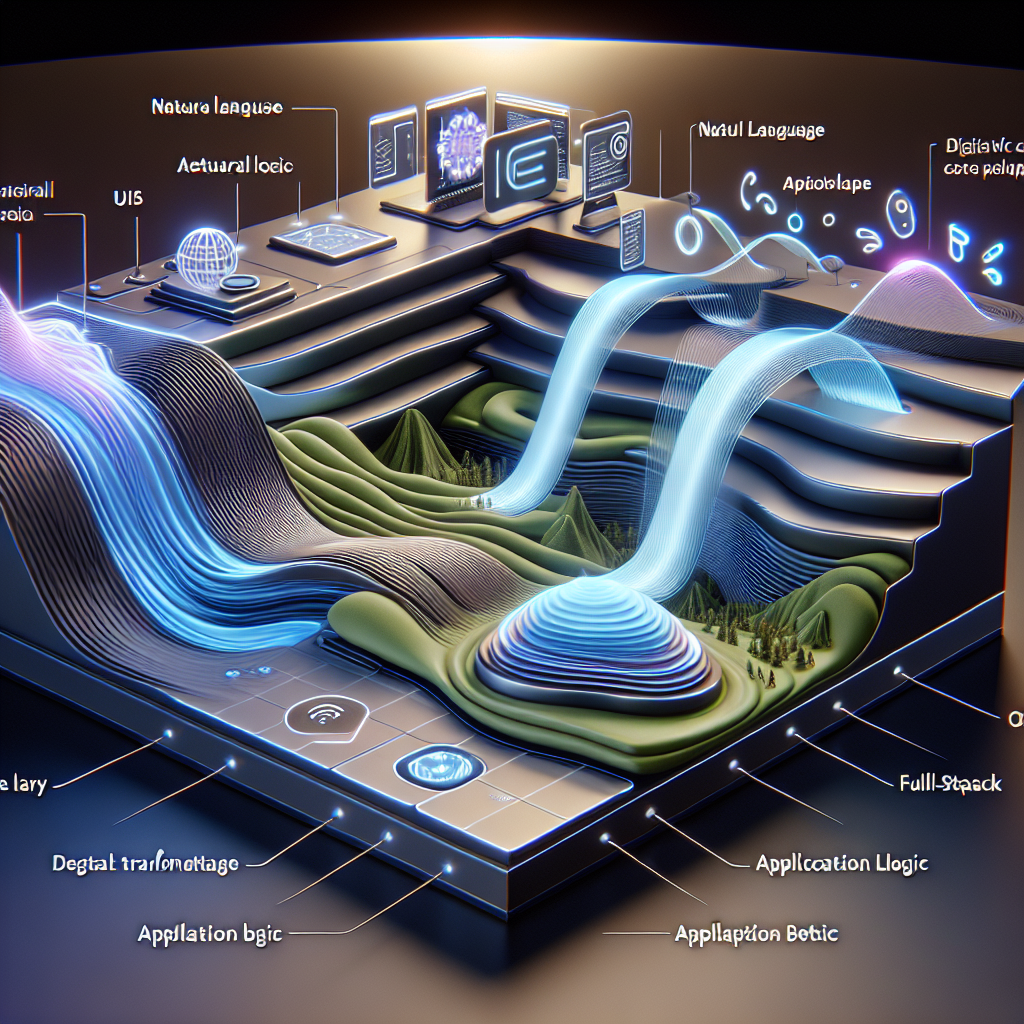
OpenAI’s continued expansion into AI-assisted software development has reached a new milestone with advancements in its Codex model, which now demonstrates the ability to separate application components such as server, agent, and user interface logic. The development, which was highlighted in an article titled “OpenAI Codex can now infer app server, agent, and UI logic” by Developer Tech, signals the growing sophistication of natural language programming models and their potential role in transforming how software is built.
Codex, OpenAI’s AI system tailored for programming tasks, has already proven capable of generating functional code across dozens of languages from everyday language prompts. However, the newest update reveals a deepened contextual understanding: the model can now interpret high-level application goals described in plain English and generate not just code snippets, but structured applications with clear architectural components. This includes frontend interfaces, backend logic, and intermediary agent processes, streamlining a task that typically requires cross-disciplinary engineering effort.
According to OpenAI’s demonstration, users can specify an application idea—such as a chatbot that schedules meetings—and Codex can infer that this concept requires multiple parts to function, including a user interface for interaction, a backend to manage data and logic, and an agent capable of communicating with external services like calendars or email systems. The AI then generates code segregated along those lines, offering developers a ready-made template upon which they can build and refine.
This development raises both excitement and concern within the developer community. On the one hand, it represents a significant productivity boost, particularly for small teams or individual developers who may lack expertise in either frontend or backend development. On the other, the abstraction of architectural decision-making to a machine raises questions about software quality, security, and maintainability. Some experts warn against overdependence on synthetic code generation without rigorous human oversight.
OpenAI acknowledges the limitations of Codex, particularly its potential to generate insecure or inefficient code. They advise that output from the model should still undergo thorough human review. Nevertheless, the implications are wide-reaching: as AI becomes more adept at interpreting the full scope of a user’s intent, the line between programmer and planner begins to blur.
For organizations exploring low-code or no-code platforms, OpenAI’s latest capabilities signal an evolution toward AI-guided coding environments where non-technical stakeholders can draft product ideas in natural language and receive functioning prototypes. While this vision is still developing, the latest progress from Codex represents a tangible step in that direction.
As Codex and similar tools continue to evolve, the role of human programmers is unlikely to disappear, but it may change substantially, shifting from manual coding to guiding, auditing, and refining AI-generated architectures. With the capacity to deconstruct high-level instructions into fully segmented applications, OpenAI’s advancements reflect a broader trajectory toward more accessible, intelligent software development tools.