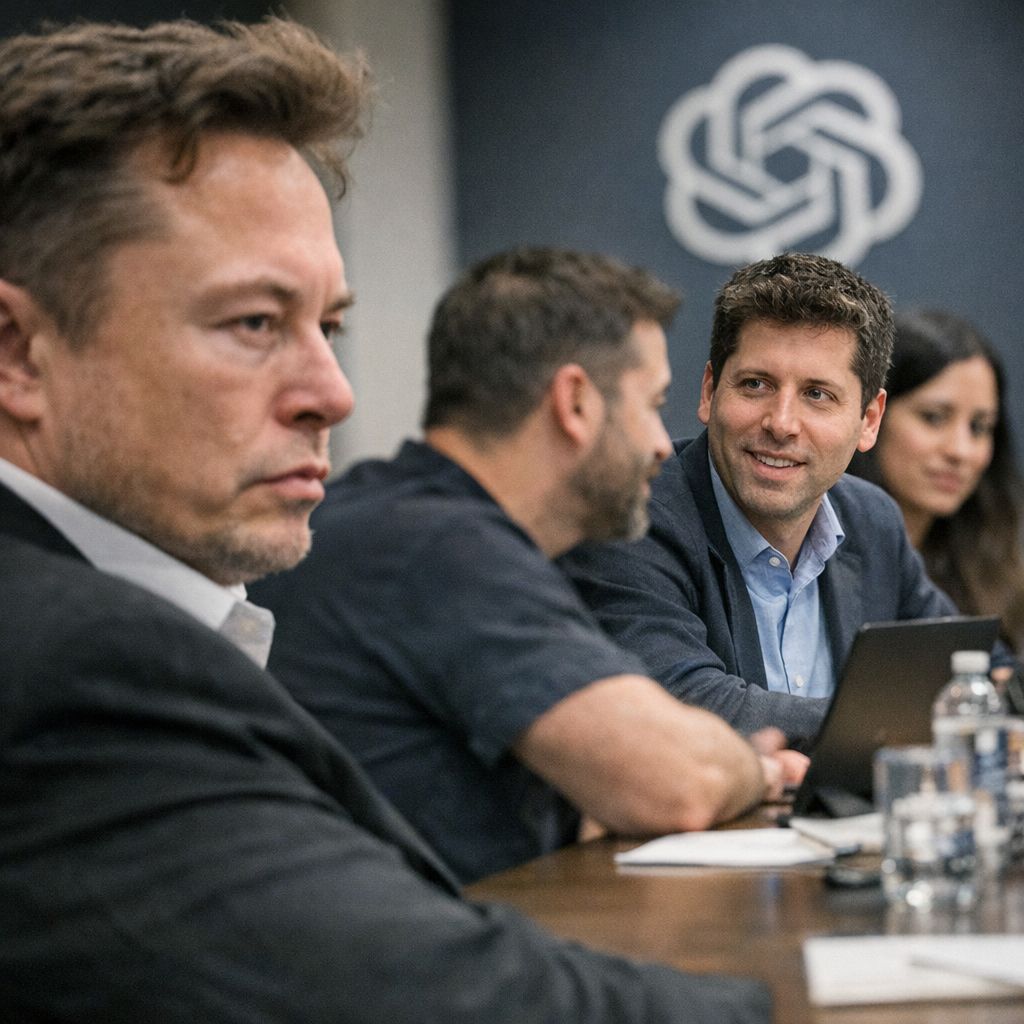
OpenAI has rejected a last-minute legal maneuver by Elon Musk aimed at forcing the removal of chief executive Sam Altman, escalating an already contentious dispute between the tech entrepreneur and the artificial intelligence company he co-founded.
According to the Economic Times article titled “OpenAI rejects Elon Musk’s eleventh-hour filing demanding Sam Altman’s ouster,” the company dismissed Musk’s filing as procedurally improper and lacking merit. The move is part of a broader legal battle in which Musk has challenged OpenAI’s governance structure and strategic direction, particularly its transition toward a more commercially oriented model.
Musk, who has been increasingly critical of OpenAI’s partnership with Microsoft and its profit-driven approach, reportedly sought urgent intervention to displace Altman from leadership. His filing came at a late stage in ongoing legal proceedings, prompting OpenAI to characterize it as an attempt to disrupt the process rather than engage constructively with the court.
OpenAI, in its response, defended Altman’s leadership and the organization’s current trajectory, arguing that the company remains committed to its founding mission of developing artificial intelligence for the benefit of humanity. It also emphasized that governance decisions should not be subject to what it described as abrupt and unsubstantiated legal challenges.
The dispute underscores deep divisions between Musk and OpenAI’s current leadership. Musk has accused the company of abandoning its original nonprofit ethos, while OpenAI maintains that its hybrid structure is necessary to secure the resources required for advanced AI development.
Legal experts cited in the Economic Times report suggest the court is unlikely to entertain Musk’s late filing favorably, given its timing and the high threshold for intervening in corporate leadership matters. The case, however, continues to draw attention due to the prominence of the figures involved and its implications for governance in the rapidly evolving AI sector.
As the legal proceedings move forward, the outcome could influence not only OpenAI’s organizational structure but also broader debates about accountability, control, and transparency in artificial intelligence development.