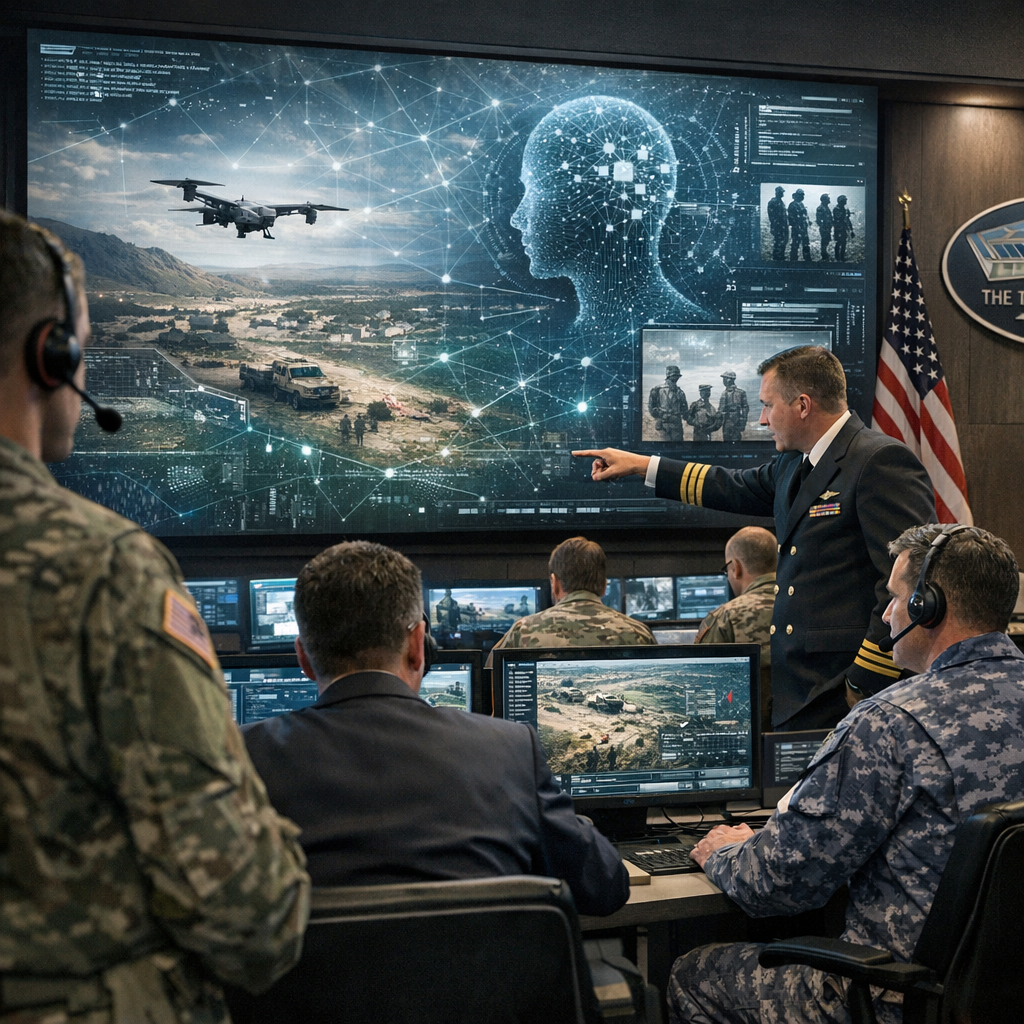
The U.S. Department of Defense is moving to integrate artificial intelligence more deeply into its operations, with new internal efforts centered on adopting technology from Palantir as a core military system, according to a recent report. The development, detailed in the Economic Times article titled “Pentagon to adopt Palantir AI as core US military system, memo says,” highlights the Pentagon’s accelerating push to operationalize advanced data analytics and AI capabilities across its vast defense infrastructure.
According to the report, a Pentagon memo outlines plans to embed Palantir’s software more firmly within military workflows, positioning it as a foundational platform for decision-making, logistics, and battlefield intelligence. The initiative underscores a broader strategic shift in which AI is no longer treated as an experimental add-on but as an essential component of modern warfare and defense planning.
Palantir, long known for its work with U.S. intelligence agencies, has spent years developing platforms designed to integrate large volumes of disparate data into actionable insights. Its tools are already used in various defense contexts, but the reported move suggests a deeper institutional reliance that could standardize its systems across multiple branches of the military.
The Pentagon’s interest in consolidating around a core AI platform comes amid growing concerns about the speed and complexity of modern threats. Military planners increasingly view data integration and real-time analysis as critical to maintaining a strategic edge, particularly in domains such as cyber operations, surveillance, and logistics coordination. By centralizing data infrastructure, officials aim to reduce fragmentation and improve responsiveness in high-stakes scenarios.
However, the move may also raise questions about vendor dependence and the concentration of sensitive defense capabilities within a single private contractor’s technology ecosystem. Critics have previously warned that relying heavily on one provider could create long-term risks related to cost, adaptability, and security, especially as AI systems evolve rapidly.
The reported adoption also reflects a broader trend within the U.S. government to deepen partnerships with private technology firms. As geopolitical competition intensifies, particularly with China’s own investments in military AI, Washington has increasingly leaned on Silicon Valley and defense-oriented startups to accelerate innovation.
While the Pentagon has not publicly detailed the full scope or timeline of the initiative, the memo cited in the Economic Times report suggests that implementation efforts are already underway. If realized at scale, the shift would mark one of the most significant integrations of commercial AI technology into core U.S. military operations to date, potentially reshaping how decisions are made and executed across the defense apparatus.