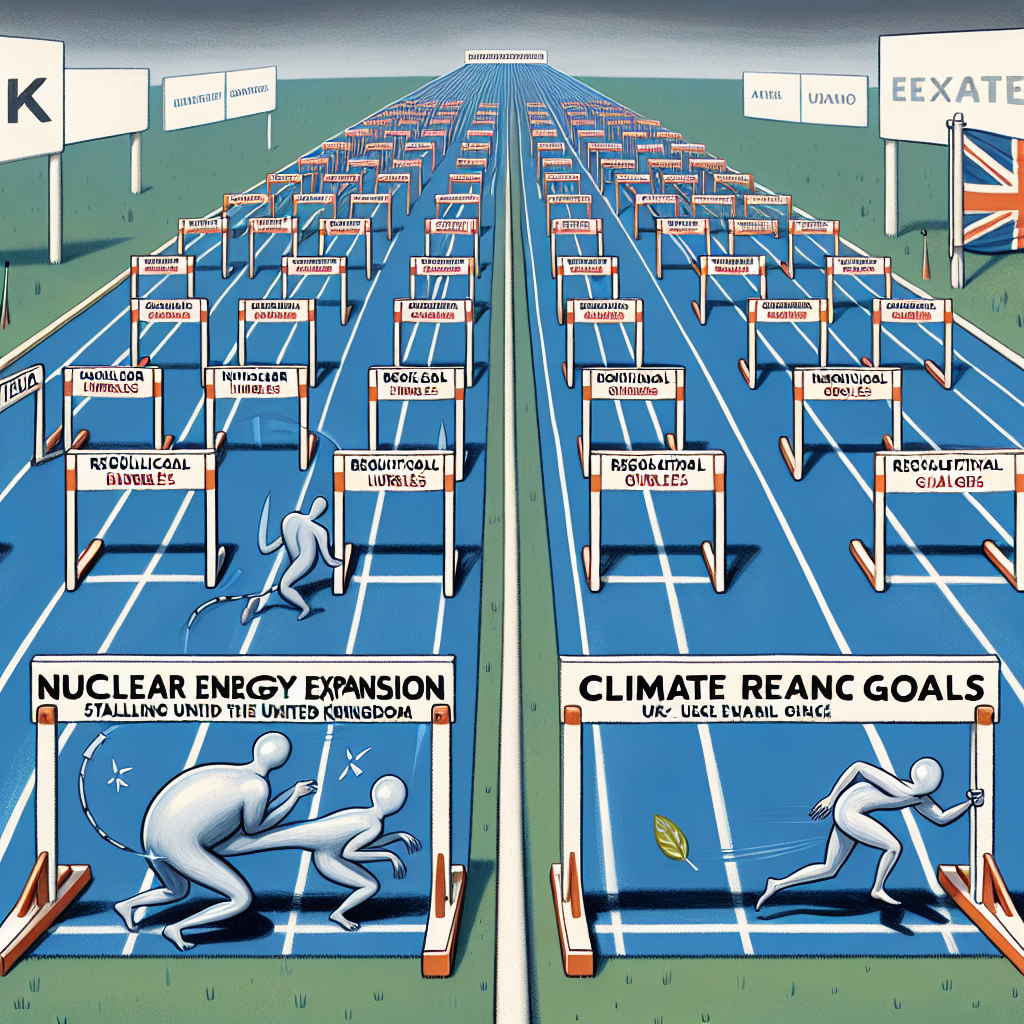
The potential development and expansion of the United Kingdom’s nuclear power sector is being significantly constrained by a plethora of regulatory barriers, according to a detailed report highlighted by the Innovation News Network. The article, titled “UK’s nuclear energy potential held back by regulatory barriers, report says,” outlines how these regulations are creating obstacles that complicate the scalability and efficiency of nuclear projects, thereby impacting the nation’s capability to meet its long-term energy and climate goals.
The crux of the issue lies in the extensive and often cumbersome regulatory procedures that govern the nuclear industry in the UK. These regulations, which were originally designed to ensure safety and environmental protection, are reportedly adding unnecessary delays and costs to nuclear projects. The report, which analyzes the current state of the UK’s nuclear industry, suggests that the time required to navigate these regulatory landscapes is deterring investment and slowing down the deployment of new nuclear technology.
One key finding in the report is the notable gap between the advancement of nuclear technology and the modernization of relevant regulations. As newer and potentially safer and more efficient nuclear technologies emerge, such as small modular reactors (SMRs), the regulatory framework has struggled to keep pace, often applying outdated standards that don’t appropriately align with current technologies.
Furthermore, the report indicates that the delay in the approval processes not only hampers the growth of the nuclear sector but also affects the broader energy market and the UK’s energy security. As the country aims to phase out fossil fuels and reduce carbon emissions, nuclear energy is considered a crucial part of the energy mix due to its capability to provide large-scale, steady, and low-carbon power. However, the slow pace of regulatory approvals undermines this role, potentially risking the UK’s targets under the Paris Agreement.
Industry advocates have called for a more streamlined and responsive regulatory process that both maintains high safety standards and allows for more agile integration of new technologies. This includes the adaptation of regulations that keep up with innovations in nuclear technology and assessing the feasibility of overlapping regulatory requirements to reduce procedural redundancies.
However, the report also underscores that it is essential to ensure that any efforts to streamline regulatory processes do not compromise on critical safety and environmental standards. The nuclear industry is inherently associated with significant safety risks, and maintaining robust regulatory oversight is crucial to protect public health and the environment.
In conclusion, while the UK has the potential to become a leader in nuclear energy, fostering innovation while ensuring safety and regulation, the current regulatory barriers present substantial challenges. Reforms aimed at modernizing the regulatory framework could unleash the full potential of the nuclear sector, contributing to the country’s energy independence and environmental commitments. The call to balance innovation and safety through an updated regulatory approach is not only a matter of economic benefit but also of national importance, affecting the sustainability and security of future generations.