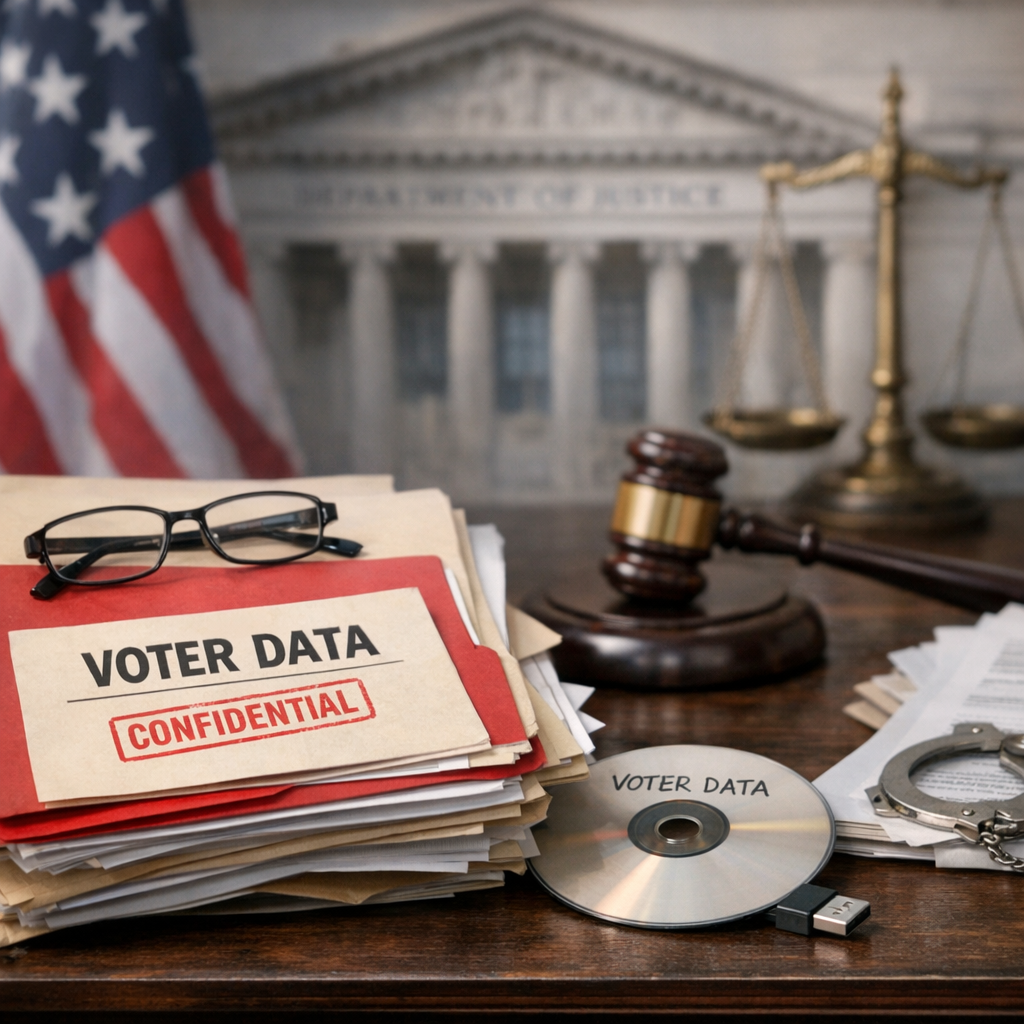
A recent report by Wired, titled “The DOJ Misled a Judge About Voter-Roll Data,” raises new concerns about transparency and accuracy in the Justice Department’s handling of election-related litigation, highlighting how flawed or overstated claims about voter data may shape judicial decisions with significant political consequences.
According to Wired’s account, Department of Justice attorneys advanced assertions in court regarding voter registration data that were later called into question by underlying evidence. The case centers on a broader legal dispute over voting access and election administration, where statistical claims about noncitizen or ineligible voters can play a pivotal role in justifying policy measures such as voter roll purges or restrictions on registration.
Wired reports that DOJ lawyers presented figures to a federal judge that suggested irregularities in voter rolls, but subsequent scrutiny indicated those figures were either misinterpreted or lacked sufficient evidentiary support. The discrepancy has drawn criticism from legal experts and voting rights advocates, who argue that even minor distortions in data can carry outsized consequences in court, particularly in politically sensitive cases involving election integrity.
The episode underscores ongoing tensions between efforts to safeguard elections and the risk of amplifying unverified or misleading claims. Courts often rely heavily on government representations when evaluating complex datasets, placing a premium on accuracy and methodological transparency. When that trust is undermined, legal analysts warn, it can erode confidence not only in specific rulings but also in the broader integrity of judicial processes tied to democratic governance.
The Justice Department has not broadly characterized its actions as intentional misconduct, but the reporting cited by Wired suggests that internal inconsistencies or analytical shortcomings were not adequately clarified during proceedings. That omission, critics contend, may have left the presiding judge with a distorted understanding of the evidence.
The controversy arrives amid heightened national scrutiny over how voter data is collected, interpreted, and deployed in policymaking. As states continue to debate measures affecting voter registration and eligibility verification, disputes over data quality have become central to both legislative and courtroom battles.
Wired’s reporting adds to a growing body of journalism examining how technical details in election data can be leveraged—or misrepresented—in ways that carry significant legal and political ramifications. For legal observers, the case serves as a reminder that in disputes over voting rights, the credibility of numerical claims can be just as consequential as the legal arguments built upon them.