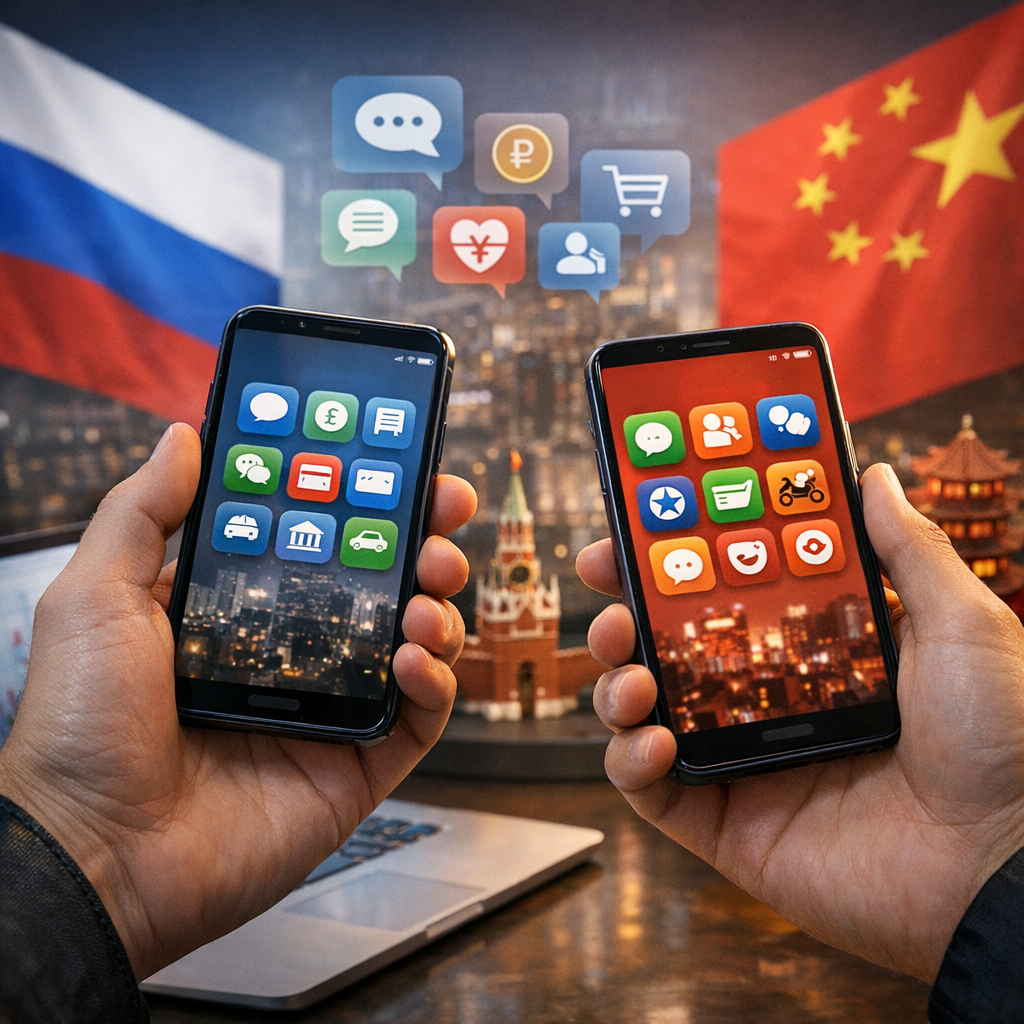
Russia is looking to China’s dominant digital platforms as it develops a state-backed messaging ecosystem aimed at reducing reliance on Western technology, according to a report published by The Economic Times titled “Russia sees China’s WeChat, Douyin as models for its homegrown Max messenger.”
The initiative centers on Max, a proposed domestic messaging platform that Russian authorities envision as more than a simple communication tool. Officials are reportedly studying China’s WeChat and Douyin—known internationally as TikTok’s Chinese counterpart—for their integration of messaging, payments, social media, and government services into unified “super apps.” These platforms have become deeply embedded in everyday life in China, offering a blueprint for digital ecosystems that extend beyond basic communication.
Russia’s interest in replicating such models reflects both technological ambition and geopolitical calculation. Since Western sanctions intensified following the invasion of Ukraine, the Kremlin has accelerated efforts to localize digital infrastructure and reduce exposure to foreign platforms. Building a multifunctional app like Max could allow Russian authorities to centralize digital services while maintaining tighter control over data flows and content moderation.
The Economic Times report notes that Russia already has experience cultivating domestic alternatives to global platforms, such as VKontakte in social networking and Telegram in messaging, though the latter operates independently of the state. However, Max appears to be envisioned as a more comprehensive system, potentially incorporating financial services, e-government functions, and entertainment features into a single interface.
Analysts cited in the report suggest that adopting a “super app” model may help drive user adoption, particularly if the platform is integrated with essential public services. China’s success with WeChat, which combines everything from messaging and payments to healthcare bookings and official documentation, demonstrates how convenience can reinforce platform dominance. Douyin, meanwhile, illustrates how short-form video and algorithm-driven content can be woven into broader digital ecosystems to sustain user engagement.
Despite these ambitions, replicating China’s model presents structural challenges. China’s tightly regulated internet environment and relatively unified domestic market have supported the rise of integrated platforms in ways that may be difficult to reproduce elsewhere. Russia faces a more fragmented digital landscape, with established competitors and varying levels of public trust in state-backed initiatives.
There are also concerns about privacy and surveillance. Expanding a government-aligned platform into multiple aspects of daily life could heighten scrutiny from both domestic users and international observers. Balancing functionality with user trust will be a critical factor in determining whether Max can gain traction beyond a limited or mandated user base.
Still, the move underscores a broader global trend toward digital sovereignty, as governments seek greater control over data, infrastructure, and online discourse. By looking to China’s WeChat and Douyin as models, Russia is signaling its intent to build a self-sufficient digital ecosystem—one that blends technology, governance, and national strategy into a single platform.