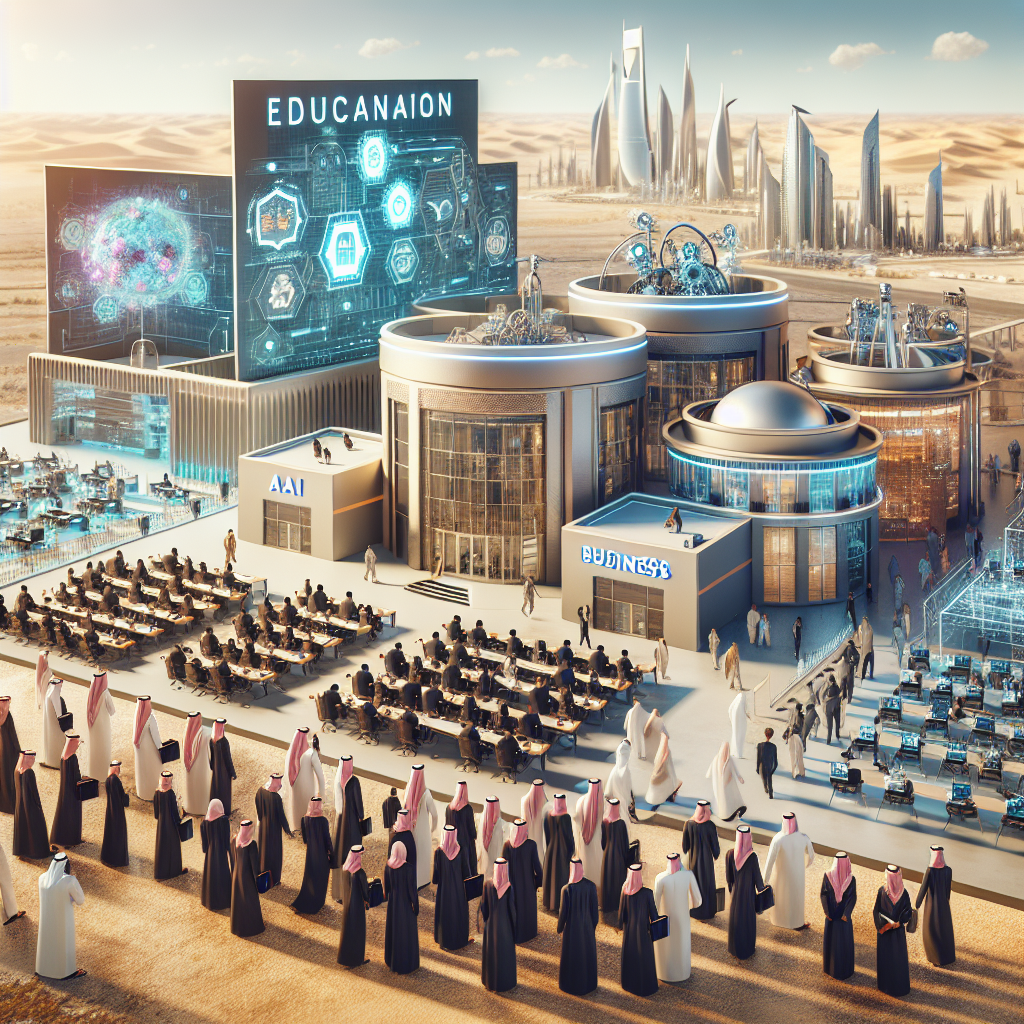
In a significant move towards bolstering its academic credentials, Saudi Arabia has disclosed its plan to establish three new universities specializing in artificial intelligence (AI), economy and business, and health. This announcement was made by the Saudi Education Minister, Hamad Al-Sheikh, reflecting the country’s ambitious strategy to diversify its economy and reduce its dependence on oil.
Saudi Arabia’s Vision 2030, an initiative spearheaded by Crown Prince Mohammed bin Salman, serves as the cornerstone of these educational expansions. The plan aims to develop public service sectors such as health, education, infrastructure, recreation, and tourism, integrating modern technology into various facets of the economy to foster a more diversified and sustainable economic landscape.
These universities are not just additions to the country’s educational infrastructure but are instead foundational to Riyadh’s broader economic strategies. The university specialized in artificial intelligence is set to be located in Riyadh, aligning with the global trend towards digital economies and acknowledging AI’s critical role in future technological developments.
Likewise, the planned universities focusing on economy and business, and health are strategically aimed at creating a more robust internal workforce capable of pushing forward national economic plans and improving health infrastructure. This move also reflects a global acknowledgment of the increasing need for specialized knowledge and training in rapidly evolving sectors such as AI, economics, and healthcare.
The establishment of such institutions is part of a larger trend seen in the Gulf Cooperation Council (GCC) countries, which are significantly investing in higher education to compete on a global scale. It is a response not only to the rapidly changing dynamics of global economies but also to the internal pressures of a young population and the need for job creation.
Internally, Saudi Arabia is grappling with the challenge of youth unemployment, which stood at approximately 34.5% among nationals aged 20-29 in 2020. The new universities could potentially alleviate some of this by equipping young Saudis with the necessary skills to thrive in the high-demand sectors of the future.
Furthermore, with the AI university, Saudi Arabia aspires to become a hub for new technology and innovation in the Middle East, drawing both international students and investments. Positioning itself in such a strategic manner could indeed shift the regional dynamics in education, technological advancement, and economic leadership.
These targeted educational endeavors might also attract international partnerships, fostering collaborations that bring cutting-edge technologies and expertise into the country. This can result in a beneficial cycle of innovation, increased economic diversity, and elevated educational standards within the kingdom.
Critically, the success of this large-scale educational investment will hinge on several factors, including curriculum relevance, faculty recruitment, regulatory governance, and integration with global educational and economic systems. Observers will watch keenly to see if these institutions can indeed fulfill their ambitious mandates and contribute meaningfully to Saudi Arabia’s economic and social aspirations as outlined in Vision 2030.
In conclusion, Saudi Arabia’s initiative to launch three specialized universities represents a proactive approach to addressing the educational needs dictated by a transforming global economy and its own socioeconomic challenges. This maneuver is poised to redefine the kingdom’s educational and economic landscape if executed with the foresight and rigor it demands.