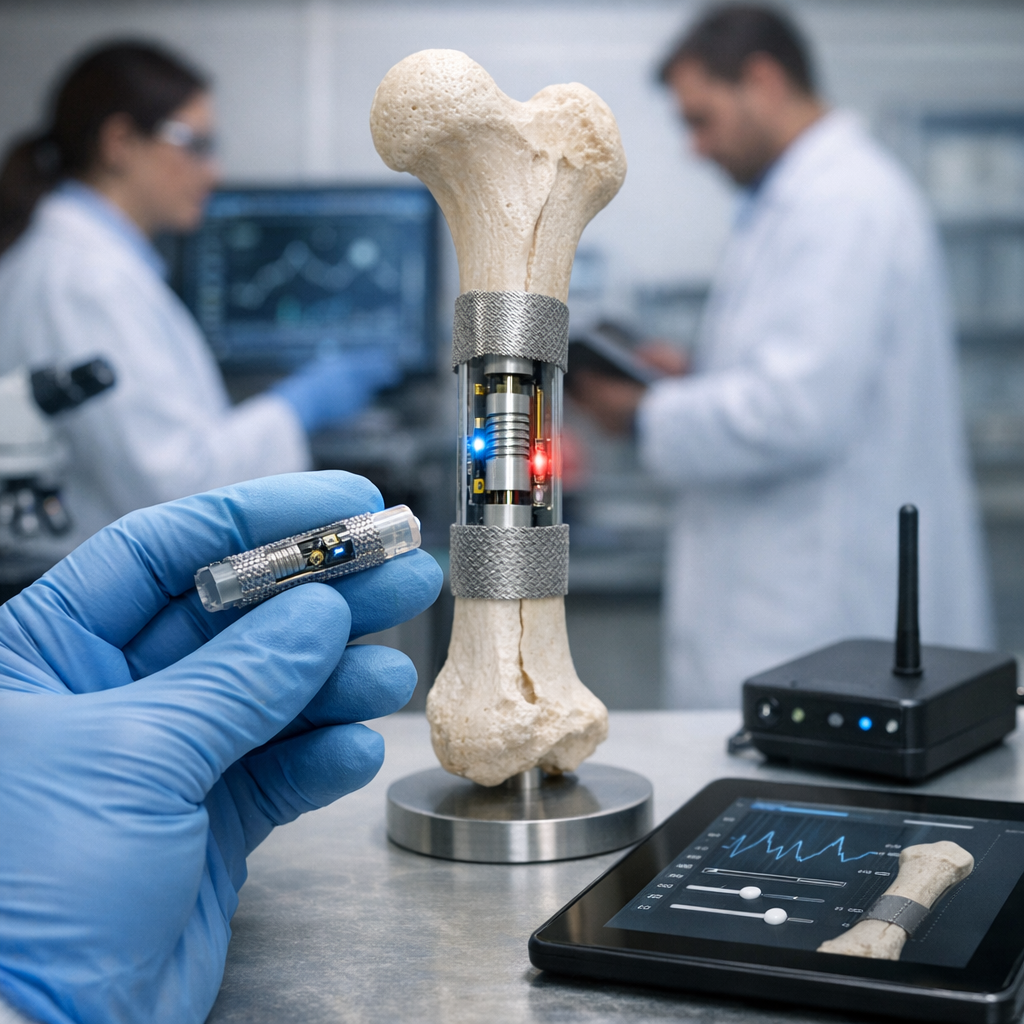
Researchers are advancing a new class of biomedical materials that can have their stiffness adjusted remotely after implantation, a development that could reshape how doctors treat a range of conditions requiring implants or tissue support.
According to an article titled “Remotely reprogramming material stiffness for implants,” published by Tech Xplore, scientists have demonstrated a method for dynamically altering the mechanical properties of implanted materials without the need for additional surgery. The approach centers on engineered materials whose internal structure can be modified in response to external stimuli, allowing clinicians to fine-tune how rigid or flexible an implant is long after it has been placed in the body.
The innovation addresses a long-standing limitation in implant design. Traditional implants must be engineered with a fixed stiffness suited to an initial medical need, but the optimal mechanical properties can change over time as tissues heal or conditions evolve. Materials that are too rigid can damage surrounding tissue or impede natural movement, while those that are too soft may fail to provide adequate support. The ability to adjust stiffness on demand offers a way to better match the implant’s properties to a patient’s changing physiology.
The researchers’ system relies on embedded structures or particles within the material that respond to controlled external signals, such as magnetic fields or other forms of energy. When activated, these components can rearrange or alter interactions within the material, effectively changing its mechanical behavior. This can be done noninvasively, enabling repeated adjustments as needed.
Potential applications span several areas of medicine. In orthopedics, implants could gradually become more rigid as a fracture heals, then soften once normal load-bearing is restored. In cardiovascular treatments, devices could adapt to changes in blood flow or vessel stiffness. Soft robotics and prosthetics may also benefit, with components that can shift between flexibility and rigidity to better mimic natural movement.
Despite the promise, the research remains at an experimental stage. Challenges include ensuring long-term biocompatibility, preventing unintended changes in material properties, and achieving precise control over the degree and location of stiffness adjustments. Researchers must also consider how external signals used to trigger changes interact with surrounding tissues and medical devices.
Still, the concept highlights a broader trend in materials science toward adaptive, responsive systems that can evolve after deployment. As described in the Tech Xplore report, the ability to remotely reprogram an implant’s mechanical properties could mark a shift away from static medical devices toward dynamic therapies that adjust in real time to patients’ needs.