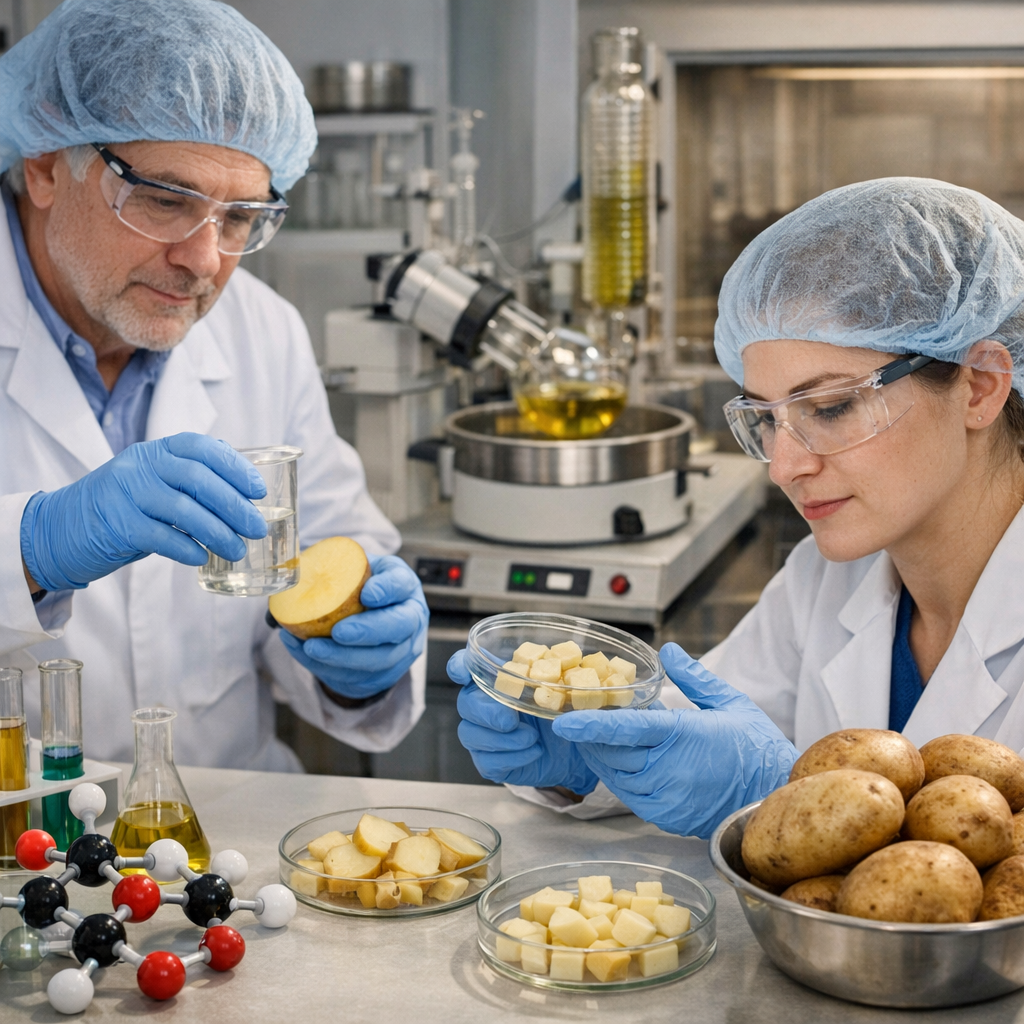
In a recent report titled “Scientists Have Made French Fry Breakthrough,” Wired detailed a development that could reshape how one of the world’s most ubiquitous foods is produced and processed. Researchers, aiming to address long-standing issues in both food quality and safety, have identified new ways to improve the chemistry of potatoes destined for frying, potentially reducing harmful byproducts while preserving taste and texture.
At the center of the breakthrough is the challenge of acrylamide, a chemical compound that can form when starchy foods like potatoes are cooked at high temperatures. Acrylamide has been the subject of years of scientific scrutiny due to concerns over its potential health risks. Traditional mitigation strategies have involved adjusting cooking temperatures or altering storage conditions, often at the expense of flavor or shelf life.
The latest research, as reported by Wired, focuses on modifying the biochemical pathways within the potato itself. By targeting the sugars and amino acids that contribute to acrylamide formation during frying, scientists have demonstrated that it is possible to significantly reduce the compound’s presence without compromising the qualities that make French fries commercially viable and widely enjoyed. This approach appears to offer a more durable solution than post-harvest interventions, which can be inconsistent and difficult to scale.
One notable aspect of the development is its potential compatibility with existing agricultural and industrial systems. Rather than requiring a complete overhaul of farming practices or food processing infrastructure, the changes can be integrated upstream, at the level of crop development. This could make adoption more feasible for producers who must balance regulatory requirements with consumer expectations and cost pressures.
Beyond safety, the breakthrough may also affect texture and taste, two attributes that have historically been difficult to preserve when attempting to reduce acrylamide. Wired reports that early results suggest the modified potatoes maintain the crisp exterior and soft interior that define a well-made French fry. If replicated at scale, this could address a central tension in food science: improving nutritional or safety profiles without diminishing sensory appeal.
The implications extend beyond French fries themselves. Potatoes are a global staple, and similar chemical reactions occur in a range of processed foods. Methods that successfully limit harmful compounds in one context could be adapted to others, potentially influencing a broader segment of the food industry.
However, questions remain about public acceptance, regulatory oversight, and long-term impacts. Innovations that alter the fundamental properties of crops often encounter resistance, particularly when they involve genetic or biochemical modification. Transparency, labeling, and rigorous safety testing are likely to play crucial roles in determining whether this scientific advance transitions into widespread use.
As detailed in Wired’s coverage, the breakthrough represents a convergence of food science, agriculture, and public health priorities. While it does not eliminate the complexities of producing safe and appealing processed foods, it offers a pathway toward reconciling them—an outcome that has eluded researchers and manufacturers for decades.