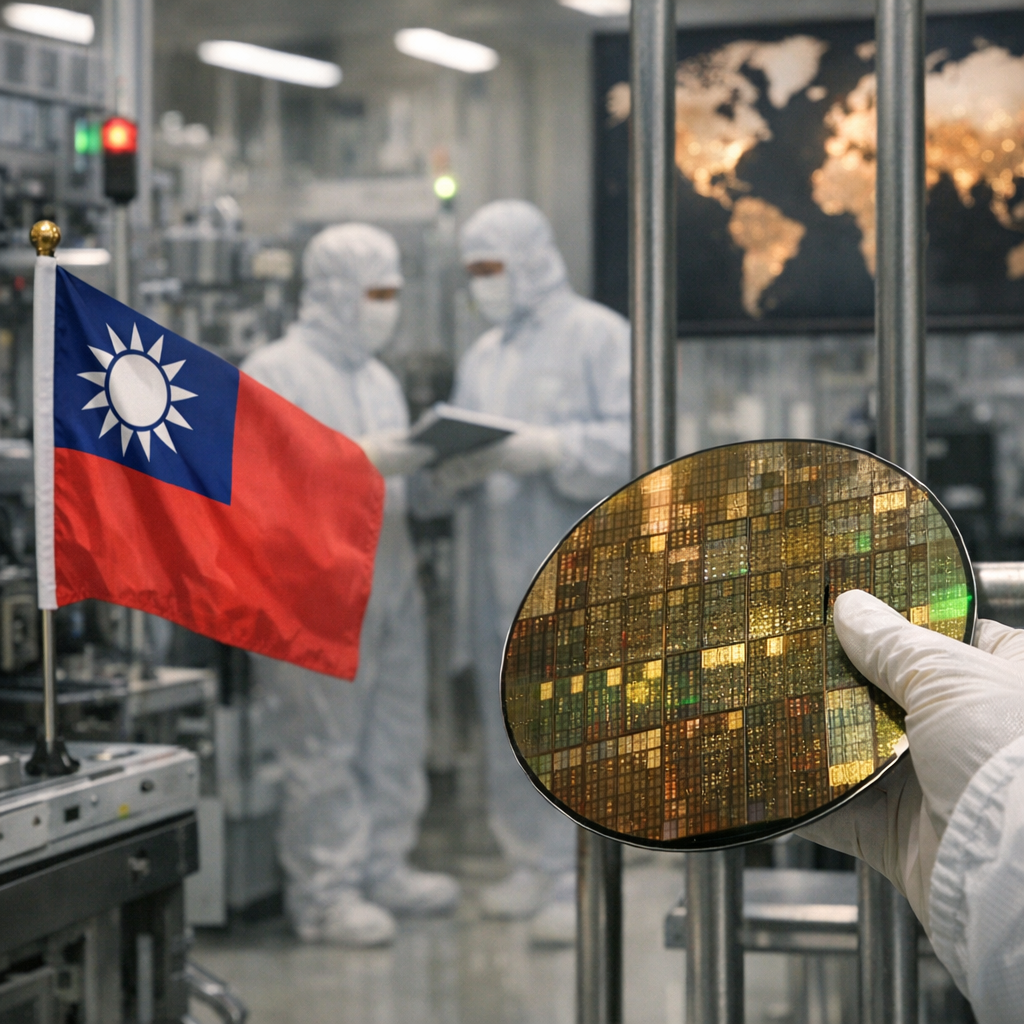
Taiwan’s efforts to safeguard its semiconductor crown jewels are moving into sharper focus as policymakers weigh tighter controls on advanced manufacturing know-how and overseas expansion by local chipmakers. The debate was prompted anew by a report published by the Techtime website under the title “RDC,” which described renewed attention in Taiwan to the risks of sensitive semiconductor technologies and talent flowing abroad, and the mechanisms the government could use to prevent that.
At the center of the discussion is the tension between two imperatives. On one hand, Taiwan’s economy depends heavily on the global competitiveness of its semiconductor firms, which earn revenue by serving international customers and, increasingly, by building manufacturing capacity closer to those customers. On the other, Taiwan’s strategic leverage and national security are closely tied to maintaining a technological lead in leading-edge process technology and keeping critical expertise at home. As global competition intensifies and geopolitical pressures mount, the question of how far Taiwan should go to restrict the movement of technology, personnel, and capital has become more urgent.
Industry analysts note that Taiwan already has tools to regulate sensitive technology exports and overseas investments, but the effectiveness of those tools depends on definitions and enforcement. The most consequential decisions typically hinge on what is classified as “key technology,” which process nodes are considered strategically sensitive, and whether restrictions apply to equipment procurement, process recipes, design and manufacturing know-how, or the movement of specialized engineers. Small changes in those definitions can have large real-world consequences for companies managing multinational operations and for suppliers whose businesses depend on cross-border service and support.
A major driver of the current scrutiny is the rapid globalization of semiconductor supply chains. Taiwanese firms have expanded manufacturing footprints in recent years, encouraged by customer demand for geographic diversification and by government incentives in key markets. Yet the more manufacturing and development work is performed abroad, the more common it becomes for expertise to be transferred through normal operational processes: training programs, joint projects with equipment vendors, staff rotations, and local hiring. Even when companies intend to keep the most advanced work in Taiwan, the boundary between mature and advanced production can blur as processes evolve, yields improve, and older technologies are upgraded with new techniques.
There is also heightened sensitivity around talent. Taiwan’s semiconductor sector relies on highly specialized engineers and technicians whose experience is often cumulative and difficult to replicate. Policymakers and corporate leaders have long worried about poaching by foreign competitors, but the stakes have risen as more jurisdictions invest heavily in building domestic chip industries. Measures aimed at deterring aggressive recruitment overseas, tightening noncompete enforcement, or strengthening penalties for misappropriation of trade secrets have all been discussed in the past; renewed attention suggests that officials may be considering whether existing laws are adequate in a more competitive environment.
From the industry perspective, however, restrictions carry trade-offs. Semiconductor manufacturing is capital-intensive and cyclical; maintaining profitability across downturns often requires securing global customers and collaborating with international partners. If overseas investment approvals become slower or more uncertain, companies could struggle to align capacity with demand or meet customer requirements for local supply. Likewise, strict limits on knowledge transfer could complicate relationships with equipment makers and materials suppliers, which typically depend on close technical collaboration to qualify advanced processes and resolve production issues quickly.
Diplomatically, Taiwan’s choices will be watched closely. Many of Taiwan’s partners want resilient supply chains that include Taiwanese participation, and some have built industrial policies around attracting Taiwanese investment. Moves to tighten outbound controls may strengthen perceptions that Taiwan is intent on protecting its technological edge at all costs, even as it remains committed to global trade. At the same time, a clearer framework could provide predictability, helping partners understand what kinds of investment and cooperation are feasible and where red lines are likely to be drawn.
The issues outlined by Techtime in “RDC” come as the semiconductor industry faces a broader recalibration: governments are treating chips not only as commercial products but as strategic assets. For Taiwan, which sits at the center of the world’s most advanced manufacturing ecosystem, policy adjustments are likely to be incremental rather than sweeping. But even incremental changes—such as expanding the scope of regulated technologies, tightening review standards for overseas projects, or increasing penalties for illicit technology transfer—could have substantial effects on corporate planning and on the global distribution of advanced production.
Ultimately, Taiwan’s challenge is to design rules that are enforceable and precise, protecting genuinely sensitive capabilities without discouraging the investment, collaboration, and talent development that made the island indispensable in the first place. As policymakers move from concern to concrete action, the coming months will show whether Taiwan opts for a more restrictive posture or seeks a balance that preserves both strategic control and industrial momentum.