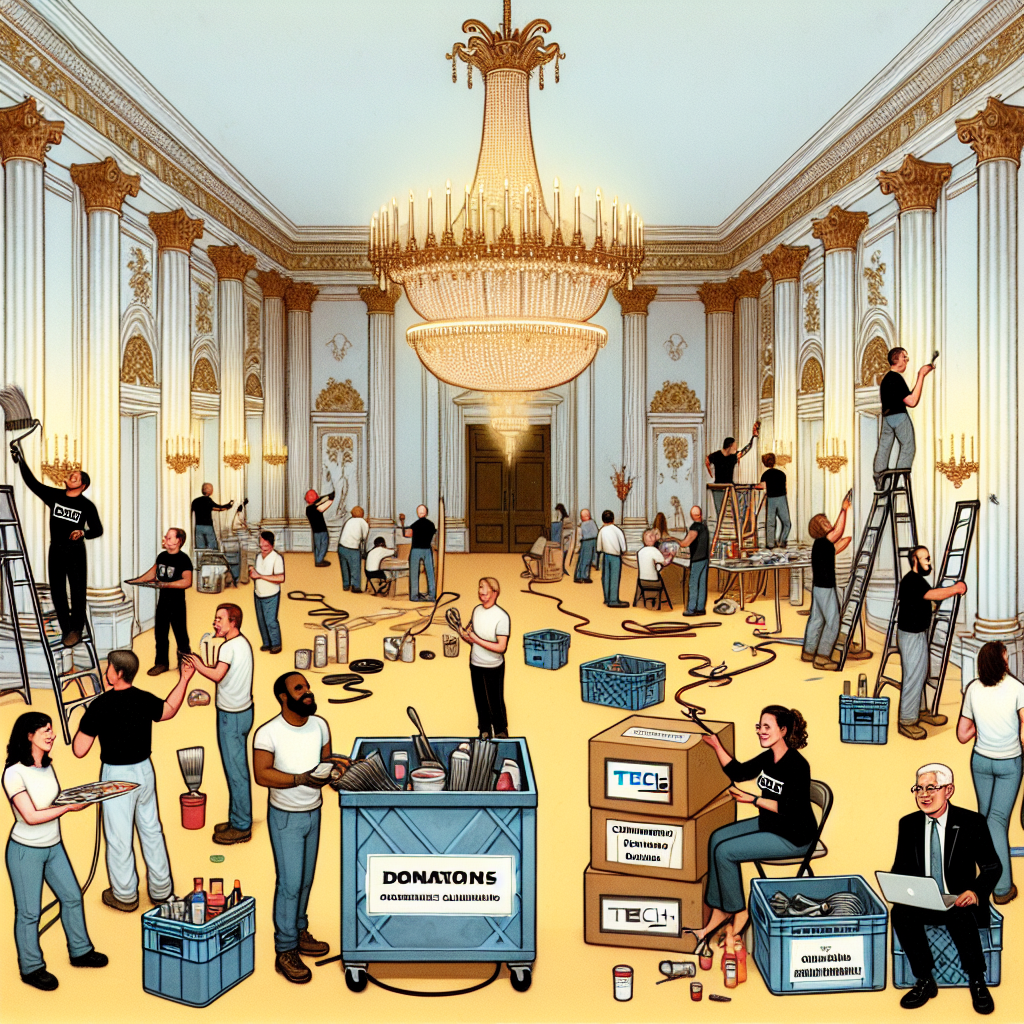
A growing nexus between political power and corporate influence is drawing renewed scrutiny in Washington as reports emerge that several major technology firms have contributed substantial financial backing for the refurbishment of a historic White House event space. According to a report titled “Big Tech Is Paying for Trump’s White House Ballroom,” published by StartupNews.fyi on October 24, 2025, private donations from leading tech companies are helping fund the renovation of the East Room—often used for state dinners, press events, and ceremonial functions—now described by insiders as being transformed into a more formal “White House Ballroom.”
Citing unnamed sources familiar with the matter, StartupNews.fyi indicates that top executives from at least three Silicon Valley giants, including two firms with active antitrust proceedings pending at the federal level, have committed millions of dollars to underwrite the modernization project. The companies reportedly view the funding as both a civic contribution and an opportunity to strengthen lines of communication with the second Trump administration, which has at times had a fraught relationship with the technology sector.
The disclosed renovations—which include upgraded chandeliers, custom drapery, and audiovisual installations calibrated for live broadcast—are described by supporters as necessary for a White House increasingly reliant on digital platforms and large-scale media events. However, critics argue that the infusion of private capital into a symbolic arm of the executive branch sets a concerning precedent, blurring the boundaries between public governance and corporate sponsorship.
Ethics experts have raised concerns about both the timing and optics of such contributions. “When organizations currently under active federal investigation are funding renovations inside the seat of executive power, it raises fundamental questions about access, influence, and transparency,” said Sarah L. Meyers, a senior fellow at the nonpartisan Center for Political Integrity. She notes that, while private donations to federal properties are not inherently illegal, the lack of clear disclosure requirements risks undermining public trust.
According to the StartupNews.fyi article, the decision to accept private funding was made quietly, and details have not been formally announced by the White House. However, event planners and administration officials reportedly anticipate unveiling the renovated ballroom during a high-profile reception later this year.
The Trump administration has not publicly confirmed the identities of the contributing companies, nor has it responded to inquiries regarding the nature of any discussions surrounding regulatory matters or government contracts that may have coincided with these contributions. A spokesperson for one of the firms mentioned in the original report said only that the donation “reflects a deep respect for American institutions and the tradition of public-private partnership.”
This development occurs amid a broader reassessment of corporate influence in American politics. As technology companies continue to expand their dominance over critical sectors of the economy—from AI to cloud infrastructure—policymakers and civil society groups are increasingly focused on the quiet channels through which political access may be purchased or rewarded.
While public-private partnerships have long supported major cultural and infrastructure initiatives, their incursion into the inner sanctums of executive authority—especially under opaque circumstances—raises unavoidable questions about the health of democratic accountability. As more details emerge, observers on both sides of the aisle are likely to press for clearer standards on how political institutions engage with deep-pocketed private interests.