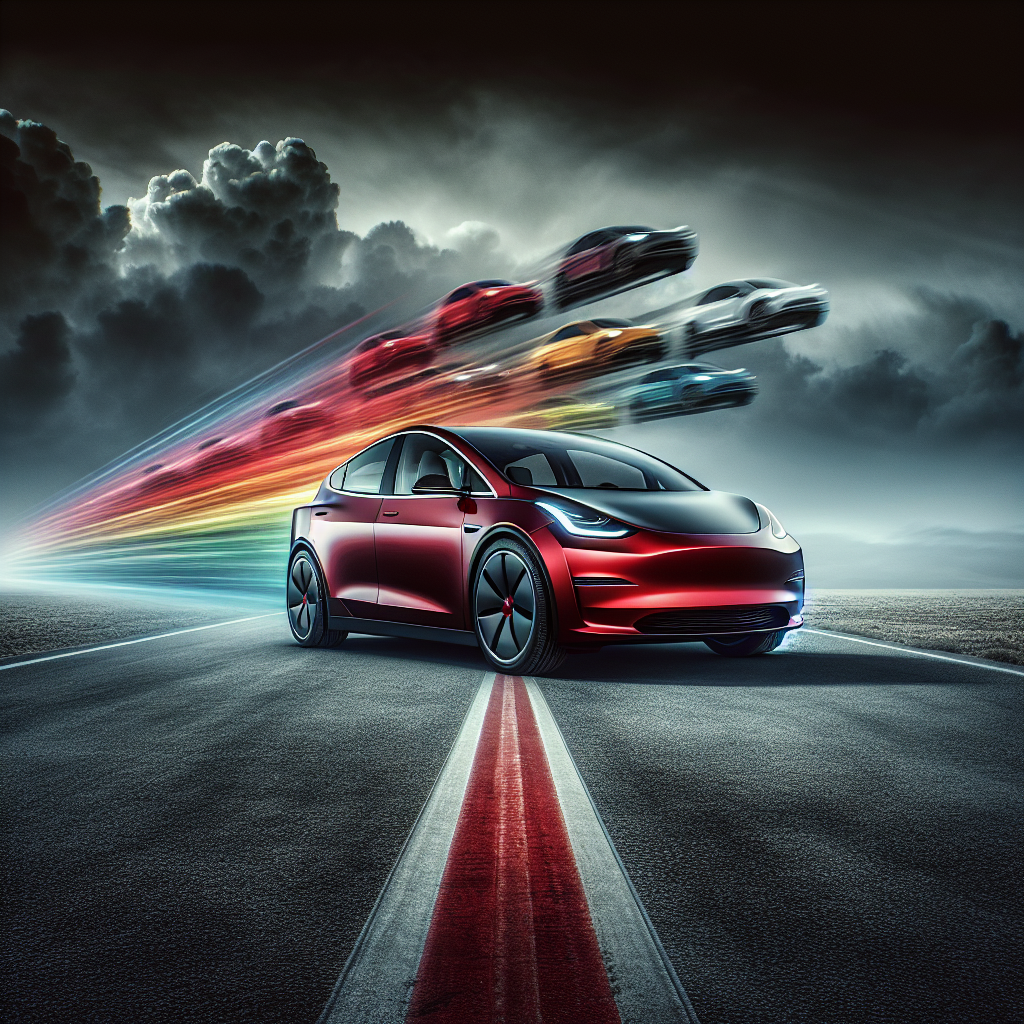
Tesla, the once undisputed leader in the electric vehicle (EV) market, has experienced a significant setback, reporting a 9% annual decline in global vehicle sales for 2025. The drop comes amid intensifying competition and has resulted in the American EV titan being overtaken by Chinese rival BYD as the world’s top-selling EV manufacturer. The figures were reported in an article titled “Tesla Annual Sales Decline 9% As It’s Overtaken by BYD As Global EV Leader,” published by StartupNews.fyi on January 2, 2026.
According to the report, Tesla delivered approximately 1.81 million vehicles globally in 2025, down from 1.98 million the previous year. In contrast, BYD achieved a total of 3.02 million EV deliveries, including both battery electric vehicles (BEVs) and plug-in hybrid electric vehicles (PHEVs). While Tesla continues to focus solely on BEVs, BYD’s hybrid offerings have expanded its market reach, particularly in emerging markets and areas with limited charging infrastructure.
Industry analysts suggest that Tesla’s sales decline reflects a confluence of strategic and operational challenges. Supply chain constraints, increased borrowing costs, and weakened consumer demand in major markets such as North America and Europe have all played a role. Furthermore, emerging competition from established automakers and aggressively expanding Chinese EV players has eroded some of Tesla’s first-mover advantage.
In response to softer demand and slowing delivery growth, Tesla implemented a series of price cuts throughout 2025. While these pricing adjustments succeeded in bolstering short-term sales in key markets like China and the United States, they also pressured the company’s profit margins—raising questions about the long-term sustainability of its current pricing strategy.
Adding to the headwinds, Tesla’s long-anticipated Cybertruck launched with limited deliveries in December 2025 after years of delays. The company’s ability to scale production of the new model will be closely watched in 2026 as it attempts to reassert its innovation-driven image and attract new customers.
Meanwhile, BYD has rapidly scaled its manufacturing capabilities and expanded its global footprint, including new market entries in Europe, Southeast Asia, and Latin America. Its success in integrating vertically across the supply chain, from battery production to final assembly, has provided cost advantages that many competitors struggle to match.
Although Tesla remains a formidable force in the EV sector, the shift in global leadership raises broader questions about the future landscape of the electric mobility industry. The rise of BYD and other Chinese manufacturers signals a significant geopolitical realignment in automotive manufacturing, once dominated by North American, European, and Japanese firms.
Tesla CEO Elon Musk has yet to comment publicly on the 2025 delivery numbers or the company’s status relative to BYD. Investors and industry observers will likely look to upcoming earnings reports and future product announcements for indications of how Tesla plans to respond to this competitive threat.
As the global transition to clean mobility enters a more mature and contested phase, the battle for EV leadership is no longer only about innovation but also about scale, affordability, and strategic positioning. Tesla’s decline in annual sales and its slip from the top spot mark a pivotal moment in a rapidly evolving industry.