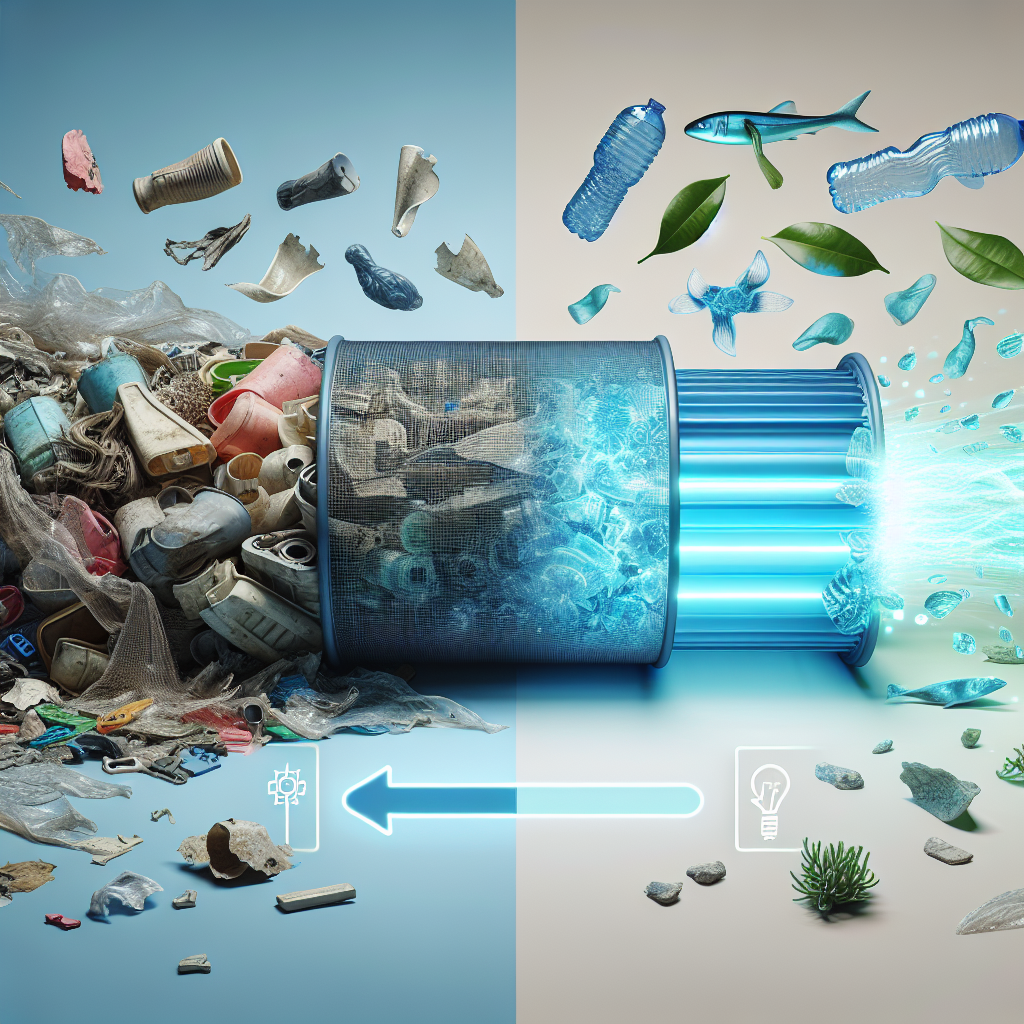
In an era increasingly focused on environmental sustainability, Israel-based Clariter, a pioneering clean-tech company, has made significant strides in solving one of the most pressing global issues: plastic waste. The firm has developed a unique recycling technology that transforms plastic waste into high-value, industrial-grade products, which include oils, waxes, and solvents.
According to a recent report by Calcalist Tech, Clariter’s innovative approach stands out by not just repurposing or reusing plastic but by upcycling it into superior quality products that serve various industrial applications. This technology not only offers a promising solution to the global plastic pollution crisis but also opens up new economic opportunities in the circular economy space.
Clariter’s method involves a chemical recycling process that breaks down different types of plastic waste that are often not recycled by conventional methods. These include plastics like Polyethylene, Polypropylene, and Polystyrene, which can be found in everything from packaging to automotive parts. Unlike mechanical recycling, which often results in lower-quality plastic susceptible to degrading after repeated use, Clariter’s chemical recycling maintains the integrity of the by-products.
The implications of such technology are vast. From an environmental perspective, it addresses the urgent need for reducing landfill usage and the reliance on virgin materials, thereby lowering carbon footprints. Economically, it converts waste into valuable commodities, potentially stabilizing markets and offering a new revenue stream for businesses involved in waste management and recycling industries.
Moreover, Clariter’s technology aligns with global regulatory trends towards stricter waste management policies and increased recycling rates. As governments worldwide impose tougher regulations on waste handling and recycling standards, technologies like those developed by Clariter could become indispensable in helping industries comply with these new norms.
This disruptive technological advancement comes at a critical time. According to the United Nations, global plastic production has outpaced most other man-made materials, and the vast majority of this ends up in landfills or in the natural environment, often finding its way to the oceans where it poses serious threats to aquatic life. The World Economic Forum has even predicted that by 2050, there could be more plastic than fish in the world’s oceans by weight.
Investors and industry stakeholders are taking notice of Clariter’s potential. With operational facilities in Eastern Europe and plans for expansion, the company is poised to scale its impact. Strategic partnerships and further development of their technology could see widespread adoption on a global scale, contributing significantly to waste reduction and resource sustainability efforts.
In an interview with Calcalist Tech, Ran Sharon, CEO of Clariter, emphasized that the company is not just transforming plastic waste but is also actively contributing to creating a sustainable future. He highlighted that their technology has reached a stage where it can achieve a significant upcycling output rate, making it both a viable environmental and economic solution.
Indeed, as the world grapples with the challenges posed by plastic waste, innovations like those from Clariter offer a beacon of hope. It showcases a successful melding of science, technology, and environmental stewardship, pointing towards a future where economic development does not come at the expense of the planet. As such, the ongoing developments in this arena will be critical to watch, as they will play a pivotal role in shaping both industrial practices and environmental policies in the years to come.