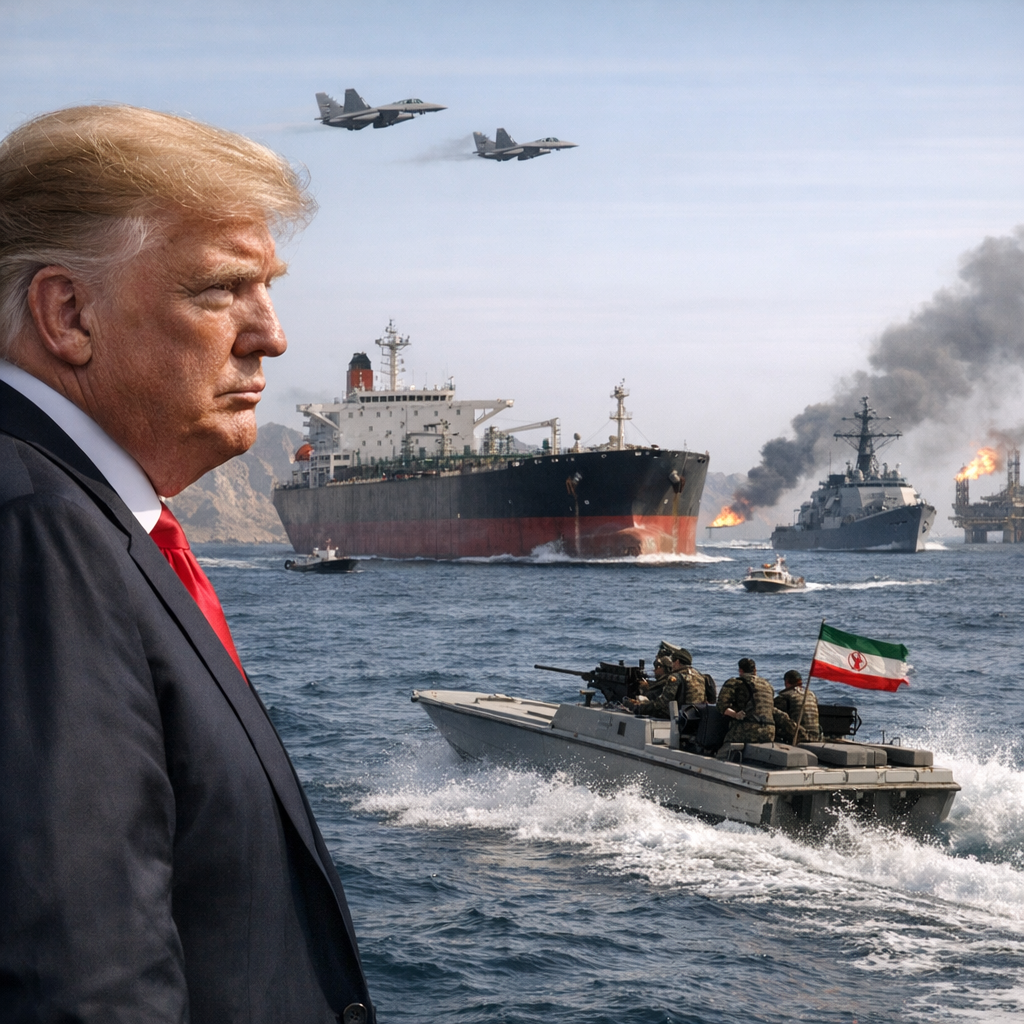
An article published by The Economic Times titled “Will obliterate power plants: Trump issues 48‑hr ultimatum to Iran over Hormuz, Tehran responds” has drawn renewed attention to escalating rhetoric around one of the world’s most strategically sensitive waterways, underscoring the fragility of regional stability in the Persian Gulf.
According to the report, former U.S. President Donald Trump issued a stark warning directed at Iran, threatening severe military action against Iranian infrastructure, including power facilities, if Tehran were to interfere with shipping through the Strait of Hormuz. The message, framed as a 48-hour ultimatum, reflects a sharp intensification in language around a longstanding geopolitical flashpoint. The strait, through which a significant portion of global oil supply passes, has repeatedly been at the center of tensions between Washington and Tehran.
Iranian officials responded with defiance, signaling that any external threat would be met with firm retaliation. Tehran’s reaction, as described in the Economic Times piece, emphasized sovereignty and warned against what it characterized as coercive posturing. The exchange highlights the persistent cycle of provocation and response that has defined U.S.-Iran relations in recent years.
Security analysts note that while such statements may be partly rhetorical, they carry tangible risks. Even limited miscalculations in the Gulf could disrupt energy markets and draw in regional actors, including Gulf states and international naval forces tasked with safeguarding shipping lanes. The Strait of Hormuz remains a critical artery for global energy, with even temporary disruptions capable of triggering price volatility and supply concerns far beyond the region.
The language attributed to Trump marks a continuation of a more confrontational approach that prioritizes deterrence through overt threats, in contrast to diplomatic engagement strategies pursued at other times. Observers suggest that such statements, whether issued in an official or informal capacity, can influence regional dynamics by emboldening hardline positions on both sides.
At the same time, Iran’s response indicates little appetite for de-escalation under pressure. Iranian leaders have historically framed their stance in terms of resistance to external intervention, and the latest exchange appears consistent with that posture. This raises the likelihood that rhetoric could continue to escalate, even if immediate military action remains unlikely.
The situation described in the Economic Times report underscores a broader pattern in global geopolitics, where strategic chokepoints such as Hormuz serve as focal points for power projection and signaling. While no immediate operational moves were confirmed, the exchange of threats alone is sufficient to heighten anxiety among policymakers, investors, and shipping interests.
For now, the confrontation remains verbal, but the underlying tensions it reflects are deeply entrenched. Without a diplomatic mechanism to ease hostilities, the risk of escalation—intentional or accidental—remains a persistent concern for the international community.