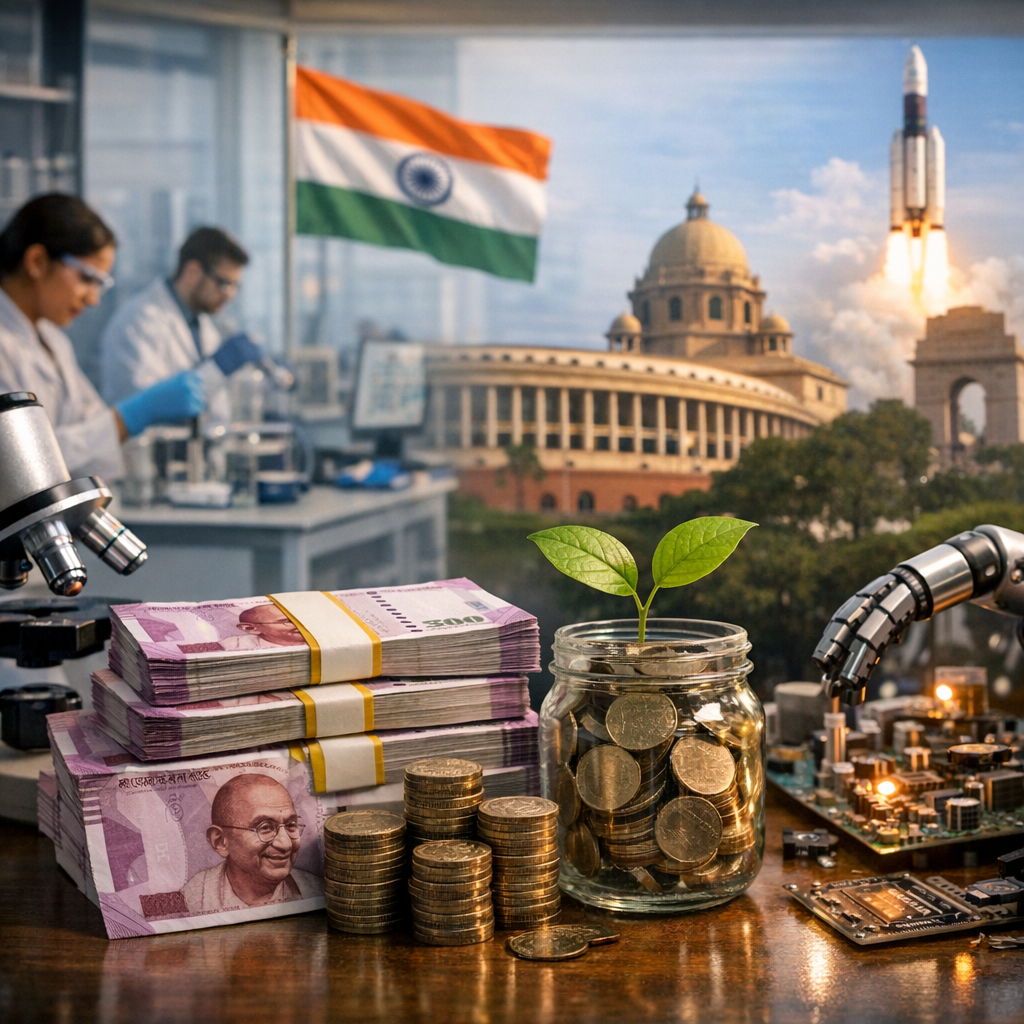
In a landmark address to Parliament, Finance Minister Nirmala Sitharaman unveiled the Union Budget for 2026–27, detailing an expansive fiscal roadmap focused on infrastructure growth, rural revitalization, and bolstering manufacturing, while pledging continued fiscal prudence. The announcements, as reported in “Budget 2026 Highlights: Nirmala Sitharaman Budget Speech Announcement – Income Tax, Middle Class, Fiscal Deficit, Jobs, Subsidy, Defence, Tariff, MSP, Agri, Trains in Union Budget 2026–27” by The Economic Times, underscore a balancing act aimed at economic consolidation ahead of the general elections.
In her seventh consecutive Budget presentation, Sitharaman projected a fiscal deficit of 5.1 percent of GDP, signaling the government’s intent to stay on track with its medium-term fiscal consolidation goals. While refraining from sweeping tax reforms, the Finance Minister maintained consistency in direct tax policy, avoiding any changes to income tax slabs and placing emphasis on stability for individual taxpayers and small businesses.
However, the government announced several measures to stimulate employment and strengthen the rural economy. A sharp thrust on Agri-sector investments stood out, with increases in Minimum Support Prices (MSPs), expanded irrigation funding, and promotion of agri-tech adoption. The measure aims to bolster farmer incomes while enhancing productivity in an election-sensitive demographic. Simultaneously, a new initiative was launched to mechanize and digitize primary agricultural markets, reinforcing the government’s efforts to modernize India’s farm economy.
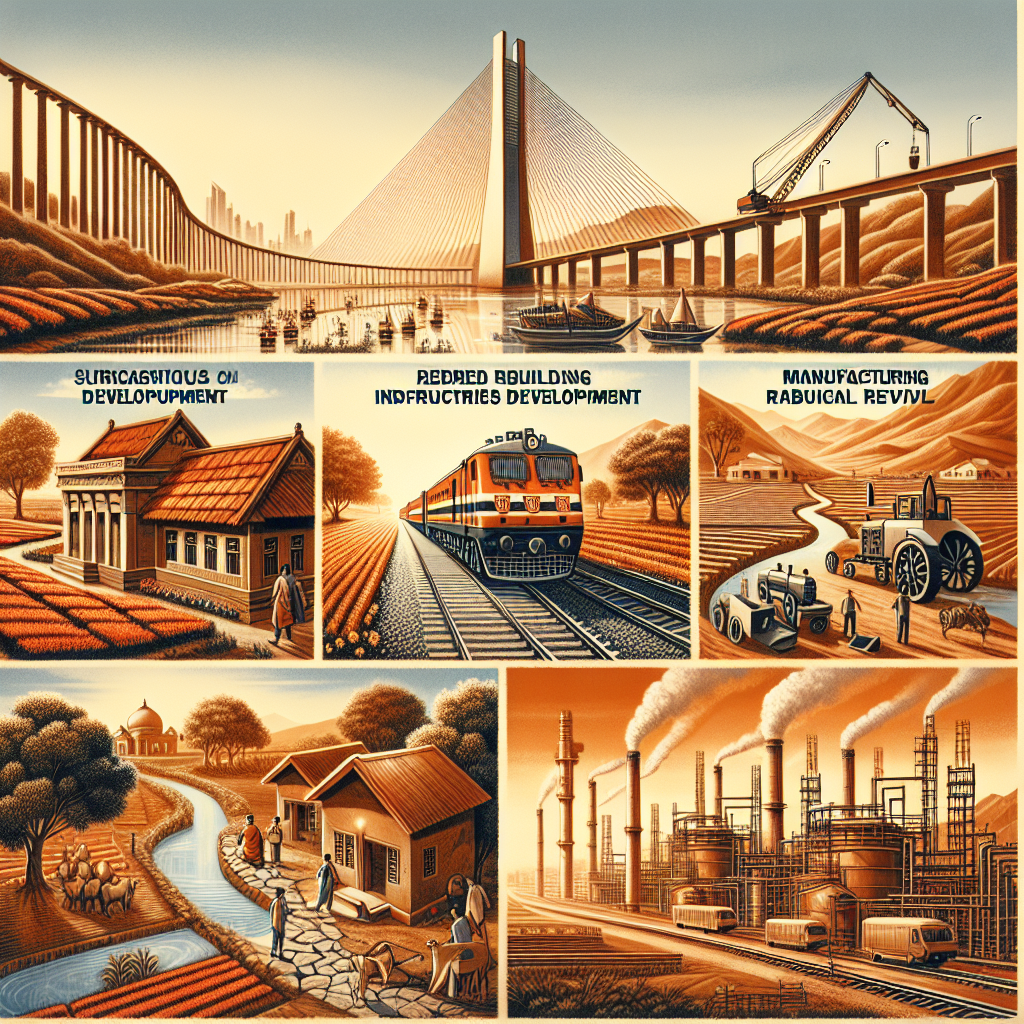
Infrastructure development remains at the heart of the government’s economic vision, with a capital expenditure outlay of Rs 11.11 lakh crore—a notable 16 percent increase over the previous year. Funds have been earmarked for highways, railway modernization, and logistics corridors, with a focus on improving last-mile connectivity and facilitating industrial growth. The Budget also includes a new railway initiative that aims to add 3,000 kilometers of new tracks, emphasizing faster movement of goods and passengers.
Manufacturing received a boost with tariff adjustments to promote domestic value addition. Select customs duties were revised to protect and encourage local industries, particularly in electronics, defense, and renewable energy components. Meanwhile, the Production-Linked Incentive (PLI) scheme has been expanded to include additional sectors, such as semiconductors and green hydrogen, reinforcing the government’s push towards technology-driven industrialization.
In line with the broader goals of job creation, the government also announced a one-year extension for the Emergency Credit Line Guarantee Scheme to support MSMEs, especially in labor-intensive industries. This initiative, coupled with continued investments in skilling programs, is expected to buttress employment generation across urban and semi-urban regions.
Addressing environmental concerns, Sitharaman highlighted increased allocations for renewable energy deployment and affirmed commitments toward meeting India’s net-zero targets. She announced fresh support for solar energy and energy storage infrastructure, aiming to attract both domestic and global investment into India’s expanding green economy.
Notably absent were populist giveaways. The budget largely retained its measured tone, focusing on long-term economic expansion rather than short-term consumption spikes. This signals the government’s preference for supply-side interventions, even in a pre-election year, and underscores an effort to maintain macroeconomic stability against a backdrop of global uncertainties.
As India eyes a sustained growth trajectory, Budget 2026–27 lays out a framework steeped in structural investments, targeted social spending, and disciplined finances. The strategy illustrates the government’s continued reliance on capital infusion and private sector participation to drive transformation, while carefully navigating the political and economic imperatives of the coming year.