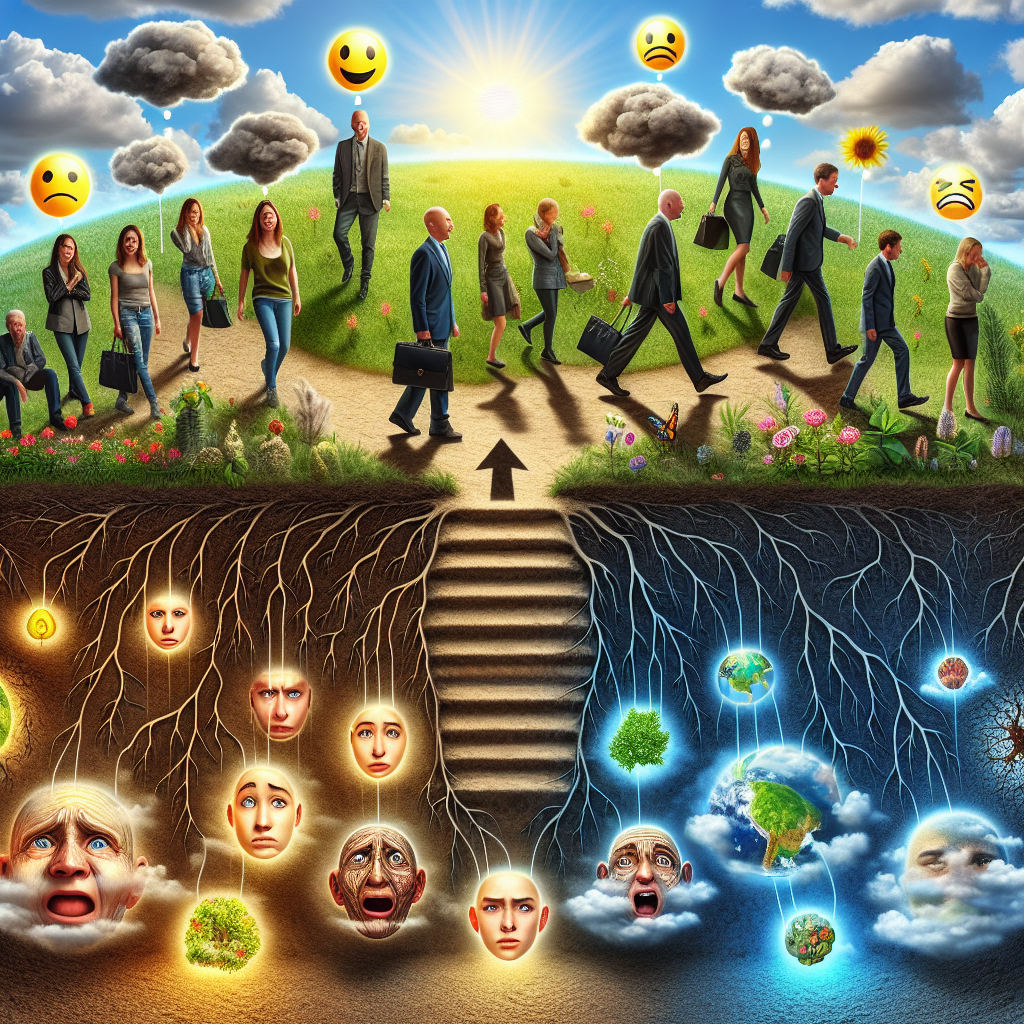
In the ongoing global battle against climate change, a recent report from Tech Xplore sheds light on a rather overlooked aspect of environmental stressors: the potential for increased emissions stemming from human frustration. The article titled “Becoming aware of the frustration-induced emissions” explores how emotional responses and daily irritations might inadvertently contribute to carbon emissions, a novel consideration that adds complexity to the climate discourse.
The report highlights that everyday frustrations, while often dismissed as merely psychological annoyances, have tangible environmental consequences. These emotional states can result in behaviors that lead to increased energy consumption. For instance, individuals experiencing high levels of stress or frustration may resort to comfort activities that they perceive as soothing, such as taking longer hot showers, overusing electricity, or excessive driving. These actions, although seemingly minor, aggregate to a significant environmental footprint when considered on a societal scale.
The article emphasizes the importance of becoming conscious of these indirect effects on the environment. Researchers argue that understanding and mitigating frustration-induced emissions could be a vital component of comprehensive climate action plans. It encourages individuals and communities to adopt more sustainable coping mechanisms for stress, which could include mindfulness practices, physical exercise, or eco-friendly hobbies.
There is a call for further studies to quantify the exact impact of human emotions on carbon emissions. The research presented suggests that policymakers, psychologists, and environmentalists need to collaborate to explore new strategies for reducing this form of emission. Public awareness campaigns and interventions that promote emotional well-being while concurrently reducing environmental impact could form a dual-edged approach to climate mitigation.
Moreover, the piece implicitly raises questions about the societal structures that contribute to widespread frustration, such as urban congestion, rigid work schedules, and inadequate public services. Addressing these root causes may not only enhance quality of life but also provide indirect benefits to the environment.
In a world where the effects of climate change are becoming increasingly pervasive, the insights offered by Tech Xplore introduce a fresh perspective on tackling emissions. It suggests an intersection between emotional health and environmental responsibility, marking a shift towards more holistic sustainability strategies. As societies evolve and incorporate technology into everyday life, recognizing and mitigating the broader implications of human behavior on the planet becomes ever more crucial.
This thought-provoking exploration encourages a reevaluation of how personal choices and emotional health intersect with broader environmental goals. In the quest for a sustainable future, acknowledging the subtleties of human behavior, as indicated by the Tech Xplore report, could be an unexpected yet indispensable component of climate strategy.