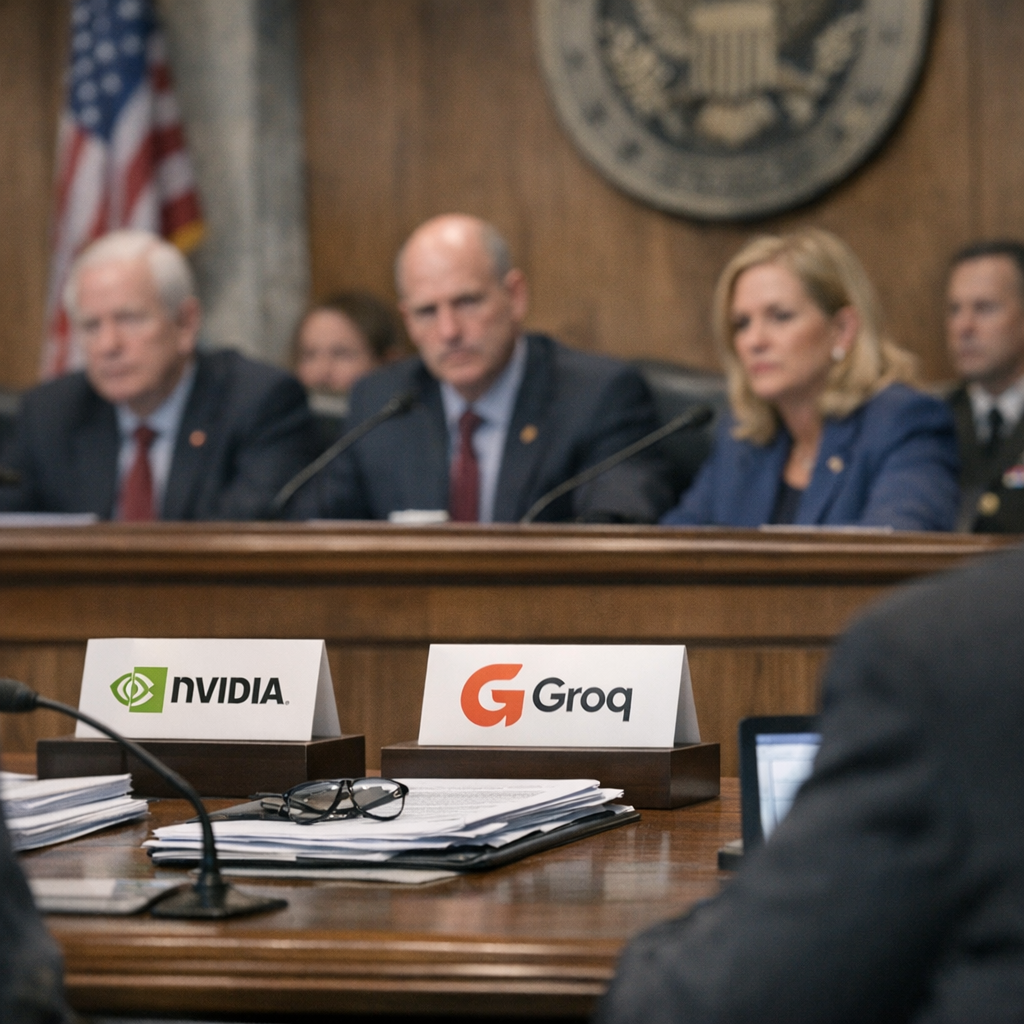
Questions are mounting in Washington over a reported multibillion-dollar technology deal involving Nvidia, as two senior U.S. senators press for closer scrutiny of the arrangement’s national security implications and market impact.
According to the Economic Times article titled “Nvidia’s $20 billion Groq deal queried by Elizabeth Warren, Richard Blumenthal,” Democratic Senators Elizabeth Warren and Richard Blumenthal have formally raised concerns about Nvidia’s reported $20 billion agreement with AI chip startup Groq. In a letter addressed to U.S. regulators, the lawmakers called for greater transparency around the transaction, warning it could reshape competition in the fast-evolving artificial intelligence sector while potentially exposing critical infrastructure to geopolitical risk.
The senators are particularly focused on how such a large-scale partnership might consolidate Nvidia’s already dominant position in high-performance AI chips. Nvidia has become the central supplier of graphics processing units powering generative AI systems, and any move that deepens its integration with emerging players could, they argue, further entrench that dominance and limit competition.
Beyond antitrust considerations, Warren and Blumenthal highlighted national security concerns tied to advanced semiconductor technology. They urged regulators to assess whether the deal could enable sensitive technologies to flow into jurisdictions or channels that might undermine U.S. strategic interests, especially given the global race to control AI infrastructure.
Groq, a relatively young company developing AI inference chips, has been positioning itself as an alternative to traditional GPU-based systems. A partnership or investment of this scale could accelerate its expansion, potentially reshaping the supply chain for AI computing power. However, lawmakers appear wary that such consolidation—particularly involving a company with Nvidia’s reach—could narrow the field rather than broaden it.
Regulators have not yet publicly outlined whether they will open a formal investigation, but the scrutiny reflects a broader shift in Washington toward tighter oversight of AI-related deals. As artificial intelligence becomes increasingly central to economic competitiveness and national security, large transactions in the sector are drawing heightened bipartisan attention.
The Economic Times report underscores that the inquiry is part of a wider pattern of U.S. lawmakers pressing tech companies for clarity on partnerships, investments, and export controls related to advanced semiconductors. With Nvidia at the center of the global AI boom, any major deal it undertakes is likely to face intensified examination from policymakers concerned about both market power and strategic risk.