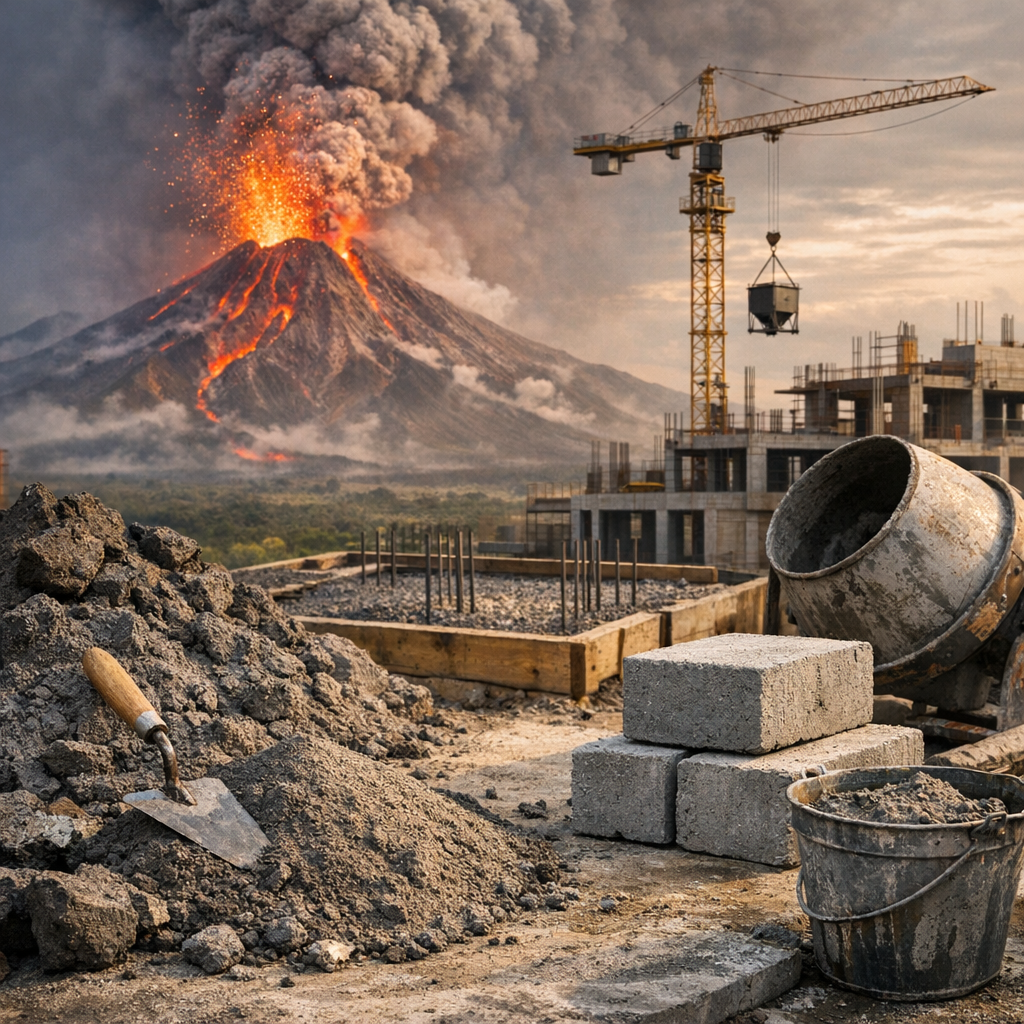
Researchers have developed a new cement formulation inspired by volcanic materials that could significantly reduce the carbon footprint of one of the world’s most polluting industries, according to a report published by Tech Xplore. The original article, titled “Volcanic formula could cut cement emissions by two-thirds,” details how scientists are rethinking conventional cement chemistry to curb emissions without sacrificing performance.
Cement production is responsible for roughly 7 to 8 percent of global carbon dioxide emissions, largely due to the energy-intensive process of heating limestone and the chemical reactions involved. The new approach replaces a substantial portion of traditional clinker—the most carbon-intensive component of cement—with materials that mimic the natural processes found in volcanic rock formation.
According to the researchers, the alternative formulation leverages aluminosilicate materials that can be activated at lower temperatures and with fewer emissions. By reducing reliance on limestone and avoiding the high heat typically required in cement kilns, the process could cut emissions by up to two-thirds compared with conventional methods.
The team also reports that the resulting material meets key performance benchmarks, including strength and durability, which are critical for widespread adoption in construction. Early testing suggests the volcanic-inspired cement can be produced using existing industrial infrastructure, potentially easing the transition for manufacturers.
Despite these promising findings, challenges remain. Scaling production, ensuring consistent raw material supply, and navigating regulatory standards are likely to be significant hurdles. Industry adoption will depend not only on technical viability but also on cost competitiveness and market acceptance.
Still, the development marks a notable step in efforts to decarbonize heavy industry. As governments and companies face increasing pressure to meet climate targets, innovations like this could play an essential role in reducing emissions from sectors that have historically proven difficult to clean up.