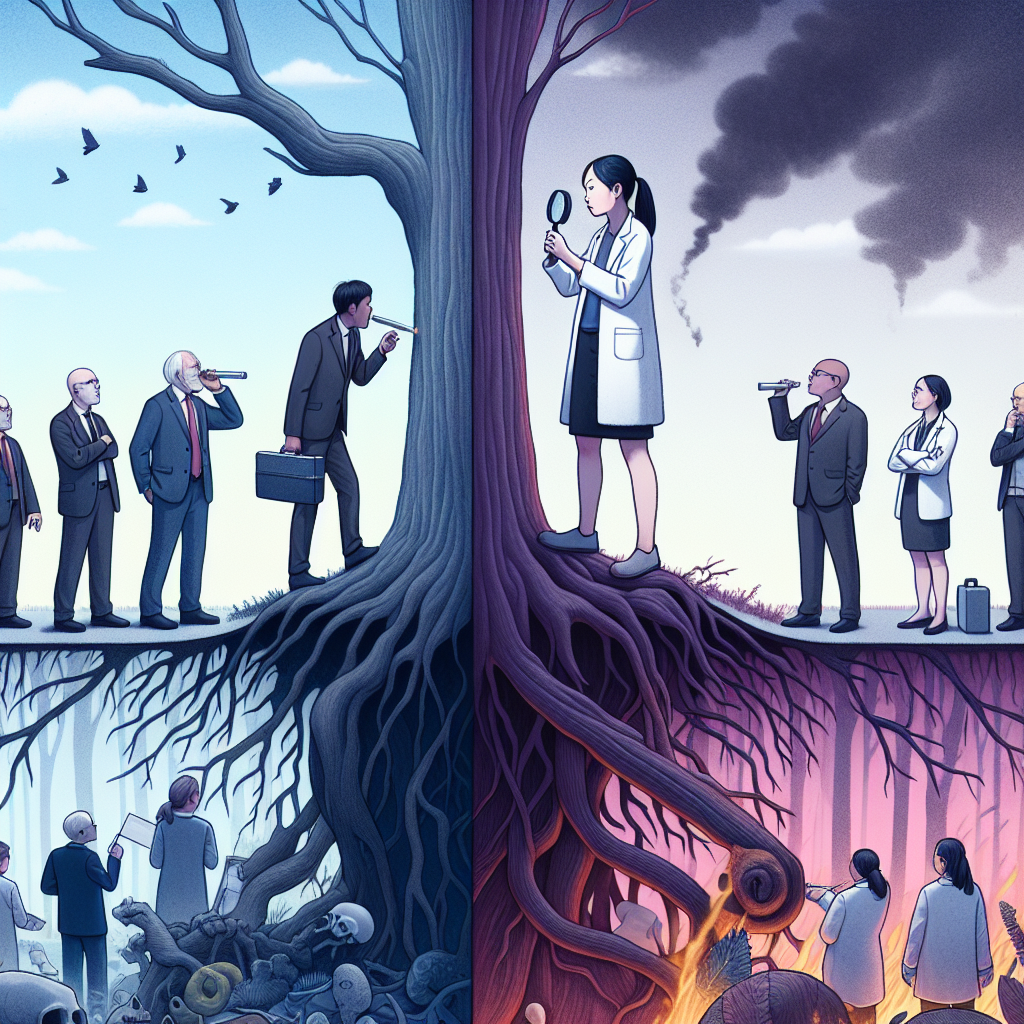
A new peer-reviewed study published in *Frontiers in Human Dynamics* casts a spotlight on how beliefs and political orientation influence the acceptance of climate change science more significantly than scientific understanding alone. The article, titled “Science Is Not Enough: Beliefs and Political Orientation Drive Climate Change Perceptions,” presents compelling evidence that addressing climate misinformation and polarization requires strategies that go beyond simply disseminating facts.
Authored by a team of interdisciplinary researchers, the paper explores how cultural identity, ideology, and trust in science interact to shape public opinion on climate change. Drawing on empirical data and a comprehensive review of social science literature, the study finds that individuals who identify strongly with certain political groups are more likely to interpret climate-related information in ways that reinforce prior beliefs rather than update them based on scientific consensus. In particular, conservative political identity was found to correlate with higher levels of skepticism about climate science, regardless of individuals’ levels of scientific literacy or education.
The researchers note that this pattern reflects a phenomenon known as “motivated reasoning,” in which people process information in a biased manner consistent with their cultural or political worldview. In this context, increased scientific knowledge does not necessarily lead to greater climate change acceptance—in some cases, it may actually deepen resistance, as individuals selectively assimilate or reject evidence to protect their identity.
One critical insight from the study is the danger of assuming that public misunderstanding about climate change stems from a deficit of knowledge. While scientific education remains important, the authors argue that public communications about climate must also consider emotional, cultural, and political dimensions. Efforts to bridge the divide, the study suggests, will require tailored messaging approaches that engage diverse worldviews and build trust across ideological lines.
The findings arrive at a crucial juncture in the global climate conversation, as policymakers confront increasing urgency to implement meaningful action while facing entrenched political opposition within some constituencies. The authors propose that more effective public engagement must include not only transparency and clarity in science communication but also strategies that acknowledge the social contexts in which beliefs are formed and sustained.
“Science Is Not Enough: Beliefs and Political Orientation Drive Climate Change Perceptions” contributes to a growing body of research signaling that confronting climate misinformation involves navigating a complex interplay of facts, identity, and values. As the climate crisis deepens, the study challenges educators, communicators, and leaders to reckon with the nuances of public persuasion—and the limits of scientific authority in a politically divided landscape.