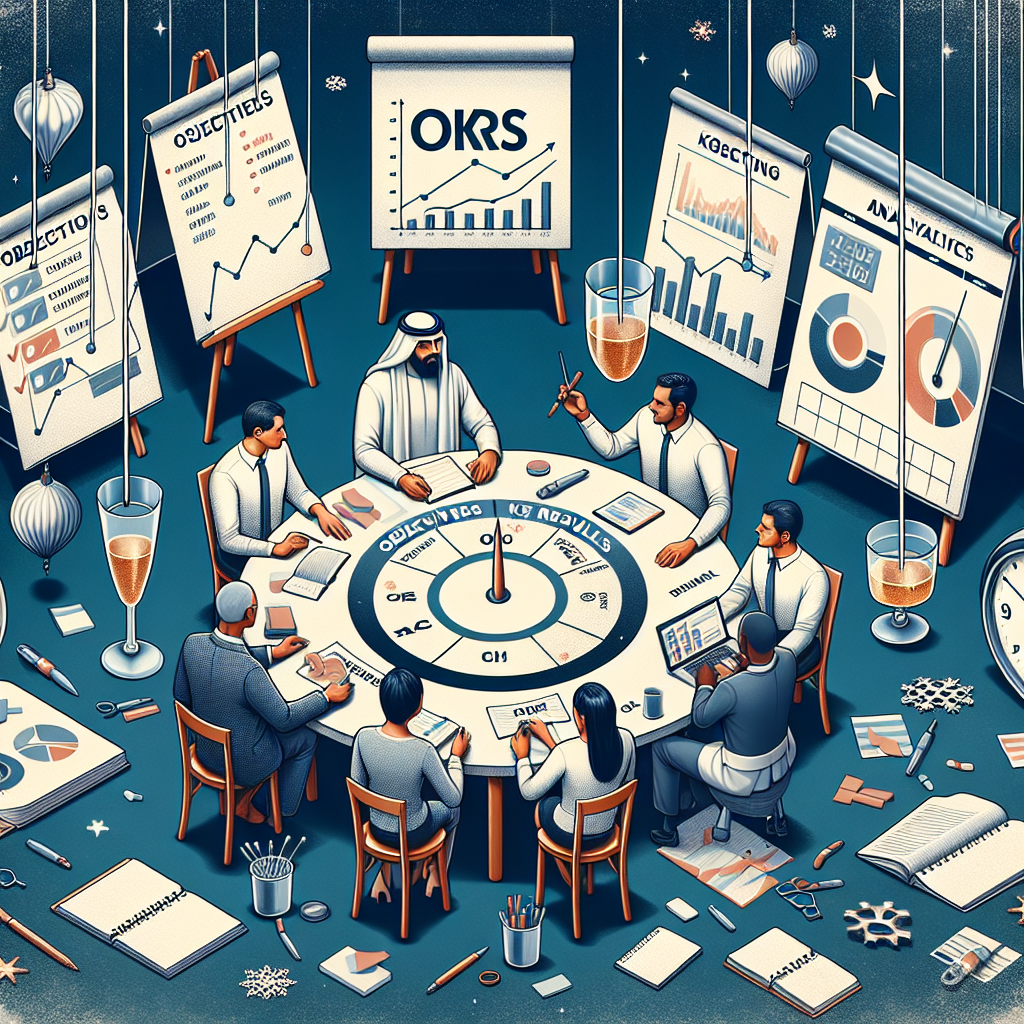
As the year draws to a close, the tradition of making New Year’s resolutions becomes a focal point for many individuals aiming to improve aspects of their personal and professional lives. However, a new trend is gaining momentum, suggesting that setting Objectives and Key Results (OKRs) may prove more effective than traditional resolutions. According to a recent piece titled “Don’t make New Year’s resolutions for 2026; create your OKRs instead,” published by VC Cafe, OKRs could be the answer to achieving more targeted and measurable success in the coming year.
OKRs are a framework for defining and tracking objectives and their outcomes. The method originates from Intel and has been popularized by major firms such as Google and Spotify. It involves establishing a clear objective accompanied by key, quantifiable results, which are regularly monitored. This strategic approach not only clarifies the desired outcomes but also engages a systematic way to measure progress.
The attraction of OKRs lies in their specificity and flexibility, making them useful across various personal and professional fields. Unlike vague resolutions often abandoned by mid-February, OKRs require ongoing evaluation and adjustment, promoting sustained engagement. For instance, whereas a typical New Year’s resolution might state a goal to “get fit,” an OKR would specify “to achieve a target weight of 160 pounds by the end of the third quarter, with milestones set for each month.” This approach not only sets a clear goal but also includes a timeline and measurable checkpoints, providing continuous motivation and a structure for assessment.
Experts suggest that implementing OKRs can cultivate a mindset geared towards continuous improvement and resilience. The iterative process—characterized by setting, tracking, and revising goals—helps foster a culture of persistent effort and adjustment, which is crucial in navigating personal growth and change. It also encourages a balanced view wherein setbacks are seen as opportunities for learning rather than failures.
Transitioning from making resolutions to establishing OKRs may require some mentoring or upfront learning. Various resources, including seminars, books, and online platforms, can offer insights into the effective application of this strategic planning tool. By adopting OKRs, individuals are likely to experience a more structured and efficacy-driven progression toward their aspirations.
The burgeoning interest in OKRs reflects a broader shift in goal-setting and personal development practices. It underscores a move away from more traditional, often ineffective resolution-making towards a more dynamic, outcome-oriented process. As modern life becomes increasingly complex and targets more ambitious, methodologies such as OKRs provide a robust framework to ensure not only the setting of objectives but crucially, their achievement.
Ultimately, the adoption of OKRs could herald a new era of resolutions, transforming yearly promises into systematic pursuits of excellence and personal fulfillment. This method presents a practical alternative for those disillusioned with the short lifespan of New Year’s resolutions, propelling them towards more sustainable, incremental success in their personal and professional lives.