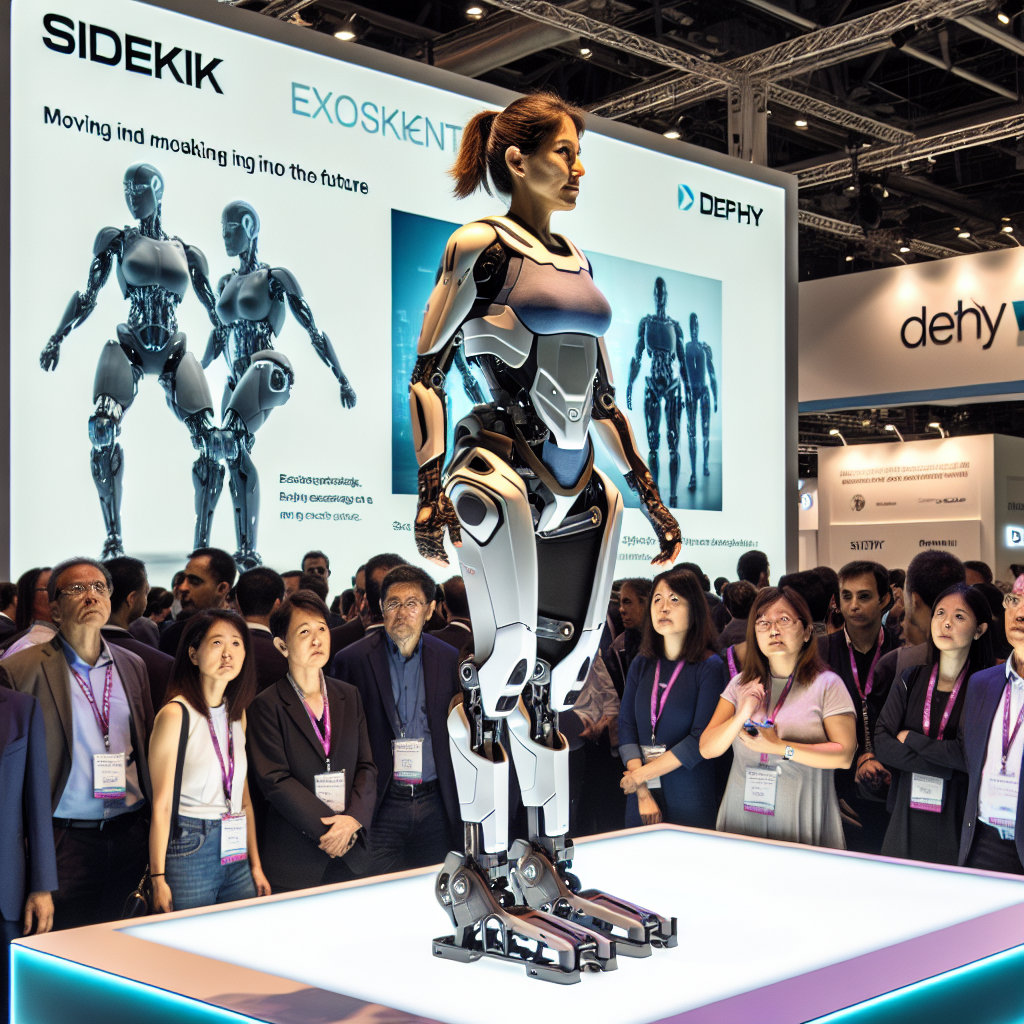
At CES 2026, the intersection of human capability and robotic innovation was on full display, with technologies ranging from wearable AI to autonomous mobility. Among the more attention-grabbing demos came from Dephy, a Massachusetts-based robotics company, whose SideKiK exoskeleton attracted significant interest for its potential to enhance human locomotion. A firsthand account published by Startup News FYI under the title “I Tried the Dephy SideKiK Robotic Exoskeleton at CES 2026 and It Gave Me a Literal Pep in My Step” underscored the striking impact of the device in real-world use.
Developed by former DARPA and MIT researchers, the SideKiK is a lower-body robotic exoskeleton designed to augment human walking by providing real-time powered assistance to the ankle joint. Unlike traditional rehab-focused exosuits, SideKiK is engineered for broader consumer and occupational applications, including daily use by those with mild mobility impairments and professionals whose jobs require prolonged standing or walking.
The Startup News FYI journalist who tested the SideKiK described a subtle but noticeable push forward with each step, creating a sensation not of being moved but of being gently supported. That effect, powered by sensors and machine learning algorithms, mimics the natural motion of the ankle to amplify a user’s stride. The device, weighing under five pounds per leg, is worn over regular shoes and pants, and is reported to be comfortable after a brief adjustment period.
Dephy envisions a growing role for the SideKiK in aging populations and workers in physically demanding roles. During CES, company officials suggested the device could benefit warehouse employees, medical staff, and individuals with early-stage mobility decline, allowing them to walk longer and with less fatigue. While the SideKiK is not yet available for retail purchase, Dephy is beginning pilot programs with institutional partners as it explores commercial deployment.
The company’s broader mission is to bring robotics closer to the human body, augmenting rather than replacing natural motion. This vision aligns with a rising trend in wearable robotics aiming to enhance human function rather than substitute it. The SideKiK distinguishes itself in this space by its focus on slim form factor, low power consumption, and adaptability to varying walking environments.
CES has increasingly become a proving ground for such assistive technologies, and Dephy’s SideKiK appears to signal a new phase of robotic wearables: practical, lightweight, and aimed not just at recovery, but at enhancement. While questions remain about mass affordability and real-world durability, early impressions from CES—including those noted in the Startup News FYI article—point to strong interest in the possibilities of exoskeletal augmentation as an everyday tool, not just a specialist’s device.
With an aging global population and growing demands in the logistics and care sectors, companies like Dephy are positioning themselves at the forefront of a new category: functional robotics that integrate seamlessly into human life. If the SideKiK delivers on its promise, it may help redefine mobility in the decade to come.