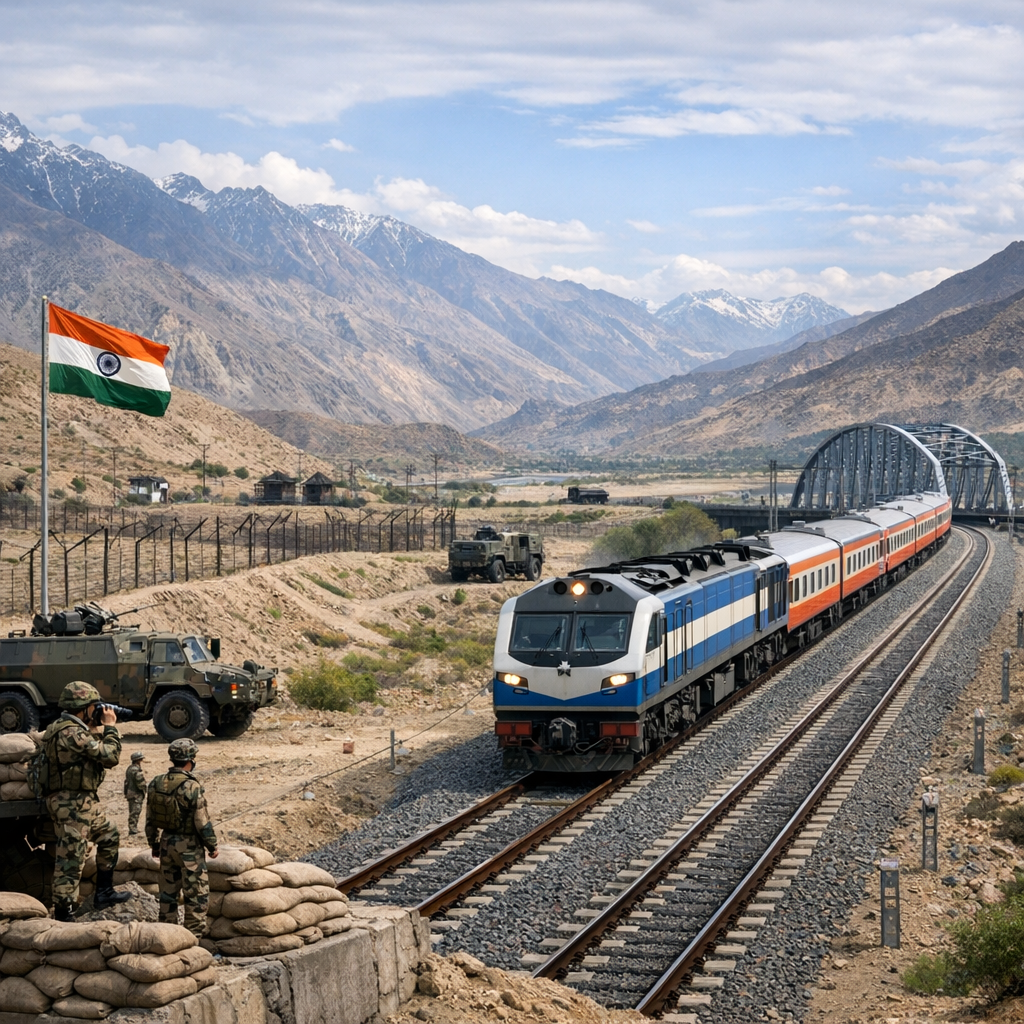
India is accelerating plans to expand railway infrastructure along its border with Pakistan in a move aimed at strengthening military logistics and regional connectivity, according to recent remarks by Railway Minister Ashwini Vaishnaw.
As reported in the Economic Times article titled “Ashwini Vaishnaw announces rail push along India-Pak border to strengthen defence readiness,” the government intends to prioritize strategic rail projects in sensitive frontier areas, highlighting the growing role of transport infrastructure in national security planning. The initiative reflects a broader shift toward integrating civilian transport development with defense preparedness.
Vaishnaw indicated that railway expansion in border regions would facilitate faster troop mobilization and improve supply chain resilience during contingencies. The emphasis is on building and upgrading lines that can support both civilian and military use, ensuring that infrastructure investments deliver dual-purpose benefits. Officials have signaled that projects will focus on capacity enhancement, modernization, and improved connectivity to remote locations.
The push comes amid heightened geopolitical awareness in South Asia, where infrastructure development has increasingly been viewed through a strategic lens. Railways, traditionally associated with economic growth and regional integration, are now being positioned as critical assets in defense logistics. Faster deployment capability, redundancy in supply routes, and improved access to border outposts are central to the government’s planning.
In addition to defense considerations, the expansion is expected to contribute to local economic development in border districts, many of which remain underconnected. Improved rail access could stimulate trade, tourism, and mobility, potentially narrowing regional disparities. However, officials have emphasized that security requirements remain the primary driver behind the initiative.
The Economic Times report notes that the rail push aligns with India’s broader infrastructure agenda, which has seen increased capital allocation for transport networks, including highways, ports, and dedicated freight corridors. By extending this focus to sensitive border areas, the government is seeking to create a more integrated and resilient national infrastructure framework.
While timelines and specific project details were not fully disclosed, the announcement underscores a clear policy direction: infrastructure development is no longer confined to economic considerations alone but is being actively leveraged to reinforce national security objectives.