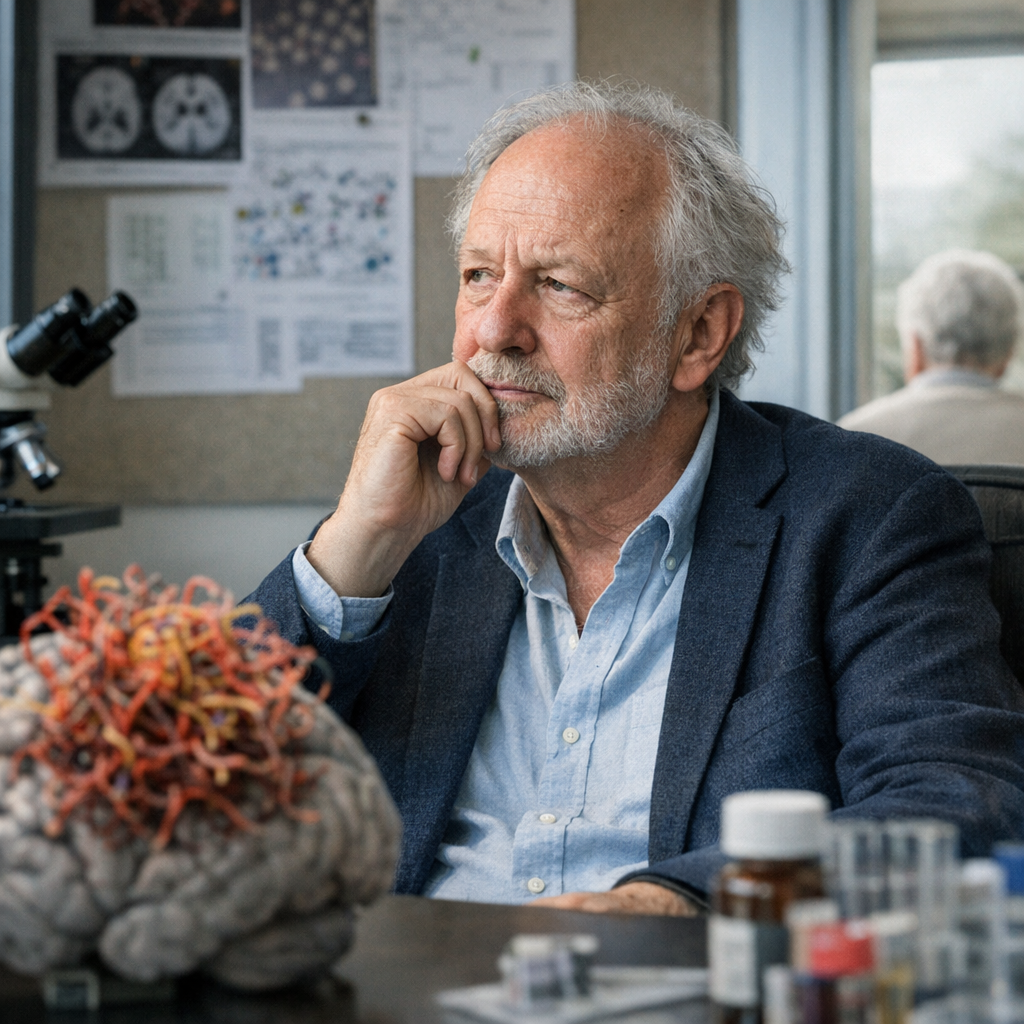
In the Wired article “The Godfather of Alzheimer’s Research Is Ready for a Revolution,” published on the outlet’s health vertical, veteran geneticist John Hardy reflects on decades of work that reshaped scientific understanding of dementia while warning that the field must now confront its limitations.
Hardy, widely credited with helping to establish the “amyloid hypothesis” that has dominated Alzheimer’s research for more than 30 years, argues that the theory—while foundational—has not yielded the clinical breakthroughs many once expected. His early discoveries linked genetic mutations to the accumulation of amyloid plaques in the brain, providing a clear biological target and driving the development of countless experimental therapies. Yet repeated failures of amyloid-targeting drugs in clinical trials have led to growing skepticism, both within the scientific community and among the public.
In the Wired account, Hardy does not disown his earlier work. Instead, he frames it as an essential step that clarified one piece of a far more complex disease. Alzheimer’s, he suggests, is not a single-condition puzzle with a single solution but a network of interacting processes, involving inflammation, immune responses, vascular health, and other factors that were historically underexplored. The narrow focus on amyloid, he implies, may have constrained progress by sidelining alternative approaches for too long.
Hardy’s perspective reflects a broader shift underway in dementia research. While recent regulatory approvals of amyloid-targeting drugs have been touted as milestones, their modest clinical benefits and potential risks have underscored the need for a more nuanced strategy. Scientists are increasingly investigating earlier detection methods, combination therapies, and interventions aimed at preventing disease onset rather than treating its later stages.
The Wired article also highlights the personal dimension of Hardy’s scientific journey. Now in the later stages of his career, he is portrayed as both a central architect of modern Alzheimer’s research and a critic of its entrenched assumptions. This dual role lends weight to his calls for intellectual flexibility and renewed investment in diverse lines of inquiry.
His argument resonates at a moment when the global burden of dementia continues to rise sharply, driven by aging populations. Despite billions of dollars in research funding and decades of intensive study, effective treatments remain limited, and no cure is in sight. Hardy’s comments suggest that future progress will depend less on refining a single dominant theory and more on embracing the disease’s complexity.
As reported by Wired, Hardy views this period not as a failure but as a transition. The field, he contends, now has the tools—from advanced imaging to large-scale genetic data—to move beyond earlier constraints. Whether that shift will lead to meaningful therapies remains uncertain, but his message is clear: the next phase of dementia research must be broader, more adaptive, and willing to challenge its own foundations.