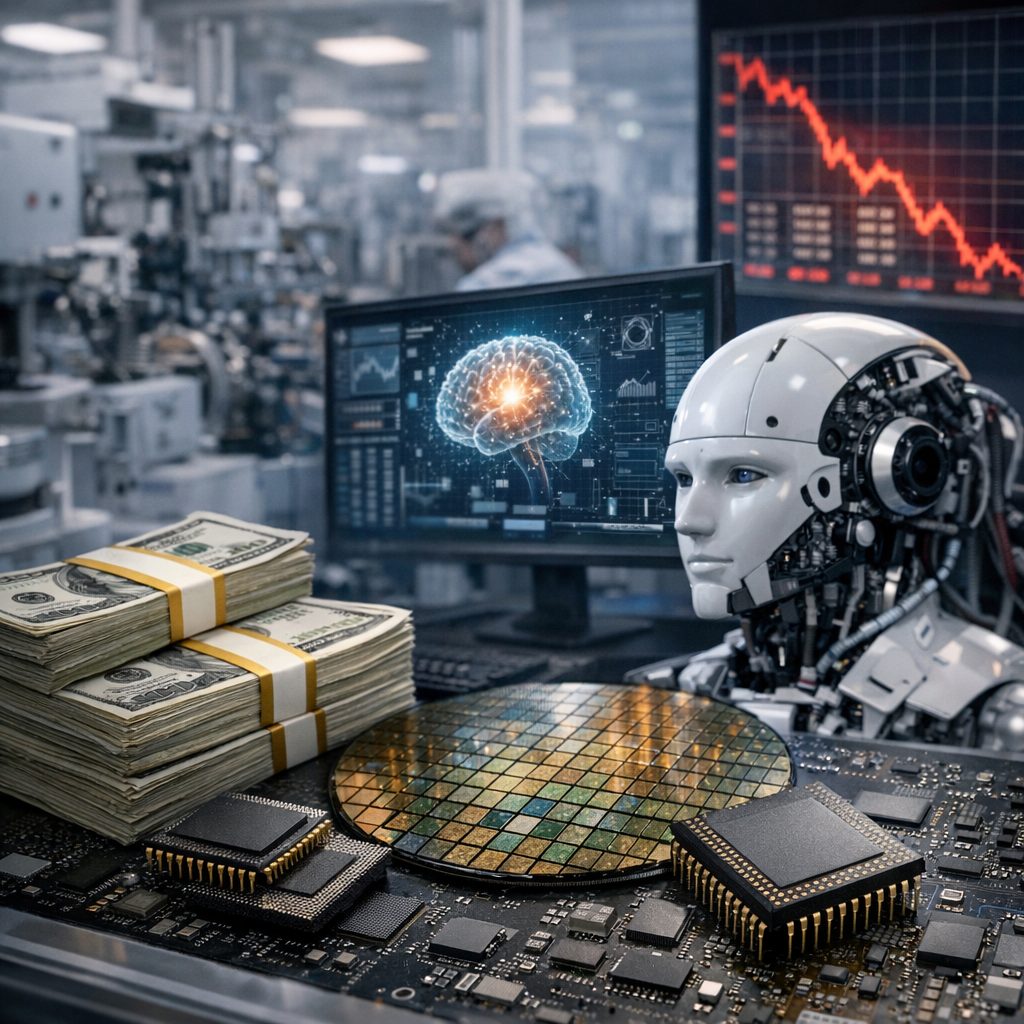
In its latest “Tech Top 5” newsletter, The Economic Times highlights growing demands from semiconductor companies for stronger government incentives while also flagging rising concerns about inflated artificial intelligence valuations, as discussed by investor Howard Morgan.
The report notes that semiconductor firms operating in India are pushing for expanded fiscal support, arguing that existing incentive frameworks are insufficient to compete globally. Industry leaders are seeking a broader package of subsidies, tax relief, and infrastructure backing to offset high capital costs and long gestation periods associated with chip manufacturing. These demands come as India aims to position itself as a significant player in the global semiconductor supply chain amid ongoing geopolitical shifts and efforts to reduce reliance on established manufacturing hubs.
Executives cited in the newsletter suggest that while policy intent has been favorable, execution challenges and delays in disbursements have tempered investor confidence. The industry is also grappling with supply chain complexities, access to advanced technology, and the need for a skilled workforce, all of which require sustained policy coordination.
Alongside industrial policy developments, The Economic Times also draws attention to cautionary views from Howard Morgan, a veteran venture capitalist, on the current state of artificial intelligence investments. Morgan warns that exuberance in AI-related funding may be driving valuations beyond sustainable levels, potentially setting the stage for a correction. He emphasizes the importance of distinguishing between companies with defensible technology and revenue models and those benefiting primarily from market hype.
Morgan’s perspective reflects a broader unease among some investors who see parallels between the current AI funding environment and previous technology bubbles. While acknowledging the transformative potential of AI, he underscores that long-term value creation will depend on execution, differentiation, and measurable outcomes rather than projections alone.
The dual themes outlined in The Economic Times newsletter — industrial policy pressures in semiconductors and caution in AI investing — point to a technology sector navigating both opportunity and risk. As governments seek to build strategic capacity in hardware and capital continues to flow into software-driven innovation, the balance between ambition and discipline is becoming increasingly critical.