A new approach to storing vast amounts of energy could help address one of the most persistent challenges in the transition to renewable power, according to recent research highlighted in the TechXplore article “Extreme large-scale energy storage.”
As renewable energy sources such as wind and solar continue to expand, the mismatch between when electricity is generated and when it is needed has become a central issue for power systems worldwide. Conventional storage technologies, including lithium-ion batteries, are effective for short-term balancing but remain costly and impractical for storing energy at the scale required to stabilize national or regional grids over extended periods.
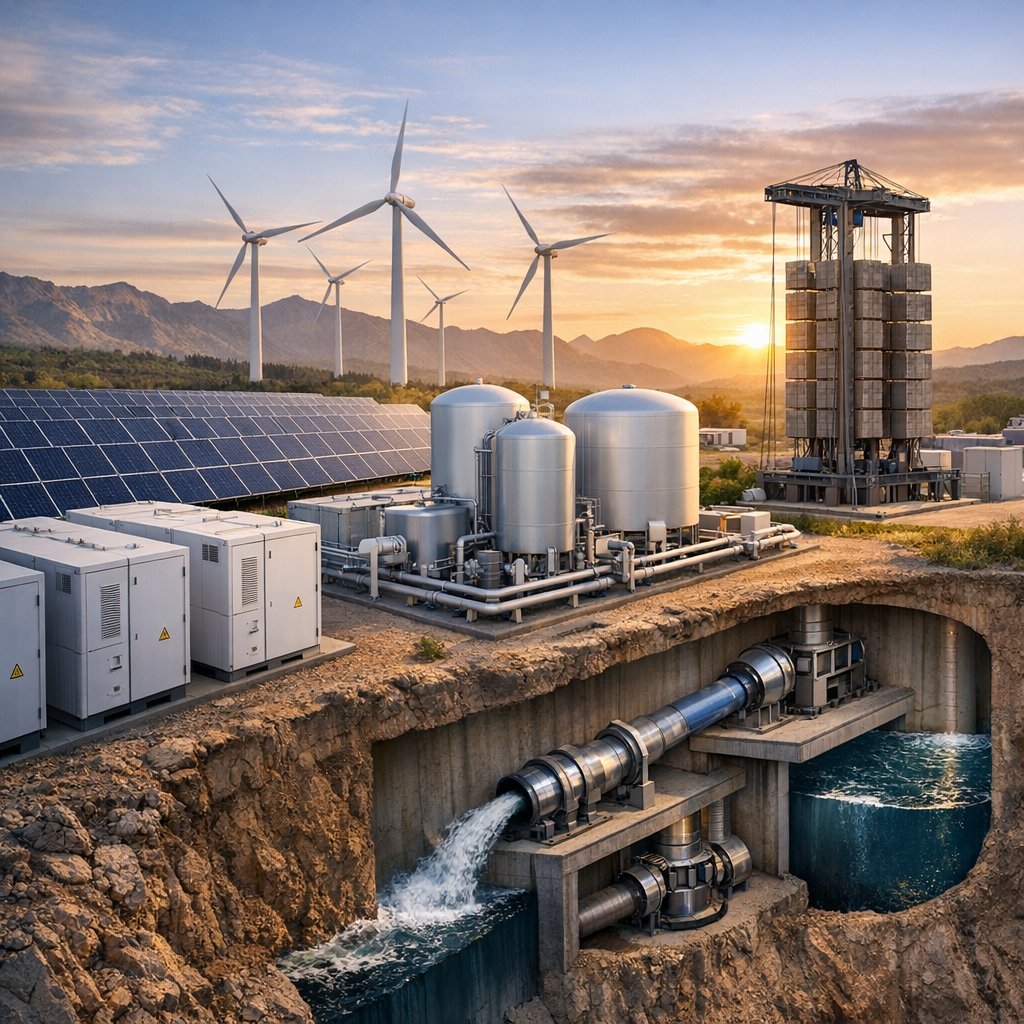
The research presented in the TechXplore report explores systems designed specifically for “extreme” large-scale storage—technologies capable of holding and releasing energy in quantities far beyond what current commercial solutions can achieve. These systems focus on scalability, durability, and cost efficiency, aiming to provide storage capacity measured in gigawatt-hours or higher.
Central to the concept is the use of abundant, low-cost materials and physical processes rather than relying on scarce or expensive components. By leveraging mechanical, thermal, or gravitational principles, researchers are seeking to create storage infrastructures that can operate over long lifespans with minimal degradation. Such systems could remain viable for decades, offering a more sustainable alternative to batteries that require periodic replacement.
Another key advantage discussed in the article is geographic flexibility. Unlike some existing storage methods that depend heavily on specific terrain or environmental conditions, the proposed approaches aim to expand the range of viable locations. This could make it easier for countries with varying landscapes to integrate large-scale storage into their energy strategies.
The implications for energy markets could be significant. Reliable, long-duration storage would allow excess renewable energy generated during peak production periods to be preserved and dispatched during times of high demand or low generation. This, in turn, could reduce reliance on fossil-fuel-based backup systems and help stabilize electricity prices.
However, the research remains in developmental stages, and substantial engineering, regulatory, and financial hurdles remain. Scaling these systems from experimental or pilot phases to full deployment will require significant investment and coordination among governments, industry, and utilities. Questions also persist about efficiency losses, infrastructure requirements, and the environmental impact of large installations.
Despite these challenges, the concept of extreme large-scale energy storage represents a potentially transformative step in the evolution of the power grid. As the TechXplore article “Extreme large-scale energy storage” suggests, breakthroughs in this area could play a decisive role in enabling a fully renewable energy future by bridging the gap between intermittent generation and continuous demand.