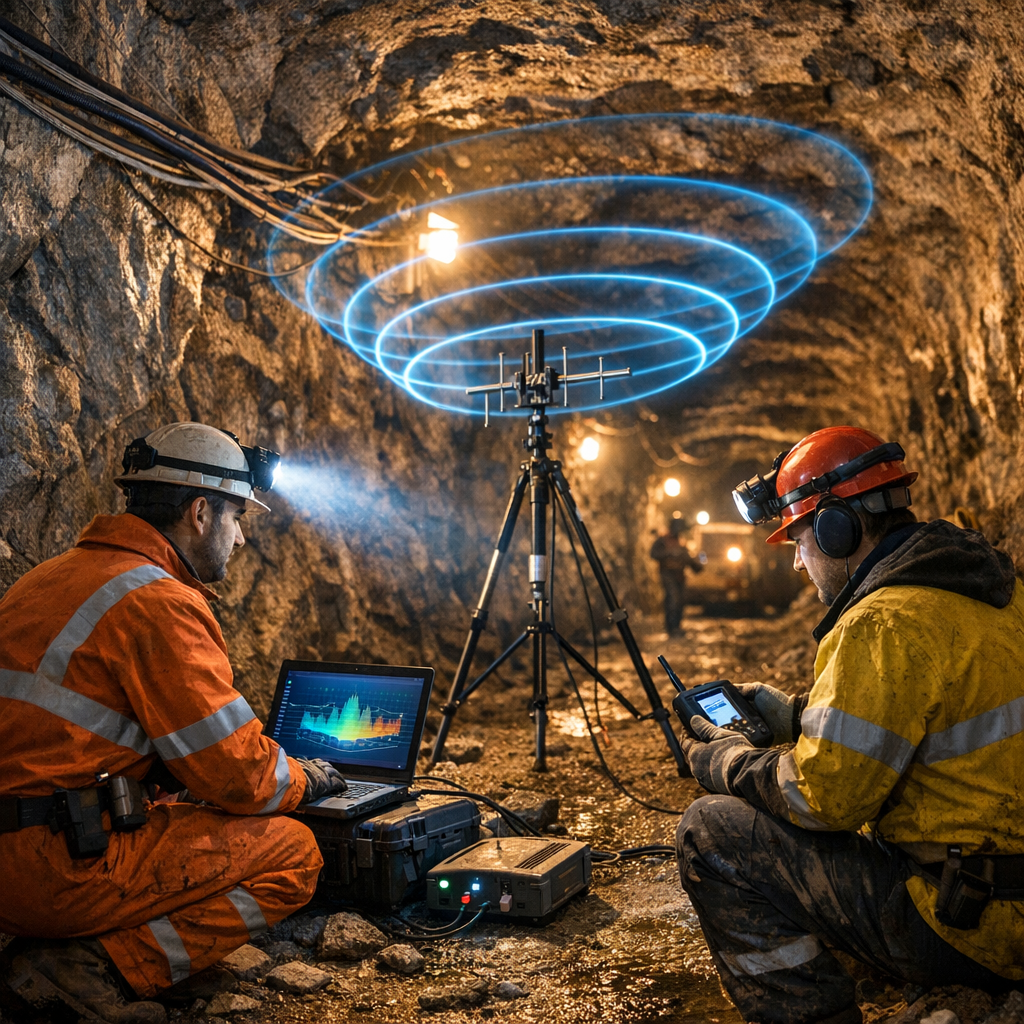
Engineers have long struggled with the limitations of wireless communication below ground, where soil, rock, and moisture rapidly degrade signals. A newly reported breakthrough suggests those constraints may be shifting. According to Tech Xplore’s article “Meter-range underground wireless communication,” researchers have demonstrated a system capable of transmitting data wirelessly across distances of several meters beneath the surface, a range that significantly exceeds many existing approaches.
Traditional underground communication methods often rely on wired infrastructure or extremely low-frequency signals that carry only limited amounts of data. These systems can be costly, difficult to deploy, and impractical in dynamic or remote environments. The research highlighted by Tech Xplore points to an alternative that balances range and data capability, potentially opening new applications in environmental monitoring, agriculture, and infrastructure management.
The core challenge stems from the physical properties of soil and rock, which absorb and scatter electromagnetic waves. Water content, mineral composition, and density all contribute to signal loss, making consistent communication difficult. The system described in the report appears to address these issues through a combination of optimized frequencies and hardware design tailored for subterranean conditions.
While the reported range—measured in meters rather than centimeters—may seem modest compared with above-ground wireless networks, it represents a meaningful advance for underground use cases. Even small increases in range can reduce the number of relay nodes required, lowering costs and simplifying deployment in applications such as soil sensing for precision agriculture, underground infrastructure monitoring, or search-and-rescue operations in collapsed structures.
Researchers also emphasize the importance of reliability in complex environments. Unlike controlled laboratory conditions, real-world underground settings can vary widely, requiring systems that adapt to changing moisture levels and geological features. Early results suggest the new approach maintains stable communication across different soil types, though further testing will be needed to confirm performance at scale.
The development comes amid growing interest in so-called “Internet of Underground Things” systems, which envision networks of buried sensors providing continuous data on soil health, structural integrity, or environmental conditions. Progress in wireless communication is a key enabler of that vision, reducing reliance on wired connections that are vulnerable to damage and difficult to maintain.
Despite the promise, challenges remain before widespread deployment becomes feasible. Energy efficiency, durability, and long-term reliability in harsh underground environments are ongoing concerns. Researchers will also need to refine the technology to ensure consistent performance across varied terrains and weather conditions.
Nevertheless, as reported by Tech Xplore, the demonstration of meter-range underground wireless communication marks a step forward in a field that has historically faced severe physical limitations. If further developed, such systems could expand the reach of sensor networks into spaces that have until now remained largely inaccessible to modern wireless technologies.